
A shawarma shopkeeper who spoke casually of bombing synagogues to “kill as many Jews as possible” yesterday was sentenced to 60 days’ house arrest. Justice Edward Prutschi, the sentencing judge in Ontario Provincial Court, said Jews are fearful and angry: "Many Canadian Jews live in a state of perpetual heightened anxiety."
U.S. Contractors Get $1.3B/yr
The federal government spends more than a billion a year with American suppliers though actual benefits to U.S. contractors have not been calculated, says the Department of Public Works. A figure of $1.3 billion a year is quoted in a briefing note written at the same time cabinet announced U.S. President Donald Trump was trying to “destroy the Canadian economy.”
Mexico No. 1 In Crime, Death
Mexico last year was the top foreign destination for crime and sudden death involving Canadian travelers, says the Department of Foreign Affairs. Consular cases in Mexico outnumbered those in America though the U.S.A. drew more than 10 times the number of Canadian visitors: "Sometimes things don’t go as planned for Canadians."
Audit Finds Preferential Hires
The National Research Council at least a dozen times in two years approved sweetheart appointments of “top-ranked talent” without posting job vacancies, says an internal audit. The Research Council previously confirmed it specifically recruited foreigners because it was “not possible to find qualified Canadians” to work at its labs: "It could undermine the perceived fairness of hiring practices at the Research Council."
Suspensions Were Symbolic
The Department of Foreign Affairs says last year it suspended 34 permits to ship military goods to Israel. Reminded of its repeated statements that Canada never exported “lethal items" to Israel, a department spokesperson confirmed the suspensions were largely symbolic: "We haven’t exported arms to Israel in 30 years."
B.C. Election Chief Ridiculed
Federal elections managers privately circulated an unsigned commentary ridiculing Anton Boegman, British Columbia’s Chief Electoral Officer, for a “comedy of errors” in a 2024 provincial vote. The Commissioner of Canada Elections released the critical seven-page document through Access To Information: "No one at Elections BC has apologized or assumed responsibility for the embarrassing failures of leadership and management."
Call Feds’ Case Far-Reaching
A federal Competition Act investigation marks an “unprecedented and legally unsubstantiated” attempt to ban service fee pricing in Canada, say lawyers for California-based Door Dash Inc. The delivery firm in a Tribunal filing said the outcome would impact all fee pricing nationwide: "This matter raises novel issues."
Lose 6th TV Station In Six Yrs
The CRTC has approved the abrupt closure of another local TV station, the sixth in six years. Revocation of a federal license for CHAT-TV of Medicine Hat, Alta., on the air since 1957, followed warnings from broadcasters that local television is in crisis: "The future of an entire Canadian industry is hanging in the balance."
Sunday Poem: ‘Veritas Vincit’
Poet W.N. Branson writes: “It only took forty years to expose the Charter for what it is…”
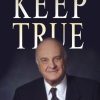
Review: A Blue-Eyed Bolshevik
Manitoba Premier Howard Pawley’s Conservative opponent Sterling Lyon liked to call him a Bolshevik. Even the Soviets had abandoned the phrase in the 1950s, but Pawley had that effect on some people. His leftist credentials were impeccable. Pawley once played a juror in a theatrical production of Twelve Angry Men, Henry Fonda’s denunciation of anti-Latino bigotry. In 1962 he served as president of Winnipeg’s Fair Play for Cuba Committee. It was a popular quip in Manitoba that Pawley’s cabinet dare not meet at the International Peace Garden for fear of arrest by North Dakota marshals. Pawley’s northern affairs minister was a Vietnam draft evader, his attorney general was an ex-Communist organizer. Yet Pawley never looked like a bomb-throwing Marxist. His campaign slogan was “Great People, Great Land.”
Agency Monitored 44M Trips
Federal agents last year tracked more than 44 million trips by Canadians driving back and forth across the border, says a Canada Border Services Agency report. Drivers were monitored under a little-known surveillance program approved by cabinet six years ago: "Do you feel comfortable?"
$704M Graves Fund Requests
A federal fund for exhumation of suspected graves at Indian Residential Schools is heavily oversubscribed, says a report. First Nations have applied for more than $700 million in funding, triple the original budget: "The actual number of individuals buried, or cemetery sites associated with Residential Schools, is unknown."
Housing Starts Slow: CMHC
Housing starts will fall this year, CMHC forecasters said yesterday. Cabinet was counting on builders doubling the number of housing starts to meet its affordability target: "New construction is slowing."
Gulf War Tribute A Precedent
Honouring Persian Gulf War veterans with an inscription on the National War Memorial “would set a precedent,” says a Department of Veterans Affairs briefing note. Veterans have sought the honour though no Canadians died in the conflict: "There are differing perspectives among veterans and military historians about adding the Gulf War."
Issue Vax Appeal To Parents
The Public Health Agency yesterday appealed to Canadian parents to keep children’s vaccinations up to date as a cost savings for the nation. New revisions to the Canadian Immunization Guide followed acknowledgment that many families remain wary of taking medical advice from the federal government: "What is your perception of childhood vaccination?"