
The author, an Israeli-born biologist, examines current events in the Blacklock’s tradition.
Monthly Archives: January 2013
1,300 Pages Of Regulations
Canadian industry is sifting through volumes of new American safety regulations for impact on the nation’s $120 billion-a year farm and food exports to the United States: “This is packed with explanations, nuances and justifications.”
An “All-Canadian” Invention
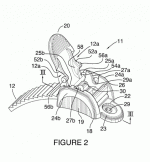
Industry Canada has awarded a patent to a Quebec manufacturer for a winter invention, a locking buckle that can be adjusted by hand without first removing your mittens. The inventor reports sales of more than 30,000 units a season.

Grinding Away On Those Anti-Spam Regulations
Lobbyists have watered down anti-spam legislation with exemptions to federal regulations, says an internet legal analyst: “Those are big loopholes.” Industry Canada is still attempting to write rules governing electronic commercial messages nine years after the federal government first struck an anti-spam task force.
CBC Sells Assets, Cuts Jobs
The Canadian Broadcasting Corporation has sold millions of dollars in real estate and cut more than eight percent of its payroll in the weeks leading to the next federal budget. The moves come amid speculation within the Conservative caucus that the public broadcaster faces additional cuts.
Another Load Of Empties
Shipping lines are pressing for “red tape” cuts to a federal regulation that forces companies to shuttle 70,000 empty containers back and forth between Atlantic ports each year in the name of protecting Canadian industry: “Here’s an easy one to fix.”
Ottawa Math: 60 – 1 = Zero
Educators are pressing the Prime Minister’s Office to rewrite 2009 federal grant regulations that exempt funding for college students who enroll in programs lasting under 60 weeks: “Canadians would like to see changes in the next budget.”
MPs Told Bill “Tips Balance”
A northern development bill nearly a decade in the making now faces “uncertainty” over concerns by a participating stakeholder group: “Amendments are going to have to be required if the bill goes through.” The legislation aims to rewrite licensing regulations for Nunavut resource projects.
Feds Ease Anti-Spam Rules
Businesses have successfully lobbied for broad exemptions to federal anti-spam regulations. “This is much friendlier for marketers,” said one industry group. Parliament has grappled with anti-spam legislation for nearly a decade, with regulations still under revision.
Polluters Pay – Sometimes
Environment Canada is waiving mandatory minimum fines on polluters, proposing that “minor” violators of federal law face unspecified lesser penalties that may include a simple warning. “We are concerned this appears to be backtracking,” said counsel for a leading environmental group.
Borrowing Triples At Port
Cabinet has more than tripled its borrowing limit on Canada’s westernmost container port to record levels to fund improvements, including transportation to a Crown-owned coal terminal now for sale to private investors.
Three Lakes To Disappear
Regulators have okayed the removal of three lakes in two provinces to make way for open-pit mining projects, ruling the public will not be “affected” by the vanishing waterways. “The tailings left over will be managed in perpetuity,” said one environmental researcher.
This Is Getting Expensive
Rising costs of cross-border trucking are so “drastic” they have the effect of a multi-million dollar tariff on goods shipped across the line between Canada and the United States, a first-ever federal study confirms. “Trucking companies and their customers are facing tough times,” warned an industry association.

Chances Are She Will Not Get Seniority
National research shows that, in academic and legal professions, the proportion of Canadian women in senior positions declines as they follow their career paths. An example: some 50 percent of new members of the Criminal Lawyers’ Association are women, but they make up just 35 percent of members with five or more years at the bar.

No Tense Agendas Here
The Canadian Cattlemen’s Association is joining a global coalition of industry and environmental groups on sustainable production, in a move one federal analyst praised as a method to counter the “anti-technology agendas” of activist groups.