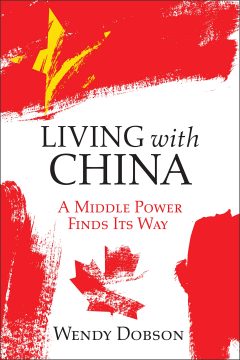
Author Wendy Dobson calls China’s system “authoritarian state capitalism.” Analysts similarly called pre-war Italy a “corporate state.” Like the Beijing Politburo of 2026, Mussolini in 1934 mesmerized outsiders with showboat statistics. Italian GDP appeared to defy Depression-era gravity, growing year over year from 1929 to 1939 while the Canadian economy shrank five percent overall. “Everything looks well ‘on the surface’,” wrote economist Henry Schultz of the University of Chicago on a 1934 Italian tour. “No debating, no complaints.” The UK Saturday Review in 1934 put Mussolini on its cover and enthused: “He dragged Italy out of the mire of socialism and in a few years has made it the most successful and prosperous country in Europe.” Interestingly, both pre-war Italy and contemporary China adopted the identical economic tools: over-valued currency, state management of the economy, price controls, abolition of independent trade unions, abolition of dissent, abolition of a free press, restrictions on mobility rights, property rights and rule of law, voodoo statistics and disastrous state spending. In fascist Italy one in five workers was a government employee. READ MORE