
The Supreme Court has put an end to a five-year defamation case involving two University of Ottawa professors. Justices declined to hear further appeals over a malicious blog that slurred a faculty member: “This was one of those long and tortured litigation files”.
Monthly Archives: February 2016
A Poem – “The Prescription”
If you suffer from moderate to severe boredom
when watching Canadian politics,
try 10 minutes a day of Palin-Trump on
CNN.
This medication is not suitable for everyone.
Do not take it if you experience
high blood pressure,
irregular heart beat,
asthma.
Common side effects may include
jaw dropping,
uncontrollable laughter,
nightmares,
hopelessness.
Ask your doctor if Palin-Trump is right for you.
(Editor’s note: poet Shai Ben-Shalom, an Israeli-born biologist, examines current events in the Blacklock’s tradition each and every Sunday)

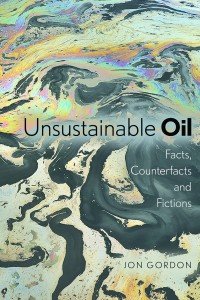
Review: Alberta Bitumen And BS
In 1959 Alberta approved a berserk scheme to set off an atomic blast at Fort McMurray, liquefying the oil sands and freeing a trillion barrels of riches. Engineers with U.S.-based Richfield Oil Corp. rated it a 50-50 chance of economic success. Then-Prime Minister John Diefenbaker killed the idea. “Certainly not,” he said.
Alberta remains unhinged on the subject of oil sands and their elusive promise of fabulous hidden wealth that would turn the province into a Saudi fiefdom. Thwarted plans for A-blasts and pipelines have fueled conspiracy theories: Edmonton would be a Big Oil mecca if not for the intrigues of Dief or Ottawa bureaucrats or National Geographic magazine or environmentalists – especially environmentalists. “Foreign socialist comrades,” former Natural Resources Minister Joe Oliver used to call them.
Unsustainable Oil documents the psychosis. “Bullshit predominates,” writes Dr. Jon Gordon of the University of Alberta; “The industrialization of the bituminous region of Northern Alberta is a manifestation of a cultural belief in limitless progress and endless expansion.” Gordon recalls taking a 2008 Suncor tour of Fort McMurray’s open pit mine when a company guide spotted a deer near the road: “Deer and other wildlife like the extraction plant and mining site because there is no hunting allowed,” the guide insisted.
Gordon is a talented writer. Unsustainable Oil profiles the Alberta sands as a phenomenon both cursed and celebrated in art and commerce and media, and nitpicking of selective facts. “The public debate about bitumen occurs within a highly polarized context in which it often seems there is no common ground,” Gordon notes.
An example: Canadians are told by opposing commentators that “the tar sands are the largest contributor to the growth of greenhouse gas emissions in Canada”; or that “oil sands emit just 5 percent of Canada’s total greenhouse gases – less than, for example, the emissions from all of Canada’s cattle and pigs.” We are assured that development will “industrialize a forest the size of Florida”, and that conversely “the oil sands do cover an area the size of Florida, but only 2 percent of that area will ever be mined.”
“As far as I can tell all of these claims are true,” Gordon writes; “Mustn’t we, then, consider every claim made about the development to be more or less bullshit”; “Suncor gives visitors to its website the chance to ‘Join the Conversation’ – on a page titled ‘Talking About Yes’ – where individuals can comment on threads like, ‘An Ipsos Reid survey shows that 80% of us believe that conversations about the oil sands should be based in science. What information do you want to hear about?’ Interestingly, that thread had zero comments when I visited.”
Undisputed by all is Alberta’s emotional investment in the oil sands, in the manner of sharp-edged discourse that dominates conversation in one-industry towns. If the mill literally stinks, it’s the smell of jobs. “Taxes and royalties paid by bitumen companies pay for health care, so if you like health care you can’t be against bitumen extraction,” as Gordon puts it. “The decision to develop bitumen is a trade-off, and the global considerations trump the local; the urban trumps the rural; the many trump the few.”
Alberta has tried to drag the whole country into this dark conversation. “Engine of the economy,” they claim – though this too is demonstrably bs. The provincial Department of Energy counted 136,200 oil sands jobs at the peak of production, in a two-trillion dollar national economy with a workforce of 18 million.
Unsustainable Oil is pungent and funny and eloquent. It profiles oil sands as a cultural happening that’s driven Canadians to polar opposites. It works.
By Holly Doan
Unsustainable Oil: Facts, Counterfacts and Fictions, by Jon Gordon; University of Alberta Press; 288 pages; ISBN 9781-7721-20363; $45
Court Strikes Bigoted Bequest
A court has struck down a bequest to fund university bursaries for Caucasian heterosexual students. A Windsor, Ont. doctor left his life savings to reward students deemed “hard working”, so long as they were not gay, “feminist” or non-white: ‘We have a different ethical compass’.
Cabinet Eyes VIA ‘Price Tag’
Cabinet must be careful in sanctioning a costly expansion of VIA Rail service, says Transport Minister Marc Garneau. The Crown railway is seeking $3 billion from taxpayers and private investors for speedier service on its busiest routes: ‘We’re looking at the business case’.
We Want Greenbacks: Ex-MP
Canada should adopt the U.S. greenback as a substitute for the wildly fluctuating loonie, the Senate banking committee has been told. A former Reform MP said using American currency would encourage investment: “It would be a tremendous benefit”.
Alberta Medicare Appeal Lost
The Supreme Court has sidestepped an appeal to reopen the decades-old debate on private health insurance. Justices declined to hear an Alberta challenge of medicare regulations: “We’re going to have to wait for the Court to be ready to consider that issue”.
Don’t Like Carbon Tax Talk
Environmentalists’ appeals for a national carbon tax have fallen flat at the Commons finance committee. Criticism from MPs follows in-house research by the Department of Natural Resources pointing to public scepticism of any emissions fee: “We need to regroup”.
CRTC Nixes Access Mandate
Broadcast regulators are dismissing an appeal to reconsider first-ever rules on wholesale wireless roaming systems. Critics petitioned the CRTC for regulations guaranteeing small companies’ access to wireless networks: “The ball is in the government’s court now”.
Insurers Fight DNA Privacy Bill; Claim Premiums Up 50%
A federal DNA privacy bill threatens to victimize Canadians with skyrocketing insurance premiums, says an industry lobbyist. A Liberal bill before the Senate would forbid insurers, employers and others from demanding access to individuals’ confidential genetic tests: “This is a matter of flagging people”.
Feds Blamed For Airport Wait
Inadequate federal funding is to blame for long airport security lineups, MPs have been told. Spending on security screening has declined since 2010 even as security fees for passengers rose more than 50 percent: “This is more than just a problem of passenger experience”.
Vegas Sports Bet Bill Returns
A Vegas-style sports betting bill is back in the Commons. MPs quickly passed the measure in 2012 but saw it lapse in the Senate over protests from the Toronto Blue Jays: “We have to deal with this”.
Nat’l Income Plan Is Revived
Cabinet must test a national guaranteed annual income program, says a Liberal legislator. The proposal follows an appeal from the Canadian Medical Association to revisit earlier pilot programs dating from 1974: “There is some momentum”.
Delinquency Rates Unsolved
Delinquency rates are falling at a faster rate than adult crimes, say new data. Statistics Canada confirmed that youth crime has declined steadily since 1991, but pointed to no single reason for the trend: “There is no consensus on it”.
Costly Seal Hunt Program OK
Cabinet will not scale back its monitoring of the Atlantic seal hunt though costs to taxpayers are five times the value of the commercial harvest, says Fisheries Minister Hunter Tootoo. A confidential department memo noted the hunt is so expensive it’s impacted other fisheries programs.
“I fully support the seal hunt,” Tootoo said in an interview. “You can tell I’m wearing a nice sealskin tie. It’s important to the economy out east.”
The department is spending $2.5 million a year monitoring the hunt, according to memos obtained through Access To Information. Revenues from the harvest have fallen to less than $500,000 annually due to a 2009 European Union ban on Canadian seal products.
“There are strict rules in place for monitoring it and we’re doing what we have to do to ensure it’s done properly,” said Tootoo, who defended the expense as an environmental necessity. “If someone spills oil in the water and it costs millions to clean it up, it may only be a little bit – but you still have to do it. There are rules in place that we have to follow, and we’ll ensure we continue to do that.”
Costs of monitoring include $1 million a year for a Coast Guard icebreaker; $475,000 for helicopter rentals; $400,000 for long-range cameras; and $375,000 a year in staff overtime. Expenses do not include costs incurred by the RCMP in monitoring the annual hunt that gets underway in March.
Fisheries staff in a 2009 memo Funding Pressure Business Case said costs of the hunt were so high they’ve required funds to be drawn from conservation programs. “This has a tremendous impact on relatively small detachment budgets,” read the memo, written by the department’s conservation and protection branch.
“These costs are beyond the capacity of conservation and protection to absorb from traditional budgets and this level of surveillance cannot be maintained without additional funding allocations,” the memo said; “That ends up significantly impacting the ability of the detachments to carry out patrols in other fisheries given the budget pressures.”
“There has been a significant increase in costs,” staff wrote; “Teams deployed via dedicated icebreakers and helicopters as well as the investment in sophisticated remote observation cameras is required”; “These enhancements are above and beyond the traditional monitoring carried out by fishery officers in the regions and come at a significant cost.”
Seal Meat On The Menu
Disclosure of seal hunt expenses came as the Senate yesterday resumed debate on a private bill to proclaim a yearly National Seal Products Day. “The commercial seal hunt is down but it is not out,” said Senator Céline Hervieux-Payette (Liberal-Que.), the bill’s sponsor.
“Canada should not be embarrassed about the seal hunt,” Hervieux-Payette told the Senate; “The disappearance of a market for seal products will never result in the end of the hunt, and those who claim otherwise are trying to manipulate public opinion.”
The value of the Atlantic hunt peaked at $34.3 million in 2006, with 348,000 seals landed. Sales fell to $1.3 million by 2010 and are now under $500,000, according to the trade department.
Bill S-208 An Act Respecting National Seal Products Day would honour the hunt every May 20, coinciding with the European Union observance of Maritime Day. “There is a lot of potential,” Hervieux-Payette said; “Seal fur is used for winter coats”; “Seal meat is even available at the Parliamentary restaurant at request during the seal hunt.”
The Senate fisheries committee in a 2012 report recommended that cabinet add seal oil as a supplement to the Canada Food Guide, and develop markets for seal products as pet food and waterproof clothing. The report Sustainable Management of Grey Seal Populations noted there has “never been a well-developed and viable market for grey seals”.
By Dale Smith