
A 30 percent tax on excess profits for large companies that saw pandemic gains would raise $7,947,000,000, the Parliamentary Budget Office said yesterday. The figures were sought by New Democrats who advocate what leader Jagmeet Singh called a “pandemic profiteering tax.”
Monthly Archives: April 2021
Threaten $100K A Day Fines
Labour Minister Filomena Tassi yesterday introduced a rushed bill ordering striking Montréal longshoreman back to work under threat of $100,000-a day fines. Tassi called it “a matter of life and death.”
Holds Stock In Gas Company
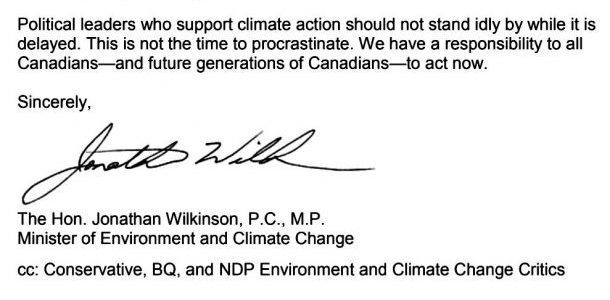
Environment Minister Jonathan Wilkinson yesterday disclosed his wife Tara owns stock in one of Canada’s largest gas companies. Wilkinson has repeatedly invoked the couple’s school-age daughters in justifying federal climate change programs, but omitted mention of family shares in Enbridge Inc.: “It is something we must take action on in the short term if we want to leave a livable planet for our kids.”
Won’t Regulate Whole Web
Cabinet is not interested in “regulating all of the internet,” the parliamentary secretary for Canadian heritage said yesterday. Remarks by Liberal MP Julie Dabrusin (Toronto-Danforth) followed a heritage committee vote to control YouTube content: “Should the government restrict access to the internet and social media to combat the spread of misinformation?”
Demand Speedy Strike Ban
Cabinet is seeking Parliament’s quick passage of a back-to-work bill to end a longshoremen’s strike at the Port of Montréal. A bill will be introduced today in the Commons: “The Port’s activities cannot be stopped. We need the Port.”
Little Love Lost For Payette
The Commons yesterday took up a Bloc Québécois bill to retroactively eliminate pension payments for ex-Governor General Julie Payette. MPs from all parties cited public outrage over Payette’s pension for life: “Things went terribly wrong.”
Plea For Time On Plastic Ban
Retailers yesterday appealed to the Commons environment committee to delay a ban on six single-use plastic items for at least a year. Quick enforcement would only hurt small shopkeepers, said the Retail Council of Canada: “Businesses need as much certainty as possible.”
Gov’t Will Regulate YouTube
The Commons heritage committee has voted to regulate YouTube under federal law. The Department of Heritage said YouTube management, not individual users, will be liable for complying with the Broadcasting Act: “The only reason the government is doing this is to stretch the justification of regulating public airwaves into a justification for regulating private viewing.”
Shares Cost More Than Ford’s
A federal agency bought stock in a money-losing Kenyan cellphone company at three times the price of shares in Ford Motor Co., records show. Export Development Canada called the “investment” speculative, and said it now plans to dump the stock that cost taxpayers $15,400,000: “The rate of return on this investment is difficult to predict.”
Failed Contractor Was ‘Solid’
The Department of Health in internal emails rated a failed contractor as “solid” even after its Covid test kits failed clinical trials. Spartan Bioscience Inc. received a $16.6 million cash advance for rush orders of test kits never delivered before it filed for bankruptcy court protection April 6: “We are in good shape.”
I’ll Do Better, Vows McKenna
Infrastructure Minister Catherine McKenna says she needs to “do a better job of explaining” where billions have been spent on public works. Auditors in a March 25 report said they found only a partial picture of where the money went: “Even the Auditor General for Canada can’t connect the dots.”
Rude But Not Discriminatory
A gibe to “go back to Québec” is not a breach of the Human Rights Code, a British Columbia tribunal has ruled. The Victoria tribunal dismissed a complaint of discrimination, saying the remark was rude but not discriminatory: “It is not so virulent or egregious.”
See Noisemakers On Electrics
Electric cars must be equipped with noisemakers under a Department of Transport proposal. Regulators said pedestrians and bicyclists are likelier to be run over by a quietly humming electric car than a conventional one: “Do you know what the problem is?”
A Sunday Poem: “Résumé”
Desperately need the money;
tend to be late;
rarely meet a deadline;
have a loose understanding
of your business.
I demonstrate
no relevant skills
for this job.
You should hire me.
After all, this is the only true résumé
in the stack.
(Editor’s note: poet Shai Ben-Shalom, an Israeli-born biologist, writes for Blacklock’s each and every Sunday)

Review: Afrikaners Of The Sub-Arctic
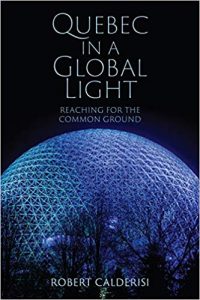
Author Robert Calderisi tells the wry story of an Alberta friend who worked eight years in Montréal and never tired of hectoring Haitian cabdrivers by giving his home address in English, “Nun’s Island” instead of Ile-des-Soeurs. “Very few drivers knew what he was talking about,” writes Calderisi. “Instead of letting them off the hook, he would jump into a different taxi, feeling triumphant. I remember hoping that he took a very long time to get home each night. I also knew that if he worked in Poland for eight years he would have learned Polish.”
Québec In A Global Light is no lament. Calderisi is refreshingly candid. After fifty-two years of official bilingualism Canada “is nothing of the sort,” he says: “Few Canadians arriving in Québec do not feel slightly disoriented.”
Authors for generations have made a cottage industry of churning out volumes on “whither Canada” themes of French disaffection and English insensitivity. Québec In A Global Light does nothing of the sort. Calderisi is a skillful writer who examines his home province with affection and a clear eye, as if it were a foreign land. They are like the Afrikaners, the Dutch settlers of South Africa, “obsessed with the survival of their culture in a sea of Others, fighting fossilization and irrelevance,” he writes.
“I hope this book will be revealing, even for those who think they know the subject well, and that it will dispel some misconceptions, just as my research dispelled some of mine,” says Calderisi. He scores on both points. Canadians accustomed to federal cabinet ministers acting as official translators for the two solitudes would be intrigued to learn there is no criticism of Québec that has not been made by a Québecker.
Calderisi quotes a conservative Québec City radio personality: “Each day, the Québec State collapses a little bit more before our eyes, like the Ville-Marie tunnel that runs under the centre of Montréal. Out of shape and out of breath, it seems to be reaching the end of a cycle, with one of the heaviest debt loads in the Western world, one boy out of three dropping out of high school, an average 20-hour wait in what are still called ‘emergency’ wards, a pension system that is running out of money, bureaucratic and trade union practices that are preventing any kind of development, public infrastructure in disrepair, etcetera.”
The provincial debt ratio to GDP is equivalent to the Ivory Coast. The tax system is so dysfunctional forty percent pay no income tax at all. Population growth is so stagnant a million people have left since 1972, and Québec will rate among the grayest provinces by 2040. Calderisi quotes then-Premier Lucien Bouchard’s account of a secret meeting with Standard & Poor’s bond raters in 1996: “I asked them to give us another chance…They answered that Québec had been going its own way for 40 years and the results were hardly brilliant.”
Calderisi proposes remedies, and reminds readers of an attribute known to any visitor who ever attended business in Trois-Rivières or billeted for a hockey tournament at Laval: “Except when they are behind the wheel, they are one of the most civil peoples on earth. And despite their cultural insecurity, Québeckers are generally happy.”
By Holly Doan
Québec In A Global Light: Reaching For The Common Ground, by Robert Calderisi; University of Toronto Press; 224 pages; ISBN 9781-4875-04717; $32.95