
Cabinet should be more willing to detail national security worries with everyday Canadians to “avoid rampant speculation,” says a Department of Public Safety report. The research coincided with cabinet’s refusal to disclose reasons why Chinese scientists were fired at a federal lab: “Most participants believe the government is not fully transparent about national security issues.”
Monthly Archives: July 2021
Election Talk Never Came Up
Newly-appointed Governor General Mary Simon yesterday said she and the Prime Minister “have not talked about the election” expected after Labour Day. A cabinet bill setting out new rules for pandemic voting was introduced in the Commons but never passed: “I have not talked about the election at all.”
Travel Right Not Covid-Proof
Provincial travel bans at the height of the pandemic were lawful, a judge has ruled. The decision by the Newfoundland and Labrador Supreme Court is the second to dismiss constitutional claims of mobility rights in a health emergency: “Does it matter that the person owns a home in each place?”
John A. Macdonald Erased By National Archives: ‘Offensive’
Management at the national archives has deleted a website feature honouring John A. Macdonald as “redundant” and “offensive.” The content including historical facts and photos for schoolchildren was deemed out of step with “our diverse and multicultural country,” said archivists: “This is just shocking.”
Internet Is “At A Crossroads”
Heritage Minister Steven Guilbeault’s internet regulations could have “far reaching impacts on social media,” a Canadian internet manager said yesterday. Nearly two-thirds of people surveyed, 62 percent, worried federal controls will curb “legitimate, lawful speech.”
Judges Uphold Lavalin Probe
The Federal Court of Appeal yesterday dismissed a challenge of a 2019 ethics report on Prime Minister Justin Trudeau’s dealings with SNC-Lavalin Group Inc. Lawyers for Democracy Watch had claimed the investigation was too narrow in failing to cite political aides for misconduct: “The focus is on the Prime Minister.”
CBC Told To Follow Its Code
CBC’s ombudsman is again recommending the broadcaster make “improvements” in disclosing financial interests of pundits. The network in three separate cases broadcast views of commentators on federal affairs without divulging they were federal contractors: “It would be nice to see CBC News offer evidence that it does in fact provide such balance.”
Grants Didn’t Help The Poor
A $49 million-a year grant program for seniors is popular with applicants but does little to help the poor, says a Department of Social Development report. Seniors used subsidies for bocce courts, Chinese cooking classes and big-screen TVs: “Other age cohorts that are struggling with young families should not have to pay for these kinds of goofy programs.”

Senators Defied Travel Orders
Three senators defied pandemic bans on non-essential travel by repeatedly flying to Ottawa and back home on government jets at taxpayers’ cost, according to Access To Information flight logs. None explained what constituency business they had during Covid lockdowns in their home provinces. The health department at the time said it was unsafe for Canadians to visit family and friends: “Ask yourself before you go out this weekend, is what I’m about to do worth the risk?”
Will Not Order Cash Refunds
Cabinet will not make it a legal requirement that airlines pay cash refunds to passengers ticketed on Covid-cancelled flights. It had promised in a January 15 Ministerial Mandate letter to “ensure Canadians get refunds for air travel cancelled due to the pandemic.”
Vows Fight On Farm Tax Cut
An MP who rewrote the Income Tax Act to benefit family-owned businesses vows to fight attempts by the Department of Finance to reopen the bill. The department in an unusual statement said it will attempt to revisit the measure that cuts taxes by at least $178 million a year: “This is desperation.”
Appoints 4 Donors In A Day
Attorney General David Lametti in a single day appointed four Liberal Party donors as judges. The flurry of appointments Friday came three weeks after the Commons justice committee rejected an investigation of Party vetting of judges: “I am confident they will serve the people.”
Can’t Target Churches: Judge
The Department of Employment unfairly rejected applications for Canada Summer Jobs funding from church groups, a federal judge has ruled. The Court was told the department appeared to badger Christian applicants with repeated claims of inadequate paperwork: “It’s pretty scathing.”
A Poem: “Wrong About Us”
Enter a Justice clothing store
in Syracuse, New York.
Inquire whether an item
bought at that location
can be returned
in a Canadian branch.
The attendant
consults the chain directory.
“Sorry, Sir”
she raises her eyes,
“There is no Justice in Canada.”
(Editor’s note: poet Shai Ben-Shalom, an Israeli-born biologist, writes for Blacklock’s each and every Sunday)

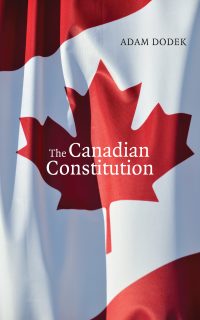
Review: Our Law In Plain English
“I admit it. I love the Canadian Constitution,” enthuses Professor Adam Dodek. So few Canadians do. In this we are not unique. A U.S. Rasmussen poll once found only 51 percent of Americans would actually vote for their Constitution; 63 percent thought it was an “excuse” to ban school prayer. And a U.K. study by the Hansard Society confirmed only 26 percent of Britons know what the House of Lords does. Forty-nine percent could not tell the difference between “parliament” and “government.”
In Canada the Constitution is so unloved, Dodek recalls the main textbook on our supreme law once went out of print for months “and nobody seemed to notice.” Dodek, dean law at the University of Ottawa, has a solution: his readable, 176-page account of the constitution and its meaning, written in plain English.
“A constitution can be thought of as an official rule book for hockey or Monopoly,” Dodek explains. “But a constitution is much more than a book of rules. A constitution can also be a symbol and a source of values. It can inspire, or it can disappoint.” In The Canadian Constitution readers learn that:
- • Only the Queen can designate a city other than Ottawa as the capital;
- • Senators must be at least 30 years old;
- • The Commons can pass a bill with as few as 20 MPs in attendance;
- • A Supreme Court judge must live within 40 kilometres of Ottawa: “It used to be 25 kilometres but it was changed at the request of Chief Justice Brian Dickson, who had a farm beyond the 25 kilometre limit.”
How many Canadians know they have a constitutional right to live in any province? Or that if charged with a crime, they have a right to a trial within a reasonable time?
Dodek’s Constitution has one unfortunate lapse, though he’s not the first to make it. A glossary of terms contains this misleading definition: “Executive: The branch of government that carries out the law. One of three branches that comprise the government – the other two are the legislative and the judicial.”
In fact the “branch” analogy is an Americanism. In Canada we have only a single Parliament that rules above all with the ability to sack any prime minister, fire any staff or void any court ruling. The reluctance of MPs to exercise these powers does not alter the fact.
Our constitution, as Dodek notes, is much more than a collection of bylaws. It says something of who we are, and has great moments.
By Holly Doan
The Canadian Constitution by Adam Dodek; Dundurn Publishing; 176 pages; ISBN 97814-5970-9317; $12.99