
Say “Canada” and people in Vietnam think of maple trees and cold weather, says federal research. Questionnaires by the Department of Agriculture follow a series of studies on what foreigners think of Canadians: “When you think of Canada what is the first thing that comes to mind?”
Monthly Archives: September 2022
Search For Covid News Leak
A privacy investigation has ended without conclusion in the case of a Covid patient whose medical history was leaked to a Prince Edward Island blogger. The case is currently before the Island’s Supreme Court: “A privacy breach cannot be undone.”
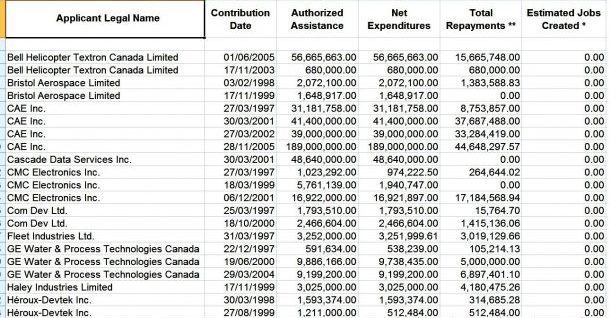
Secret Loan Terms Disclosed
Federally-subsidized companies were given years to repay as little as ten cents on the taxpayers’ dollar borrowed from the Department of Industry, Access To Information records show. Confidential details of easy-term loans were disclosed by order of Information Commissioner Caroline Maynard: “Public funds are involved.”
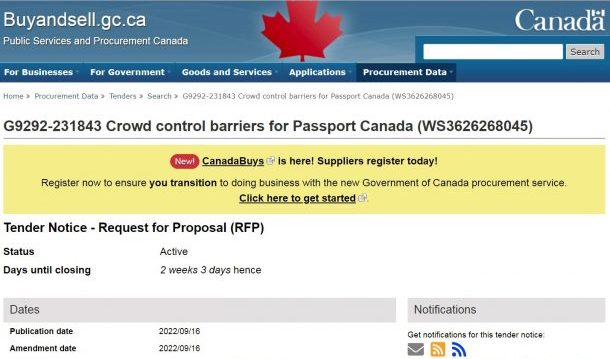
To Control Passport Crowds
The passport office, now in its six month of public protests over processing delays, is ordering crowd control barriers. Managers in a notice to contractors said delivery of barriers was needed at its Montréal office where police were repeatedly called to calm crowds: “People are crying and freaking out.”
Student Loan Interest Fees Up
Cabinet on Saturday gave notice it will raise the interest rate on student loans. Prime Minister Justin Trudeau in the last election campaign had promised to abolish students’ interest charges altogether: “The government wants to make sure young people know they matter.”
Unvaxed Win A Federal Case
A federal tribunal has reinstated Employment Insurance benefits for a Toronto man fired for being unvaccinated. The judgment was the first successful appeal on behalf of Canadians denied jobless benefits over their medical status, said a lawyer in the case: “To my knowledge it is the first.”
Feds Defend Beleagured Bank
Cabinet is rejecting an all-party committee recommendation that it disband a Crown agency, the Canada Infrastructure Bank. A Commons transport committee report called the Bank a costly failure: “The government strongly disagrees with the recommendation.”
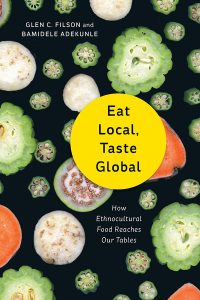
Review: Good Eats
Any book that examines the human condition through diet is welcome. Who is not wiser on learning Lester Pearson was so bland his favourite lunch was a poached egg, or that Britain’s Ministry of Food recommended rice soup as a wartime Christmas meal in 1917?
In Eat Local, Taste Global Professors Glen Filson and Bamidele Adekunle of the University of Guelph look at vegetables in documenting Canada’s demographic revolution. The nation has never seen so many different immigrants from so many varied lands – Asian, African, Caribbean, Middle Eastern. Authors note the nation imports 24.9 million pounds of okra annually, a third of it in the Toronto area through the largest vegetable wholesaler in the nation, the Ontario Food Terminal Board.
“While humans are often viewed as rational beings who make informed decisions to optimize their benefits, food decisions are not always rational,” says Eat Local. “This is evident as food serves many purposes beyond nutritional value, including construction of personal identity and pleasure.”
“There are many factors that influence food choice including previous exposure, expectations, economic factors, marketing, education and nutritional knowledge, social interactions, morality and religion, culture, lifestyle, age, food trends, media and the attributes of the individual,” authors explain.
Eat Local is a scholarly eye-opener for readers who recall when the range of exotic foreign foods in Canada ran a narrow gamut from chop suey to Japanese oranges. Today Canadians eat 21 million pounds’ worth of Asian purple eggplant every year, and 24 million pounds of yard-long beans. Foreign ingredients like cilantro, broccoli and artichokes, introduced by Italian immigrants, are commonplace. Bok choy and bitter melon are sold in most supermarkets in most medium-sized cities in Canada. Halal butchering has saved many a small, independent packing house.
Authors note this is simple economics – more immigrants, more income – but marvel that it occurs at all. Grocery retailing is heavily controlled among a handful of corporations, and inexpensive processed food is everywhere. “Our industrial diet has been and continues to be nutritionally degraded due to the ever-growing abundance of ‘pseudo-food’, an even broader category than the more widely used term ‘junk food’,” they write.
In 2013 the federal agency that regulates food safety, the Canadian Food Inspection Agency, even expanded the definition of “local” produce from a 50-kilometre radius to include interprovincial goods, meaning carrots sold as “local” in Vancouver may be trucked from Blairmore, Alta. “There is somewhat of a political economic tug-of-war between those controlling most of what we eat, and those wanting a more sustainable agriculture and local access to fresh, healthy food,” authors write. “This struggle occurs along the value chain from producers to processors, and distributors, wholesalers and retailers all the way to the consumers.”
By Holly Doan
Eat Local, Taste Global: How Ethnocultural Food Reaches Our Tables, by Glen Filson and Bamidele Adekunle; Wilfrid Laurier University Press; 200 pages; ISBN 9781-7711-23136; $27.99

Offered Money Door To Door
A federal agency struggled to give away millions in subsidies to businesses it claimed suffered due to Freedom Convoy protests in downtown Ottawa. Access To Information records show organizers extended deadlines and went door to door pleading with business owners to apply for cheques: “Go door to door to boost awareness and increase applications.”
Admit Equity Tax Is A Loser
CMHC in Access To Information records for the first time acknowledged intense opposition to its promotion of a home equity tax. Staff in internal emails uncovered by the Canadian Taxpayers Federation concluded it was “not worthwhile” to pursue the idea: “Reaction both in the media and by the public was swift.”
Global News “On The Brink”
Global News is “on the brink,” an executive with the country’s number three television network yesterday told a Senate hearing. The assessment came despite millions in federal subsidies and a 38 percent profit margin in TV: “We can no longer do this alone.”
Tears As House Pays Tribute
MPs including one member who choked back tears yesterday lamented the Queen’s death at 96. Observances for a Day of Mourning Monday range from a moment’s silence by Toronto streetcar operators to church carillons at Anglican congregations nationwide that will ring out God Save The King: “Does it make sense to act as if someone we have only ever seen from a distance is a member of our own family?”
Researched Covid Scofflaws
Rates of compliance with public health orders varied widely nationwide, Statistics Canada said yesterday. Analysts said they were able to identify a handful of characteristics shared by Canadians who defied masking orders and other mandates: “Individuals aged 34 or younger were less compliant overall.”
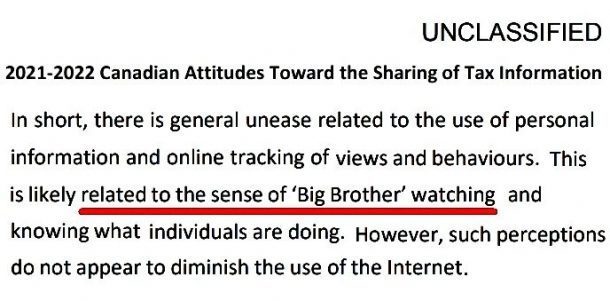
Would Share Tax Data With Police: “A Very Bad Idea –“
The Canada Revenue Agency polled the public on sharing information from tax returns with police and debt collectors, records show. Taxpayers in an internal report called it a bad idea, something akin to “Big Brother.”
Call Internet Bill ‘Power Grab’
A cabinet bill to regulate legal internet content is a “power grab over human communications,” a former CRTC commissioner testified last night at Senate committee hearings. Bill C-11 would classify YouTube videos as TV broadcasts subject to mandatory regulation: “It’s a kind of reverse takeover of the internet.”