
Heritage Minister Pablo Rodriguez yesterday pleaded with senators to quickly pass Canada’s first bill to regulate legal internet content. Members of the Senate transport and communications committee warned of likely amendments to Bill C-11: ““I am asking you, please, Senators.”
Monthly Archives: November 2022
Didn’t Spot China Meddling
Chief Electoral Officer Stéphane Perrault yesterday said he saw no evidence Chinese Communist agents interfered in the 2019 federal campaign. Perrault acknowledged he did not look for any: “There may be offences that are committed that we find out after the fact.”
Billions For Student Loan Aid
Federal repeal of interest on Canada Student Loans will cost more than $556 million a year in perpetuity, the Senate national finance committee was told yesterday. The measure takes effect next April 1: “The investment is $2.7 billion over five years but then there is an ongoing cost as well of $556.3 million per year.”
Claim Flag Man Was Publicist
A publicist and former Toronto Star manager yesterday was named as the masked provocateur seen hoisting a Nazi flag at the Freedom Convoy. The individual named denied it. The Prime Minister had pointed to the incident as proof protesters were violent extremists: “It was all over the news, the gentleman who was carrying the Nazi flag.”
9500 Emails, Cards & Letters
Thousands of Canadians have written and emailed Justice Paul Rouleau to discuss his Freedom Convoy inquiry. Tens of thousands more followed testimony online, the Public Order Emergency Commission said yesterday: “Public interest in the Commission’s work has been very high.”
RCAF Hires Falcons At $6M
The Royal Canadian Air Force spent $6 million on a falconry program, records show. The military paid falconers for use of ancient techniques in protecting aircraft from nuisance bird strikes: “They happen quite often. Rarely do they cause any major damage.”
Economy Lost A Billion Coins
Pandemic lockdowns saw more than a billion coins go out of circulation, records show. The Royal Canadian Mint called it an unprecedented event that could lead to a “cash light society” with fewer bank tellers and armoured cars: “Coin demand will continue to decline.”
Uncertain Of Recovery Costs
Treasury Board President Mona Fortier yesterday would not say how much it will cost to recover funds from ineligible applicants who received Canada Emergency Response Benefit cheques. One Canada Revenue Agency estimate said nearly $150 million had been spent to date: “It makes you wonder.”

Feds Discussed Seizing Funds
Cabinet discussed seizing funds held in Freedom Convoy sympathizers’ bank and credit union accounts, according to minutes of a secret meeting. Public Safety Minister Marco Mendicino told cabinet that Emergencies Act powers “enabled the seizure of funds.”
“Full Power” Against Convoy
Cabinet had to bring “the full power of the federal government” against the Freedom Convoy, says the head of the federal public service. Janice Charette, the $343,000-a year clerk of the Privy Council, wrote in a secret memo the protest threatened “social cohesion” and “national unity.”

Seize 4,770 Guns In Six Years
Fewer than 5,000 firearms have been seized at the border in the past six years, according to the Canada Border Services Agency. Federal authorities acknowledged they do not know the extent of gun smuggling: “There is still more work to do.”
Fed Payroll Up To $55 Billion
The federal payroll will top $50 billion this year, says the Parliamentary Budget Office. Analysts counted 391,000 federal employees: “Spending on public servant salaries and benefits is forecast to climb to almost $55 billion this year or about $130,000 per full-time employee.”
Gov’t Weakened Labour Bill
Conservative and New Democrat MPs have joined in condemning cabinet for weakening a private bill to protect workers’ benefits in company bankruptcies. “I am sick of it,” New Democrat MP Daniel Blaikie (Elmwood-Transcona, Man.) told the Commons: “There always seem to be roadblocks.”
“Reunification” – A Poem
My favourite Korean folk tale
is designed to teach children proper hygiene
although it plays out like a nightmare:
If you cut your toenails & forget to clean up the clippings
rats will eat it, become an exact replica of yourself
& turn up at your door.
Your identities will be indecipherable to your father
& your position in the household is diminished
by at least half.
My second favourite folk tale concerns a pickled, yellow king
who sends his Turtle Doctor to find a new liver.
The first animal outside the kingdom he finds
is a rabbit.
When they improvidently show their hand
Rabbit insists it’s too valuable to travel with.
He is released in good faith
& according to the story, he ends all benders.
When the doctor demands his dues
the rabbit stifles a laugh: “Why would I give you that?
You know I can’t live without it,”
& bounds off.
(Editor’s note: poet Peter Gibbon has lived in South Korea and published with In/Words Magazine, Apt. 9 Press, Bywords and Toronto’s The Puritan)

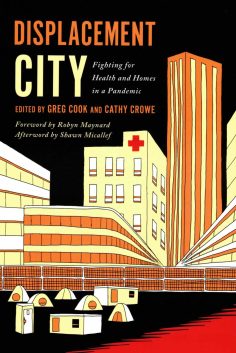
Review: A Failure
Covid is a tale of failure by federal executives and political aides. They did not mean to cause death and suffering; these people are not monsters. They were merely reckless and incompetent in the manner of Titanic officers who kept a dance band and well-stocked liquor cabinet but no binoculars in the crow’s nest. The Public Health Agency of Canada was fully funded at $675 million a year and found money for climate change conferences but literally could not run a mask warehouse. It was their job to keep you safe. They failed.
Displacement City is a story of failure. The City of Toronto last year budgeted $663 million for homeless and housing programs yet authors count 10,000 homeless people. The City has 75 years of experience in public housing and a six-figure CEO at the Toronto Community Housing Corporation, yet was reduced to arguing whether to install communal toilets at tent cities in municipal parks.
“In Toronto people who are poor have been living through crises for years,” write editors Greg Cooke and Cathy Crowe. “Prior to the pandemic over a hundred people were dying preventable deaths each year, many because of the overdose crisis. For years advocates had been demanding the City of Toronto declare a homelessness emergency and asking for additional resources. Now, all of a sudden, there was a health crisis.”
Displacement City is a passionate account of failure. It lists the names of homeless who died including many Jane and John Does. “Shelters were either full or unsafe,” authors quote one homeless person, adding: “Even before the pandemic the shelter system had high rates of violence, bed bugs and theft.”
Toronto’s response to failure, like the Public Health Agency’s, was to spend and spend and spend. No inquiry, no firings, nobody named names. Executives and political aides who could not wisely use $663 million to ensure homeless people did not freeze to death instead concluded the problem was not theirs.
At one point the City began leasing hotel rooms for use by the homeless. “Many of us were excited at the thought of our clients living in these hotels where they would have their own rooms with doors that locked, real beds, hot showers and functioning TVs they could watch freely, the very basics of a safe and dignified space,” writes one contributor. “However this excitement soon turned to frustration. The shelter hotels were run like regular shelters with bed checks and unnecessary rules such as not allowing couples to room together.”
This is what failure looks like. It is expensive and bureaucratic and pleases no one, neither “clients” nor ratepayers who discover they are financing free cable TV.
Identifying who is responsible for failure is hard. These people cover their tracks. Very often it takes Access To Information records and cross-examination under oath to find the truth.
Yet the consequences of recklessness and incompetence are plain as day. The system was fully funded. The municipality had paid experts and powerful friends. Liberals hold 25 of 25 Toronto seats. Six are in cabinet including the minister of housing. Still people died.
This is failure on a Titanic scale. Contributors to Displacement City are understandably angry. Some blame capitalism. One contributor complains the Mayor should have expropriated buildings to find apartments for the homeless. Another writes: “The City might have made life safer for encampment residents by allowing them access to basic amenities in the form of public washrooms, running water, clean electricity and fire safety.”
This is not a failure of humanity. It is a failure of management. It is the tale of Covid. There will be many, many more accounts to come.
By Holly Doan
Displacement City: Fighting for Health and Homes in a Pandemic, edited by Greg Cook and Cathy Crowe; University of Toronto Press: 320 pages; ISBN 9781-4875-46496; $29.95



