
The Freedom Convoy was no threat to national security, says the Canadian Security Intelligence Service. The director of the federal spy agency opposed use of the Emergencies Act, the Public Order Emergency Commission was told yesterday: “They knew about all of this, correct?”
Monthly Archives: November 2022
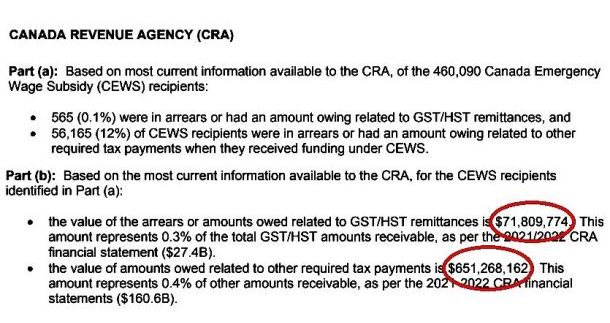
Subsidized Firms Owe $723M
The Canada Revenue Agency paid pandemic subsidies to 56,000 companies that owed the Agency more than $700 million in unpaid tax, cabinet disclosed yesterday. Figures suggest the Agency grossly underestimated the number of insolvent firms that received the Canada Emergency Wage Subsidy: “I think we are doing a very good job.”
Electric Car Plan To Cost $20B
Installing enough fast charging stations to meet cabinet’s electric car mandate will cost about $20 billion, says the Department of Natural Resources. Cabinet since 2016 has already spent $3.3 billion on rebates and subsidies to promote electric cars, by official estimate: “Our overall estimate for public charging infrastructure needs across Canada would represent a total investment of approximately $20 billion.”
MPs Demand China Records
The House affairs committee yesterday voted unanimously to compel documents regarding alleged Chinese Communist interference in federal campaigns. The committee earlier heard foreign agents sought to unseat Conservative MPs: “Canadians deserve answers.”
Feds Surveyed On Postal Cuts
The Department of Public Works has polled Canadian businesses on service cuts, records show. Business operators are the heaviest users of the post office: “To what extent would you support or oppose an end to door to door home delivery and replacing it with community mailboxes?”
Convoy Was “Mental” Threat
The Freedom Convoy threatened “mental health” but was not literally violent, Ontario’s deputy solicitor general told the Public Order Emergency Commission. The testimony followed evidence from the Ottawa Police Service that the protest “felt” violent: “No murders, shootings, robberies, stabbings, aggravated assaults, nothing of that sort.”
Bought Tow Trucks On Kijiji
The Government of Alberta in 48 hours bought $826,000 worth of towing equipment at Kijiji and the Truck Trader to clear a border blockade, records show. Public Safety Minister Marco Mendicino had claimed “no tow trucks were available” at the time, forcing the federal cabinet to invoke the Emergencies Act: “These were found by conducting online searches of websites like Kijiji and Truck Trader.”
Debt Charges Balloon To $53B
Federal debt charges will top $53 billion by 2024, says the Parliamentary Budget Office. Costs of interest payments on the federal debt will nearly double federal spending on children’s benefits: “That is something that will have a major impact on public finances.”
Hockey Passport’s Unpopular
Minor hockey players and parents oppose a federal “concussion passport” as an invasion of privacy, says internal research by the Department of Canadian Heritage. “The possibility that individuals’ highly confidential medical information could be shared potentially outside the health care system was a fundamental concern,” wrote researchers: “Divulging information about their health should be their decision and theirs alone.”
‘Should Tips Be GST Taxed?’
Tips are GST taxable but only if mandatory, says Tax Court. The rare ruling on sales tax treatment of gratuities came in the case of a caterer that charged all customers 15 percent regardless of whether they enjoyed themselves: “To discourage behaviour one taxes that behaviour.”
Lost Ottawa: A Fish Museum
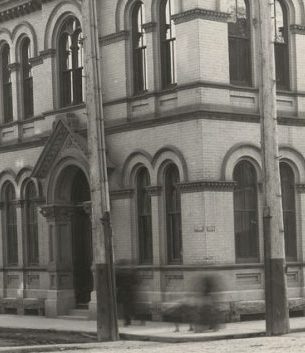
Of the capital’s lost landmarks none is more curious than an old federal museum that exhibited oil paintings, whale bones and lobster. It was the Dominion Fisheries Museum, opened at the corner of Queen and O’Connor streets in 1884.
The original curator was an eccentric Scot, Andrew Halkett. He made the museum one of the first of its kind in Canada, a must-see for visitors just two blocks from Parliament Hill.
It was a beautiful Second Empire structure with rows of double-hooded windows and a mansard roof. Two floors displayed a fish hatchery, a full whale skeleton, a rare 8-foot green sturgeon and other ichthyology exhibits. The top floor from 1888 to 1911 was home to the National Gallery of Canada, the first federal collection of paintings and sculpture.
Halkett, the curator, was the main attraction. He joined the Department of Fisheries in 1879 as a resident naturalist and served 52 years. Halkett devoted his life to the study of fish and lobster, oysters and scallops.
“He was ever on the lookout for means of conserving our sea food and he lectured frequently to fishermen explaining to them better methods of making a livelihood,” a newspaperman wrote.
His books are rare and valuable: Sea Life In The Pribilof Islands, a study of creatures off the coast of Alaska, and The Moulting Of The Lobster. One 1913 title, the encyclopedic Check List Of The Fishes Of The Dominion Of Canada And Newfoundland, remains in print.
Halkett was “slightly built, studious and particular of speech,” wrote a contemporary, but had “vim and verve not in keeping with his studious appearance.” He joined the first Canadian scientific expedition to the High Arctic, the 1903 Neptune expedition, and nearly perished in a blizzard while studying habits of the fur seal in the Bering Sea.
At home, Halkett was a Greek scholar and lifelong member of the Bible Society and boasted his fisheries museum was so popular it opened on the Lord’s Day, 2 to 5 pm. Yet in a flash Halkett and the museum were gone.
In 1917 the exhibits were closed and the building demolished to make way for a federal office complex, the Hunter Building. It in turn was sold by the government in 1982 and bulldozed to make way for an insurance tower.
And Halkett? He moved to Nova Scotia to spend the twilight of his career studying lobsters, and retired in 1929 at age 75. The old naturalist died in 1937. The Department of Fisheries sent a wreath.
By Andrew Elliott

Review: Heroes
On Sunday, June 22, 1953 a liquor store clerk named Bill Beatty died from an accidental fall at his Toronto duplex. Beatty was a plain man who died an ordinary death, yet a Globe & Mail editor pushed his obituary up to page four: “As a result of injuries suffered a week ago in a fall from an upper duplex porch at his home, William James Beatty, 54, of 56 Macdonnell Ave., died yesterday afternoon in St. Joseph’s Hospital. Mr. Beatty, it is believed, suffered a dizzy spell from the heat and lost his balance. He never regained consciousness. A veteran of the First World War, he served overseas with the 75th Regiment.”
He was with the 75th. In a city that celebrated Old School Ties and the exclusivity of private clubs, the combat veterans of the Toronto Scottish Regiment were a privileged class of workers’ aristocracy honoured long after the war’s end.
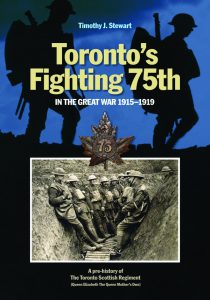
Author Timothy J. Stewart chronicles their story in Toronto’s Fighting 75th In The Great War, an affectionate account of the city regiment that survived the worst battles of the Western front. Survivors were farmers and stock-jobbers, storekeepers and postal workers. One served a term in the legislature; another was art director at Eaton’s.
Toronto, then and now, was a city of neighbourhoods and tight-knit families. The regiment’s list of dead included ten Browns, five Clarks, four Stewarts and three MacDonalds.
“During the 75ths’ three years overseas, more than 4,000 men had worn its Maple Leaf and Unicorn cap badge; more than 917 had died in battle or afterwards of wounds, or were missing and unknown but to God,” writes Stewart, an educator and curator of the Toronto Scottish museum. “An additional 2,300 had been wounded in body or mind. These were staggering numbers.”
The Fighting 75th is a rich tribute, beautifully illustrated, with vignettes culled from thousands of hours of research. Veterans called the regiment the “six bits.” Their march was “Colonel Bogey,” immortalized later as the theme of Bridge On The River Kwai. They sailed to war on April Fool’s Day to endure “appalling conditions” at the Somme, Vimy and Passchendaele, writes Stewart.
The 75th’s first commanding officer was Samuel Beckett, an architect killed in action at Vimy Ridge as he shouted his last words: “There is no withdrawal; come on again!” Their third commander was Colin Harbottle, an ex-bicycle racer who’d served time in Kingston penitentiary for embezzlement. Harbottle was a zealous reformer in wartime; he fined an infantryman 44 days’ pay for stealing a bottle of cognac. When he died of a heart attack while hunting partridge at Muskoka in 1933 old soldiers lined the streets of Toronto, heads bowed.
Historian Stewart documents their stories with genuine warmth and a police reporter’s eye for detail. The Fighting 75th had one Victoria Cross winner, and seven men court-martialed for self-inflicted wounds. One private, Laurence Ramsay, 21, was killed in action in 1918. A friend found an undated letter in Ramsay’s helmet: “Dear Mother,” it read, “Should I fall in action, I wish to leave you this last farewell…I am as good a boy when I write this as that far off day when I left my beloved home.”
Beautiful.
By Holly Doan
Toronto’s Fighting 75th in the Great War 1915-1919: A Prehistory of The Toronto Scottish Regiment, by Timothy J. Stewart; Wilfrid University Library Press; ISBN 9781-77112-1828; $59.99
Pause For Remembrance Day
Blacklock’s Reporter today pauses for Remembrance Day observances with gratitude to all who honoured our country. Thank you for your service — The Editor.

Skimpy OT But Food Was A-1
A truckers’ blockade in Windsor, Ont. was so relaxed local police complained they couldn’t earn enough overtime, records show. However “the food provided was top notch,” said a police department report submitted to the Freedom Convoy inquiry. Cabinet had pointed to the Windsor blockade as a contributing factor in its use of the Emergencies Act: “The food provided was top notch and officers were extremely grateful.”
Canada Day Costs Rise 86%
Costs of Canada Day festivities on Parliament Hill have nearly doubled since the Department of Canadian Heritage assumed responsibility for all expenses, records show. Accounts indicate cost of the one-day observance is up to $6 million: “The information is based on actual costs.”



