The Senate is hiring a climate change consultant to help lower its emissions. Senators log 5,000,000 kilometres a year in air travel, by official estimate: “Our house is on fire and something urgently needs to be done.”
Monthly Archives: November 2022
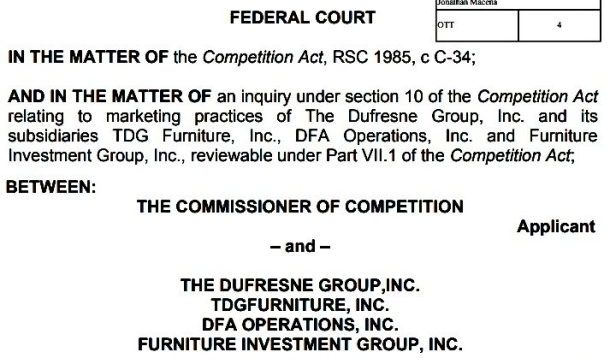
Furniture Trade Investigated
The Competition Bureau since 2019 has been investigating sales practices by one of the country’s biggest furniture dealers, Federal Court records disclose. Allegations target The Dufresne Group Inc. of Winnipeg: “The Commissioner has reason to believe the respondents engaged in deceptive marketing practices.”
Pension Reforms Clear Panel
The Commons finance committee has cleared a private Conservative bill to save company pensions in cases of bankruptcy. MPs have tried and failed to pass similar amendments to bankruptcy law since 1975: “We know the history of all the companies – Eaton’s, Sears, Nortel.”
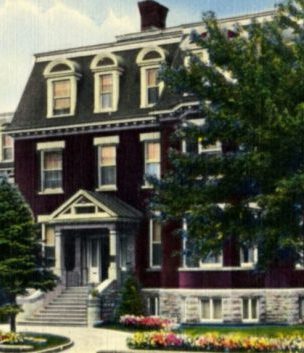
Lost Ottawa: Russian Spy HQ
Atop a hill overlooking the Rideau River on Ottawa’s Charlotte Street stood a mansion that had its share of drama. It saw a sensational spy scandal and a suspicious fire.
Custom-built for a lumber baron’s son, John Frederick Booth, the home was cast in the ornate Queen Anne Revival style in 1917. The architect was John W.H. Watts, a former Public Works designer who turned to building expensive homes for Ottawa’s elite.
The house was a baronial retreat for one of the city’s wealthiest families. Here Booth married off his only daughter to a Danish prince in 1924. It was after Booth’s death that the house at 285 Charlotte Street achieved international notoriety.
In 1942 the Government of Canada purchased it from Booth’s heirs and sold it the USSR as an embassy. Prime Minister Mackenzie King would call it “a place of intrigue.” From the day the Russians opened the mission, the house on Charlotte Street “was almost immediately used as a source for espionage,” wrote one historian.
Here on September 5, 1945 cipher clerk Igor Gouzenko fled with enough secret cables to send eight Canadian spies to prison including MP Fred Rose. Gouzenko was sentenced to death in absentia by the Soviet Supreme Court. He spent the rest of his years hiding in southern Ontario under the pseudonym “Mister Sabotka.”
On New Year’s Day 1956 the Charlotte Street mansion burned to the ground. The cause was undetermined. Fire crews agreed the building might have been saved if only embassy staff had not blocked their entry. Instead, the Russians let the flames spread as they hurriedly carted boxes of secret documents to awaiting cars.
The Soviets, it turned out, had much to hide. KGB defector Vasili Mitrokhin recounted in his 1999 memoirs The Mitrokhin Archive: “Between 1951 and 1953 the Ottawa legal residency, spurred on by Moscow’s criticism of its inertia since the defection of Gouzenko, recruited eleven agents.”
They stole the plans for the Avro Arrow and recruited Laval economist Hugh Hambleton as a Soviet agent, Mitrokhin wrote. They planted an agent in the RCMP and secretly financed the Canadian Communist Party with funds code named “U.S. wheat.” In a spy operation nicknamed Operation Cedar, the Soviets scouted areas to sabotage oil and gas pipeline installations from British Columbia to Quebec, and arranged an agents’ rendezvous at Lake of the Woods on the Minnesota border.
Only years afterward, with KGB defections and the collapse of the U.S.S.R., was the extent of Soviet skullduggery on Charlotte Street finally revealed. And today? The address at No. 285 remains the Embassy of Russia, rebuilt in 1957 as a grey Stalinist bunker.
By Andrew Elliott

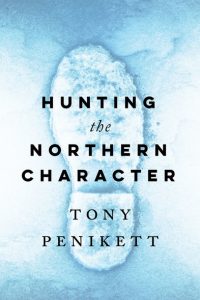
Book Review: An Eleventh Province
The idea of provincehood for the Territories is like a magnitude 8 earthquake in the St. Lawrence River Valley. It’s inevitable and slightly terrifying for the unprepared. Mere thought of a fifth Western province at the table upsets every place setting contrived since 1867. Author Tony Penikett recalls when the Northwest Territories was pressured to comply with the Official Languages Act, the legislature sanctioned French, English – and nine aboriginal languages.
“Nowadays nobody believes that provincial status is on the horizon for Yukon, the Northwest Territories or Nunavut,” writes Penikett, former two-term Yukon premier. “For the foreseeable future, devolution of legislative jurisdiction over lands and resources may be all the northern territories can hope to get.”
Hunting The Northern Character is an eloquent appeal to end condescending treatment of the one uniquely Canada region best known to the outside world. The Arctic is famous and famously patronized. More people today live in the Northwest Territories (44,500), Yukon (38,500) and Nunavut (38,000) than lived in Manitoba when it joined Confederation in 1870 (37,000). Yet vast regions remain under federal control and Northerners in some communities must still write Ottawa for permission to build a school gym.
“When southern Canadians spare a thought for land claims or northern treaties, they tend to think of the concrete aspect of the agreements: actual land,” writes Penikett. “They pay less attention to the more abstract concept of jurisdiction. In British policy, as set out in the Royal Proclamation of 1763, land and jurisdiction go together. To hold vast lands, one must have power to make rules about their use; otherwise, what would be the point? As it happens, intellectuals in Europe, the United States and Canada have argued for centuries about whether Indigenous people have the capacity to govern and administer their own lands.”
Canadians think of the Arctic as an uninhabitable fringe of the federation. Turn the picture and it becomes the centre, explains Penikett. “Hapless media shaping means that harried policy makers may frame issues to fit outdated images of the Arctic and its peoples,” says Hunting The Northern Character. “Spare the Arctic any political leader who models him or herself on historical figures such as Sam Steele, Bishop Stringer or even Sir John Franklin, much less the fictional characters from Jack London’s White Fang or John Wayne in North To Alaska.”
“Such mystic Arctic headspaces are ungovernable,” writes Penikett. “The true North has outlived and outgrown them.”
Penikett faults federal employees who control our Arctic empire from the “air-conditioned comfort of their cubicles” in Ottawa 100 kilometres from the U.S. border, and perpetuate a “deliberately constructed self-image” of the North. The author recounts attending a wake in a Dene village, so poor it had no running water, where mourners ate moose stew and platters of salmon and bannock.
“Crow Clan servers go round the room offering the elders on the wall benches low-bush cranberry jam with their bannock,” he writes. “This feast is a celebration of one life, but also of a life lived together and of the foods gathered from tribal lands and waters around the village.”
“The situation confirms something I’ve noticed before: the poorer the community, the richer the traditional culture,” writes Penikett. “Is that some kind of law, I wonder? Does southern-model prosperity inevitable lead to northern cultural poverty?”
Hunting The Northern Character is a warm depiction of a society that endured hardship and someday will gain home rule. Wait for it. It will be upsetting and tremendous.
By Holly Doan
Hunting the Northern Character, by Tony Penikett; UBC Press; 348 pages; ISBN 9780-7748-80008; $34.95
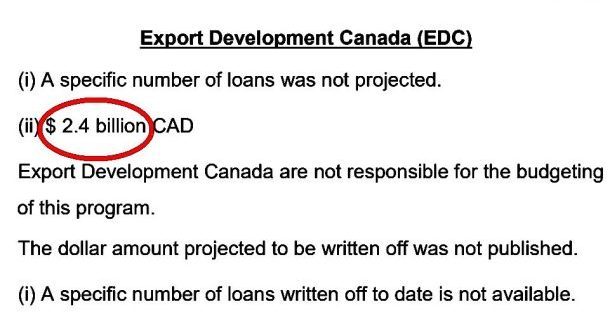
Losing $2.4B On Covid Loans
Taxpayers stand to lose $2.4 billion under a pandemic loan relief program, records show. The multi-billion loss was projected though cabinet extended a payment holiday for business borrowers to December 31, 2023: “We’ve had your back from day one.”
Count Tire Irons As Weapons
The Ottawa Police Service last night said its claim the Freedom Convoy had weapons referred not to firearms but tire irons and work tools. Patricia Ferguson, acting deputy chief of police, acknowledged officers did not find any guns in convoy vehicles: “We don’t know if there really were guns.”
Raised $25M In Thirty Days
The Freedom Convoy was among the most successful private fundraisers in Canadian history raising nearly $25 million in a month, data show. Figures yesterday released by a judicial inquiry confirmed most contributions, 59 percent, were Canadian: “I believe they just wanted to support the cause.”
Claim China Meddled In Vote
Chinese Communists ran a propaganda campaign to steer votes from Conservative candidates in the last election, the House affairs committee was told yesterday. It was difficult to gauge the impact, witnesses testified: “It’s incredibly hard to measure the impact of these sorts of operations on election outcomes.”
Confirm Christmas Recession
A Christmas recession is likely, the Department of Finance yesterday confirmed in a Fall Economic Statement. “Times feel tough,” said Finance Minister Chrystia Freeland: “We cannot support every single Canadian in the way we did.”
OK ArriveCan Audit 173-149
The Commons yesterday by a vote of 173 to 149 ordered a detailed audit of the ArriveCan app. The $54 million program intended to check cross-border travelers’ vaccine status was suspiciously expensive, MPs were told: “There is obviously something fishy going on.”
Note From Our Shareholders
Blacklock’s shareholders yesterday issued the following statement regarding threats of punitive sanctions by subsidized competitors on the Parliamentary Press Gallery executive: “We will fight these people. We are retaining counsel. We will vigorously enforce our lawful rights and the Gallery’s obligations under the Canada Corporations Act. We will seek costs and damages. We will hold directors personally liable for their misconduct. We will compel disclosure of confidential Gallery correspondence and cross-examine executive members under oath. We will name names.”
Bought Genocide-Made Pins
The Department of Canadian Heritage bought maple leaf flag pins from China even as the Commons voted to condemn the People’s Republic for crimes against humanity, records show. Federal contracts for patriotic paraphernalia were worth hundreds of thousands: “This is our national symbol. This is our country.”
Spent $1.3M On Dubai Junket
A junket to Dubai by Governor General Mary Simon and 45 invitees cost taxpayers $1.3 million, according to accounts disclosed yesterday by the Commons government operations committee. Federal agencies have yet to surrender actual menus from the trip that were equivalent to $218 per plate for breakfast, lunch and supper: “Oh my God, this is an astronomically high price.”
Spaghetti Up 26%: StatsCan
The price of spaghetti is up 26 percent nationwide on average, Statistics Canada reported yesterday. New grocery inflation figures came ahead of a Fall Economic Statement that will provide some inflation relief, said Prime Minister Justin Trudeau: “Yes there continue to be pressures.”