The Canada Border Services Agency is targeting a 219 percent increase in deportations this year. Past rates were not good enough, said an Agency memo: “Removals are prioritized based on a risk.”
Monthly Archives: January 2023
Bill Will Target Hunters: Feds
New federal gun controls “may reduce the number of firearms some hunters use,” admits a federal briefing note to Public Safety Minister Marco Mendicino. Hunters will have to find alternatives, it said: “People feel hoodwinked.”
OK Covid Amnesty For 8,500
More than 8,000 undocumented foreign health care workers and their families were permitted to remain in Canada under a temporary amnesty program, according to Department of Immigration figures. The “guardian angels” program was a pandemic necessity, officials said: “We need to bring more people into our workforce.”
$10.6M For Jailhouse Healers
The federal prison service is budgeting almost $11 million a year on spiritual healing for Indigenous inmates. Contractors are paid for “telling of stories,” “sacred ceremonies” and “sharing of traditional teachings,” said an internal audit: “One strives to be in harmony with all living things on Mother Earth.”

Private Censor Paid $126,840
The National Gallery of Canada paid a private consultant over $126,000 to censor documents under the Access To Information Act. Other federal departments and agencies have hired private censors at fees that ran into the millions: “We’re not able to keep pace.”
Another Firing For Nepotism
A senior Department of Public Works manager has been dismissed for nepotism and misuse of public facilities. Authorities would not name the manager but called the misconduct a “serious breach” of its ethics code: “Allegations of wrongdoing were founded.”
A Poem: “Bread In A Vice”
My childhood friend
used to put bread
in a vice,
squeezing out the empty spaces,
showing us the paper-thin slice
that was left.
He claimed
the food industry was cheating
by selling us
air.
Suppose there was a way
to put campaign promises
in a vice.
By Shai Ben-Shalom

Review: That Was A Wow Question
It is an Ottawa ritual now that every cabinet minister must open public remarks with the phrase, “I acknowledge I am speaking to you today from the unceded territory of the Algonquin people.”
There is no context. The Minister of Small Engine Repair could be testifying on budget appropriations, but only after paying homage to the Algonquin.
What do those words even mean? Does Parliament Hill really belong to the Algonquin? If so, shouldn’t they just pay them for it?
If a cabinet minister “acknowledges” this is stolen land, does that carry any legal weight? Or is it a manipulative and self-serving deflection of anticipated criticism, like saying: “Some of my best friends are Jewish”?
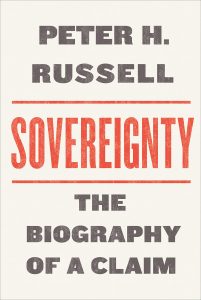
Professor Peter Russell, acclaimed political scientist with the University of Toronto for more than a half-century, examines a similar question in Sovereignty: The Biography Of A Claim. Russell devotes a whole book to the meaning of the word “sovereignty.” It works. It is wry, fast-moving and instructive.
Russell recalls a 1974 meeting with the Dene Nation in Yellowknife. They opposed a federal pipeline and needed good advice. “What is sovereignty?” they asked. “How did the Queen get it over us?”
Sovereignty is an emptier word than people think – it is not mentioned in the Constitution, writes Russell – and the second question? “When I returned to Toronto I scurried over to the law school to ask my colleagues learned in the law for their answer to the second question. Wow, they said, that sure is a big question but we really don’t have a clue how the Queen established sovereignty over the Dene or any other Indigenous nation.”
“Like so many people the Dene were thinking of sovereignty as a thing that was just there and that they just had to live with,” writes Russell. “But sovereignty is not a fixed part of nature. It is a claim made by humans. The effectiveness of the claim depends on how well it is supported by coercive force.”
In the case of First Nations it was obtained by plain trickery, writes Russell. “And that is a polite way of answering the question,” he says. “Fraud is closer to what actually occurred.” Cabinet’s 19th century treaties with First Nations had “killer language.”
“In return for some upfront money and small annual payments of a few dollars to every man, woman and child, flags, medals, suits for the chiefs, sometimes fishnets and farming equipment plus some small parcels of their former homeland to be assigned to them by the queen or king as ‘reserves,’ the Native owners are purported to ‘cede, release, surrender and yield up’ all rights and privileges to all of their territory,” writes Russell.
The English in the age of empire absorbed the Algonquin just as they absorbed the Welsh, Irish and Scottish. “I discovered that sovereignty wasn’t a thing or a law but a claim,” writes Russell. “That discovery makes a world of difference because a claim can be resisted, a claim is only as good as its acceptance by others. In that sense it is a relational term.”
This last point is key. Sovereignty has no meaning unless it is backed by force and ethical judgment, and recognized by others as legitimate, writes Russell. “The claim to be effective must be recognized,” he says.
Sovereignty casts a bright light on platitudes that dominate official discourse on First Nations. The result is absorbing.
By Holly Doan
Sovereignty: The Biography of a Claim, by Peter H. Russell; University of Toronto Press; 192 pages; ISBN 9781-4875-09095; $19.47
Pledges Pharmacare Or Bust
Cabinet must live to the letter of an agreement promising passage of a pharmacare bill by year’s end or renege on a vote deal, New Democrat leader Jagmeet Singh said yesterday. His remarks follow a Department of Health memo that said “working” on a prescription drug bill, not passing it, was sufficient: “They would be breaking the deal.”
CBC Breaches Its Ethics Code
A CBC story faulting the Catholic Church was “an error in judgment” that violated the broadcaster’s own ethics code, a network ombudsman said yesterday. The ruling came three days after CEO Catherine Tait hailed the CBC as the “gold standard” on ethics: ‘Editors did not have an explanation for the failure.’
Convoy Pastor v. Prosecutors
Crown prosecutors have dropped charges against a Freedom Convoy pastor ticketed for breach of lockdown orders. Pastor Henry Hildebrandt of the Church of God of Aylmer, Ont. challenged quarantine rules that forced churches to close but permitted liquor and marijuana stores to remain open: “What are we afraid of?”
See E-Commerce Crackdown
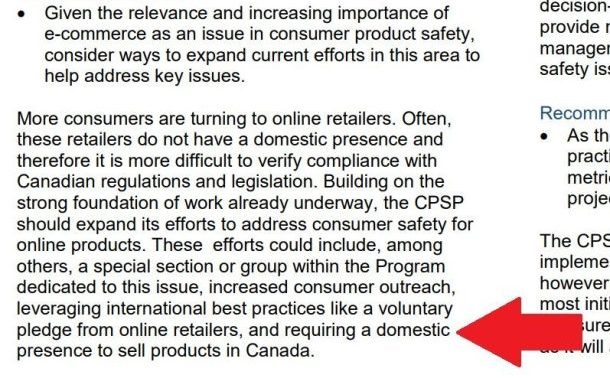
The Department of Health in an internal report proposes a crackdown on internet vendors in the name of consumer safety. It suggested foreign e-commerce companies be required to have “a domestic presence to sell products in Canada.”
Feds Confirm Foreign Attack
A “cyber incident” that knocked the National Research Council offline last year was a foreign attack, the agency confirms. It would not elaborate: “The Council has thoroughly weighed the public interest for disclosure against the need to ensure security of its network.”
MPs Push Contracting Probe
The Commons government operations committee yesterday agreed unanimously to summon seven cabinet members to explain ballooning costs of federal consultants. The investigation targets McKinsey & Company, a global consulting firm whose ex-managing director was a Liberal appointee as Canadian ambassador to China: “Who is pulling the strings?”
Asked To Rewrite Old Tweets
Language Commissioner Raymond Théberge asked federally-regulated employers to “back tweet” French translations of old messages on their social media accounts so Twitter feeds would be officially bilingual, according to a report to senators. One employers’ group called it “impossible.”