
Citizens cannot be charged under vague laws on the say-so of police, a New Brunswick judge has ruled. The decision came in the case of an RCMP campaign against motorcyclists: “Every citizen should know what is expected of them.”
Monthly Archives: August 2024
Blacklists Whites & Catholics
Federally-subsidized activists claim a Catholic group is a “hate movement” and that most haters are white people. The Canadian Anti-Hate Network published its blacklist after receiving $640,000 from Heritage Minister Pascale St-Onge’s department and others for “research.”
Two Jewish Charities Vetoed
The Canada Revenue Agency on Saturday stripped tax status from two Jewish charities including one whose fundraising Negev Dinners hosted prime ministers since John Diefenbaker. Litigation is pending: ‘They failed to meet parts of the Income Tax Act.’
Want Chretien-Style Cutbacks
Cabinet must cut spending 15 percent, says a Canadian Chamber of Commerce submission to the Commons finance committee. The figure represents the steepest cuts since then-Prime Minister Jean Chretien’s 1995 austerity program that eliminated 45,000 federal jobs: “Canadians are right to be concerned.”
Teaching “Needs And Wants”
A federal agency is expanding a program to educate high schoolers on credit, debt and “the difference between needs and wants.” The Financial Consumer Agency of Canada has faulted parents for failing to teach children about basic budgeting: “Parents are the first place where children should be learning something.”
NDPers Breach Labour Law
The Ontario New Democratic Party Caucus breached the Labour Relations Act, says an arbitrator. The Caucus was censured for firing a employee who complained of workplace groping and lewd misconduct by her boss, a member of the legislature: “The Caucus issued a termination letter.”
Sunday Poem: “The Forest”
Poet W.N. Branson writes: “Psychology of place, The weight presses down. Plans are laid, The best laid plans. Cartier and Donnaconna, Did they know?…”
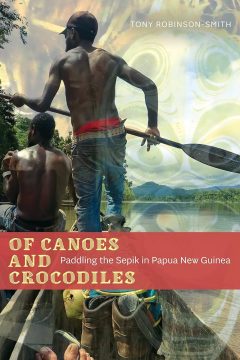
Book Review: Holiday Road
Papua New Guinea is best known as the malarial graveyard of 8,000 Australians in World War Two and the jungle spot where oil heir Michael Rockefeller vanished on a 1961 canoe trip. He is believed to have been eaten by tribespeople. Here is where Tony Robinson-Smith and his wife Nadya, of Sault Ste. Marie, Ont., decided to take their holiday.
The point of travel is to see, smell and taste a different world. Of Canoes And Crocodiles achieves this with humour and meticulous note-taking. The couple set out to cover the 1,126-kilometre Sepik River by dugout canoe. “It will be dangerous,” warns one villager. “You should not go alone,” says another.
They carry no firearms but 20 cans of tuna, instant coffee and mosquito netting. The result: Of Canoes And Crocodiles is the best of travel writing, rich and vivid. “It is an overcast, windless day and the air seems soupy and stale,” writes Robinson-Smith. Any reader could smell it.
Papua New Guinea is partially recognizable to any Canadian who ever backpacked through the Third World. It is a very remote 21st century village that remains untouched by Adidas T-shirts, tailor-made cigarettes or Christianity.
The Third World is also small and dark, literally. There are no good roads or municipal lighting. “Parrots, their bright colours now dull in the fading light, bullet by low overhead in bands of three of our, screeching uproariously,” writes Robinson-Smith. “I scan the banks nervously for crocodiles.”
Villagers hunt crocodiles with spears and jacklighting. “The light makes crocodiles come to the canoe,” a hunter tells the travelers. “That sounds dangerous,” says Nadya. “Yes,” the hunter replies.
Our correspondents paddle the Sepik. It is no Rhine cruise. “The day’s paddle ends when we run up on a mud bar in front of two huts leaning out over the water. Both are in miserable condition, slats missing from the walls, stilt legs at odd angles, palm leaf roofs patchy and sagging.”
Food is fresh and quickly monotonous. “Slurping coconuts on our seventh day in paradise, we discuss options,” writes Robinson-Smith. Of Canoes And Crocodiles is warm and human. “What do you do for fun?” the author asks one Papuan. “Fish and carve masks,” the villager replies.
Papuans have cash crops, vanilla pods and crocodile skins. Chickens are free range but not kept for eggs or meat. “Chicken eat insect,” a villager explains. “Then insect do not eat our food.”
The jungle menu is coconut, coconut, coconut, wild pig and cuscus, smoked piranha, catfish and sugar cane for snacks. This is the reason there are so few Papuan restaurants in our cities. Breakfast is pancakes made of flour from the sago palm.
Processing sago flour by hand is hard work. Everyone works in the Third World. Even love is work. A bridal dowry is a fortune, the equivalent of $2,000, representing a substantial investment by aunts, uncles and cousins.
A husband explains that once married, men “make canoes, hunt animals, build houses, clear forest for gardens and cut down sago.” A wife explains women “fish, cook meals, look after children, go to market, look after house.” There is some dispute as to who does the most labour, but a 32-hour work week is unthinkable.
“I will return to Canada with images of a tribal life that is robust and enduring,” writes Robinson-Smith. “The men and women we met on the Sepik were lean, fit, cheerful, practical, self-reliant and fiercely proud.”
By Holly Doan
Of Canoes And Crocodiles: Paddling The Sepik In Papua New Guinea, by Tony Robinson-Smith; University of Alberta Press; 240 pages; ISBN 9781-77212-7348; $26.99

Seek “Randy” Texts & Emails
Employment Minister Randy Boissonnault faces new demands for records after his business partner admitted lying to reporters. The Commissioner of Ethics yesterday disclosed he asked Boissonnault for emails and texts: “I am concerned about this.”
Rights Commissioner Is Out
Cabinet yesterday refused to release findings of its investigation into a former Muslim Students’ Association activist appointed Canada’s Chief Human Rights Commissioner. Birju Dattani’s appointment was suspended only minutes before it was to take effect following protests from B’nai Brith and others: “Dattani has a history of anti-Semitic commentary.”
Want More Curbs On Alcohol
Health Minister Mark Holland’s department has quietly researched “suggestions for regulatory measures” on alcohol like restricting glamourous depictions of drinking in the movies, says a federal report. It follows a proposal to mandate cancer warnings on liquor, beer and wine: ‘Suggestions included restricting the depiction of alcohol consumption in movies.’
RCMP Admit Credibility Gap
The RCMP must “enhance public trust” by showing more candour in explaining policing methods, says an internal audit. The Mounties in 2022 were censured by a Commons committee for lack of accountability in using facial recognition technology and spyware: “There has been limited transparency.”
Oppose ‘Pretendian’ Vendors
Contractors pretending to be Indigenous to land federal work are “of great concern,” Ethics Commissioner Konrad von Finckenstein yesterday told the Commons public accounts committee. An audit of Indigenous claimants has yet to be disclosed: “It is something that needs to be addressed and dealt with.”
Wasn’t Me, Says Star Witness
A federal manager named a key figure in the $59.5 million ArriveCan scandal yesterday denied any involvement in sweetheart contracting. “I was just a low level employee,” testified Diane Daly, a $108,000-a year senior administrator with the Department of Public Works: “I did not have the expertise to know what an IT-anything was.”
Gov’t Shelves Click-Box Oath
Immigration Minister Marc Miller’s department has shelved a proposal for click-box citizenship following a public outcry. The department in a briefing note said it accepted Canadians attached profound meaning to publicly swearing allegiance to Canada in person, a legal requirement for new citizens since 1947: “I do not agree with this interpretation where the oath of citizenship is only a formality.”



