
Cabinet under a private bill introduced yesterday would gain new powers to blacklist criminal gangs similar to terrorists. Current law enforcement is ineffective, said the sponsor of the bill: “Will the government support us?”
Monthly Archives: November 2024
Says Feds Omitted Fine Print
Cabinet’s pre-election proposal to issue $250 cheques to millions of tax filers yesterday was cast in doubt. New Democrat leader Jagmeet Singh said he was not told of key details of the program before he expressed support: “It is a slap in the face.”
Anti-Jewish Riot “Disgusting”
Attorney General Arif Virani yesterday said he was disgusted by anti-Semitic rioting in Montréal. One advocacy group asked that Virani vigorously pursue hate crimes prosecutions of street demonstrators targeting Jews: “Enough with the Hitler salutes in our streets.”
CBC Confirms $497,000 Club
Payments to CBC vice presidents are a half million each, CEO Catherine Tait yesterday disclosed at the Commons heritage committee. One Liberal MP defended the pay, saying executives were motivated by “love of country.”
Counts On ‘Voluntary’ Leave
Foreigners who have no legal right to stay in Canada are expected to leave voluntarily, Immigration Minister Marc Miller said yesterday. The Commons immigration committee was told nearly five million temporary permits will expire over the next year: “That is what is expected.”

Count This As Nat’l Defence
Cabinet includes millions spent on the Canadian Coast Guard as part of its NATO commitment for national defence, figures confirm. Costs were among $6.5 billion in non-military spending included in Canada’s NATO arithmetic: “We are on a clear path.”
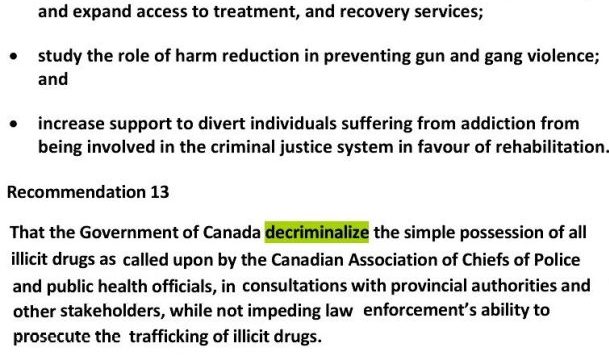
MPs Liked Decriminalization
MPs by a vote of 210 to 117 have endorsed a recommendation to decriminalize possession of heroin, cocaine and all other illegal drugs nationwide. The result came with little comment during a flurry of Commons votes on committee reports: “We have reached the end of the road.”

Heated Views OK Says Court
Heated debate “is what a free and democratic society does,” an Ontario judge has ruled in a ten-year legal dispute over political opinion. The key decision on free expression came in the case of 2014 commentaries by Jerry Agar of Radio CFRB Toronto: “Views may at times be expressed in colourful terms.”
Outcry Over Minister’s Insult
Immigration Minister Marc Miller was denounced after describing an Independent MP’s immigrant employees as lazy and useless. MPs expressed astonishment at the personal insult: “They are lazy. They don’t get anything done.”
Broadcasters Oppose Ad Ban
Television broadcasters rely on food advertising to offset part of the expense of their newsrooms, says the Canadian Association of Broadcasters. The trade group petitioned senators against a private Liberal bill to ban food ads targeting children: “When the ability to advertise with Canadian companies is constrained it directly impacts the ability for broadcasters to support essential democratic activities.”
Can’t Say That In Parliament
Cabinet is dismissing complaints of wasteful spending as this year’s deficit approaches $50 billion or more. Conservative MP Corey Tochor (Saskatoon-University) provoked a formal protest for rough language after telling the Commons that cabinet was “pissing away taxpayers’ money.”
Feds Counting The Homeless
A federal count on homeless people will be updated by Christmas, the first revision in two years, says the Department of Infrastructure. It follows a Budget Office report pointing to a steady increase in the number of homeless: “The next update is expected by late 2024.”
Sunday Poem: “The Centre”
Snug against the Laurentians,
Commerce and import flow out along the river.
Older ways brush against myths older still.
Governing secure and content,
Of their place.
In the centre.
Stretched along the lake,
Enterprise and industry comingle.
Convinced of their necessity,
To the rest of the Dominion.
And assured of their place
In the centre.
But west of Winnipeg,
Where the forest thins,
And the wind is sovereign,
The prairie reveals itself,
And a sign indicates plainly.
Here lies the Centre.
By W.N. Branson

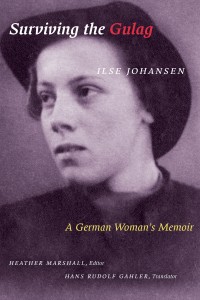
Review: Ilse’s War
The Second World War altered a quarter billion lives. The number of eyewitnesses dwindles. We are left with personal accounts of ordinary people who saw extraordinary things. Surviving The Gulag is one.
Ilse Johansen in postwar years worked as a school janitor and cruise ship stewardess in Vancouver. Friends recall she seemed friendly enough but could not bear to throw out even scraps of food. Johansen wrote her memoirs, translated here from the original German. Surviving the Gulag is like pulling a loose thread that slowly unravels a tightly-knit narrative leading to unexpected places.
Johansen at first glance is not a sympathetic character. She was a German nationalist with an office job in Romania and a Nazi membership pin. “She herself wore the uniform of the Nazi Party for her civilian duties as a secretary in Bucharest,” writes editor Heather Marshall of the University of Alberta.
Johansen’s memoirs initially are laced with tedious commentaries on German superiority. Romanians are hapless, Russians are alcoholic brutes, so-and-so is remembered only as a Jewess. It is jarring to a 21st century reader.
Yet Johansen was also a skilled diarist who matter-of-factly recounts stark anecdotes of her arrest and detention after Bucharest fell to the Soviets in 1944. She recalls one inmate weeping from hunger and others fighting over fish bones. “Johansen was a careful observer of everything that happened to her and of the people with whom she came into contact,” notes Surviving the Gulag.
“Very few people lived through five years in a Soviet prisoner of war camp and managed to bring back notes and memories with as much factual information. She makes little attempt to explain or analyze, which gives the memoir the feel of pure and immediate observation.”
Johansen survives her war by stealing potatoes at a prison farm. She recalls the Soviet propaganda slogans urging inmates to meet their production quota: Remember 125%. She remembers, too, the descent into madness.
“Child mortality is very high in the camp,” she writes. One bunk mate, 22, has a toddler she keeps alive only for the sake of rations: “I have never seen a mother like this,” writes Johansen. “It is pitiful to watch this. She doesn’t send the child to the kindergarten because then she will not receive the child’s ration. Instead she lets the child sit on the bed while she is at work. The little one is so quiet that one can leave her alone. On these occasions it happens of course that she wets the bed. The little one begins to shake when she sees the mother enter the door. The woman is merciless; she beats and throws the child back and forth until we cannot watch it any longer. The poor little mite finally dies.”
Johansen survives beatings, a failed escape attempt and starvation, all amid the spectacular beauty of Russia. “Sky-high pines look up from deep gorges,” she writes. “Huge boulders are covered with wild roses”; “I feel lighthearted,” says Johansen. “Could this country be so cruel and terrible when nature is so gorgeous?”
In time Johansen even gains insight into her tormentors. Where Soviets once seemed subhuman, she learns: “Prison is an everyday reality for Russians. One can be a very decent person but have a history of having done time for several years. They are not ashamed of talking about it: ‘My mother is sitting in jail; my husband has been convicted and was given three years in the penitentiary.’ Nobody is surprised about it. Many times the reason is an injudicious statement reported by someone. Sometimes it is homicide. They talk about it as if it were nothing special. Life here is hard and people are formed accordingly.”
Johansen was released in 1949 – “no one seems to know why,” writes Editor Marshall – and immigrated to Western Canada. Surviving the Gulag leaves much unsaid. What remains is absorbing, and very human.
By Holly Doan
Surviving the Gulag: A German Woman’s Memoir, by Ilse Johansen; University of Alberta Press; 296 pages; ISBN 9781-7721-20387; $34.95
Tax Perks Widen Budget Hole
Prime Minister Justin Trudeau yesterday outlined pre-election perks for taxpayers that open a budget hole worth $5 billion to $10 billion, figures show. The finance department declined comment on the impact on this year’s deficit that is already 17 percent over estimate: “That sounds like a trick.”