
The Canada Revenue Agency was stung by public ridicule after attempting humour in a Twitter post, Access To Information records show. Management used a cartoon character to encourage taxpayers to file a yearly return on a promise of federal benefits: ‘It was met with bewilderment.’
Monthly Archives: January 2025
“Knowledge-Based Policy”
The Liberals didn’t know
the deficit would be three times their
estimate.
Nor did they know
international agreements
would be in their way of legalizing
pot.
And how could they know
bringing in Syrian refugees
would be such a challenge
they couldn’t meet their own
deadline?
I remember trying it in Grade 4,
telling my teacher
– straight face, eye contact –
that I didn’t know the homework was for today.
That evening,
Mom needed to write a note,
explain,
apologise.
By Shai Ben-Shalom

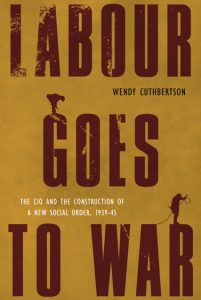
Review: “C-anada I-s O-rganizing!”
In Canadian remembrance of the Second World War one fact rarely rates a footnote: Victory was union-made. Wartime membership in trade unions more than doubled.
The U.S.-based Congress of Industrial Organizations first organized a Windsor, Ont. auto parts plant in 1935. It became the fastest-growing labour group in the country.
“A union leader must be an incurable optimist,” one organizer told the CIO’s inaugural national conference in Ottawa just weeks after war’s outbreak in 1939. Their slogan: “C-anada I-s O-rganizing!”
Author Wendy Cuthbertson recounts a story that is rich in anecdotes. An English-born organizer marveled that in Canada, union members drove automobiles and wore fur coats. “Unthinkable in a European union meeting,” she said. Another recalled the gratitude of Polish and Ukrainian immigrants organized in the slaughterhouse trade: “I’d hand them a leaflet and they’d take it and smile and go into the plant and wave out the window. They knew it was about the union, even if they didn’t know what it said.”
Labour Goes To War documents the role of trade unions in the greatest industrial mobilization in our history. Canada’s manufacturing grew two-and-a-half times. The industrial workforce increased to more than 900,000. Ontario was so short of factory hands it issued work permits to 6,800 children under 14.
Unions stood “wholeheartedly behind the empire,” as a Trades and Labour Congress president put it. One former UAW organizer recruited an entire platoon for the Essex Scottish regiment.
Yet Labour Goes To War is not a patriotic romp. Even WWII could not erase tension on the shop floor. When labour tried to organize the Massey-Harris company in Toronto, management tried to foil the campaign by granting workers a paid lunch, then fired 76 employees as troublemakers.
Other wartime managers countered union drives with kindness. Dominion Foundries of Hamilton, Ont. invested in employees’ banquets, brass bands, sports teams and a staff newspaper, all money that “could have gone into workers’ wages,” wrote a Steelworkers’ organizer.
Nor did Parliament appear sympathetic to labour’s cause. With the outbreak of war cabinet dusted off the 1907 Industrial Disputes Investigations Act that required unions to submit to federal conciliation before any strike. The resulting cooling-off period could last months or a full year, in the case of Algoma Steel.
For all that, CIO membership ballooned from 50,000 to 244,000 in war years, an “astounding rate of growth,” writes Cuthbertson. By 1944 the union-backed Co-operative Commonwealth Federation stood first in the national Gallup poll, won government in Saskatchewan and elected 34 members to the Ontario legislature.
It rates more than a footnote.
By Holly Doan
Labour Goes To War: The CIO and the Construction of a New Social Order 1939-45 by Wendy Cuthbertson, UBC Press; 240 pages; ISBN 9780-7748-23432; $32.95
Afghan Flight Remains Secret
The Department of Foreign Affairs is censoring records detailing Canada’s hurried flight from Kabul in 2021. Staff in one memo confirmed Taliban terrorists confiscated diplomatic offices but would not “disclose further details due to security considerations.”
Hiked Emissions 257K Times
A pre-election carbon tax break on home heating oil will increase the nation’s greenhouse gas emissions by more than a quarter million tonnes, new figures showed yesterday. The Prime Minister called it a break for Atlantic Canada where oil is a mainstay of home heating and Liberals held 24 seats: “We have heard clearly from Atlantic Canadians.”
Mortgage Fraud Is Up: Gov’t
Mortgage fraud and money laundering are growing worse in real estate despite new federal laws dating from 2020, cabinet said yesterday. The Department of Finance detailed new anti-fraud rules to take effect October 1, 2025 affecting realtors and title insurers: ‘Fraud is on the rise.’
‘Unwise’ To Rely On CBC-TV
It is unwise for CBC TV viewers to rely on the network “if you want to be fully informed,” says CBC Ombudsman Jack Nagler. The 34-year employee in his final report as Ombudsman faulted the CBC as “too timid” in failing to acknowledge differing points of view in its news coverage: “We aren’t hearing enough information that conflicts with our pre-existing views, and when we do, too often we reject it out of hand.”
Say Web Rule Is A Life Saver
The Department of Transport effective yesterday finalized regulations to aid millions of drivers unwittingly operating vehicles subject to safety recalls. New rules require that automakers post keyword-searchable recall notices on their websites and keep them posted for 15 years, enough time to cover the typical life span of passenger vehicles in Canada: ‘It would mean fewer severe injuries and fatalities.’
Crown Bank Called In Police
Numerous criminal investigations are underway into suspected fraud in a small business loan program, records show. Export Development Canada, a Crown bank assigned to run the pandemic relief plan, confirmed it identified several suspicious borrowers: “Referrals to the RCMP were made.”
Gov’t Details Web Of Conflict
A federal agency disbanded in 2024 created a web of conflicts with insiders who “made increasingly questionable decisions,” says a federal report. The Privy Council document concluded gross mismanagement at Sustainable Development Technology Canada cost taxpayers more than $150 million: “A continuous cycle of executive mismanagement led to serious conflict.”
Media Unfair, Say CBC Execs
CBC managers in internal staff emails complained other media were unfair in detailing the network’s lucrative executive bonus program. Media would “only ask us for comment” after publishing facts, wrote one executive. “Disappointing,” replied another: “Very disappointing.”
Can’t Aid Israeli Army: Audit
A Jewish aid group was stripped of charitable status for providing indirect aid to Israeli Defence Forces, Access To Information records show. Ne’eman Foundation Canada of Thornhill, Ont. argued it helped individual ex-military and that national service was an inseparable part of Israeli life: ‘Aiding Canada’s armed forces is charitable; supporting the armed forces of another country is not.’
Businesses v. Copper Thieves
Parliament must enact tougher laws to shield the nation’s telecom networks from copper thieves, say business groups. Boards of trade in three cities petitioned the Senate transport and communications committee to rewrite the Criminal Code: “Copper theft is a growing problem.”