
Postsecondary graduates typically find work they enjoy in their chosen field but at lower pay than they hoped, says a tracking study by the Department of Employment. Fewer than a third of graduates expressed regrets, said the report released yesterday: “What are student debt loads at graduation and three years later?”
Monthly Archives: August 2025
Warning On Green Fuel Regs
Cabinet’s own green fuel regulations may leave Canadians more reliant on American gas and diesel imports, says a briefing note by Environment Minister Julie Dabrusin’s department. Canadian makers of products like biodiesel were struggling to meet expected demand under a federal mandate, it said: “Canada’s low carbon fuel industry is struggling.”
VIP Kenney At $470 Lib Meet
Former Alberta premier Jason Kenney will join speakers at a Liberal-affiliated Ottawa think tank to discuss “national progress” at $470 a ticket, say organizers. Kenney’s host, Canada 2020, was formerly chaired by Mark Carney: “Be part of the conversation.”
Spending $114K On Feelings
The military is awarding a six-figure, sole-sourced contract for psychometric training to “provide insights into core emotional motivations and fears,” according to the Department of National Defence. Managers hired a British consultant who also sells workshops on self-esteem and romantic relationships: ‘It has its roots in a deeply spiritual journey.’
Pay Hike Partly Meets Pledge
A $2 billion retroactive pay hike for the Canadian Armed Forces covers about a fifth of the sum required to meet Prime Minister Mark Carney’s NATO pledge, figures show. “This is part of the strategic investment to meet NATO’s two percent defence spending target,” said Carney.
“Terrorist” Was Too Political
The CBC did not identify terrorists in news stories because the term reflected a “certain narrative” and was “highly politicized,” an executive wrote in a newly-disclosed letter. The editorial policy drew censure from MPs and led to thousands of complaints: “We must always choose our words carefully.”
A Poem: “Sistine Chapel”
Time for Michelangelo’s
performance review.
Focus on How.
Four years painting a ceiling.
Creativity a concern: themes copied from Bible.
Did not identify areas for personal development.
Did not proactively engage supervisor.
Teamwork a weakness.
Workstation a mess.
Recommended action:
job shadowing.
By Shai Ben-Shalom

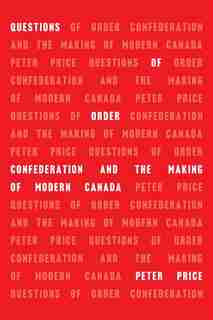
Book Review: The Shipboard Debate
In 1874 a Scottish immigrant ship the Moravian glided past the pretty farms and hamlets of the St. Lawrence River valley. Passengers gathered on deck after a long transatlantic journey.
“A discussion broke out among a number of the ship’s passengers,” writes author Peter Price. “‘Who are Canadians?’ asked one person. For the gathered passengers, most of whom were laying eyes on the shores of Canada for the first time, it was a question with no obvious answer. A ‘person born in Canada is always considered a Canadian,’ one person insisted. This answer made little sense to another, who retorted that ‘a fellow can’t be a horse because he was born in a stable.’”
Yet Canada survived. Most nations indexed in the 19th century atlas did not. The Austro-Hungarian Empire, Czarist Russia, Kingdoms of Bavaria, Serbia and Hawaii, Republic of Cuba, Qing Empire, Orange Free State, all gone. The list of industrialized nations to survive intact for 158 years without civil war is a short list, yet Canada did it.
Ask, “Who are Canadians?” today and tens of millions will answer. Not so in the Confederation era, writes Price. As late as 1889 Nova Scotians used the term “Canadian” to refer to people from Ontario.
The word “citizenship” was “the political antonym of ‘colonist,’” he writes. Empire Day was an annual observance from 1898. The original British North America Act was scarcely a celebration of nationhood; it did not even contain the word “people.”
If the U.S. Declaration of Independence had famous signers, “in the case of Canada there was no signature, no moment at which the inhabitants of what became Canada convened and assented to their new appellation,” says Questions Of Order.
“‘Founding’ moments rarely have the conscious cohesion and clarity of purpose with which they are later remembered,” writes Price, of Queen’s University. “The truth is that founding moments exist most vividly in the imagination of posterity, and their retrieval in historical records tends to recover instead only fragments of later possibilities.”
Questions Of Order is a 19th century scrapbook of the land we left behind. Price is an enthusiastic chronicler. He guides readers through a time capsule of an era so different from ours Canada Day would be unrecognizable to the Fathers of Confederation.
Their flag was an English flag, their anthem God Save The Queen, their loyalty to the Old Country. The whole point of Canada was to save a big, rich land from the clutches of Americans.
“The emphasis on Canada’s British character as a contrast to the republicanism of the United States was a frequent feature of Canadian political and social life,” says Price. “It carried with it the idea of devotion not only to English political ideals, but likewise to all the cherished traditions of the English race, and to all its treasured legacies of mind and heart.”
“Over a century and a half after Confederation, it has become widely popular to mark that date as the emergence of Canadian independence,” he explains. “In all the discussions of the Canadian question, however, the suggestion that Canada ought to establish itself as a fully ‘independent’ state was the rarest one.”
Of course we were more than Little Englanders, even then. The country in its beauty, vastness and wealth inspires a deep pride and affection in most people who spend more than a winter here. It did then, too. As The New Dominion Monthly wrote in 1875, “Consider the name ‘Canadian’ as one to be proud of, and Canada as a country to be loved and gloried in.’”
By Holly Doan
Questions of Order: Confederation and the Making of Modern Canada, by Peter Price; University of Toronto Press; 226 pages; ISBN 9781-4875-22186; $20.96
Indigenous OK Is Mandatory
Prime Minister Mark Carney yesterday redefined his first major bill to mandate that industrial projects deemed fit for speedy approval “must” serve Indigenous interests. The legal text of Bill C-5 passed into law June 26 states only that Indigenous interests “may” or “can” be considered: “Core to the objective, these projects must advance the interests of Indigenous peoples.”
Will Force Vote On Tax Break
Opposition Leader Pierre Poilievre yesterday said he will compel a Commons vote this fall on capital gains tax breaks and other initiatives to “get building now” amid U.S. tariffs. Poilievre made the comment while campaigning in an August 18 byelection in Battle River-Crowfoot, Alta.: “We need to get building.”
Prison Contraband Up 169%
Seizures of contraband drugs in federal prisons have jumped 169 percent since Parliament passed a Drug-Free Prisons Act, according to internal figures. Wardens blamed technology like drones: “It is doubtful if there is a prison in the world that is drug-free.”
Report Knocks DEI Funding
Many Canadian researchers resent diversity, equity and inclusion criteria used to determine who qualifies for federal funding, says a submission to the Commons science committee. The document cited one instance in which a researcher was asked if they were LGBTQ for a project that had nothing to do with the LGBTQ community: “It is regrettable that criteria unrelated to science, excellence and merit are influencing funding decisions.”
Bar Fight Spoils November 11
An army corporal has been censured for picking a barroom fight after attending Remembrance Day ceremonies. Score-settling on a mournful day to honour Canadian war dead marked “a significant shortfall of expected military decorum,” wrote a Court Martial judge: “Conduct yourself in a manner that would honour the sacrifices of those who have gone before us.”
EV Sales “Weaker”: Regulator
A federal regulator yesterday predicted weaker 2025 sales of zero emission vehicles just ahead of mandatory quotas. MPs on June 17 voted 194-141 to uphold the federal mandate that requires 20 percent of 2026 new vehicle sales be zero emission: “Weaker sales in 2025 are likely.”
UFO Spotters Urged To Call
Dr. Mona Nemer, cabinet’s $393,000-a year science advisor, recommends the government create a UFO agency to take calls from Canadians who claim to spot alien life. Nemer in an Access To Information report said it was likely “only a matter of time before it is discovered” but noted people who claim close encounters are typically ridiculed: “Report sightings without fear of repercussions.”



