PM Ponders China Atrocities

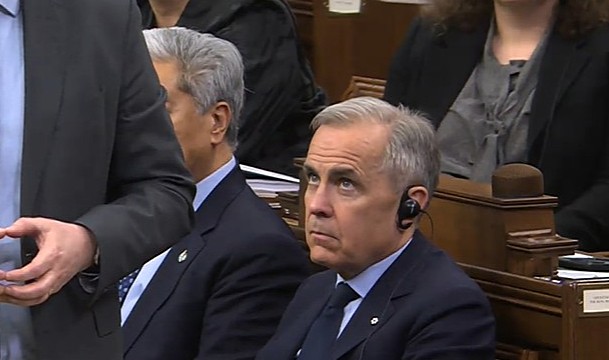
Prime Minister Mark Carney yesterday would not say whether he believes China uses slave labour. It followed cabinet’s announcement of “a new foreign policy” that encourages Canadians to get to know the People’s Republic: “Do you believe there is forced labour in China?”

This content is for Blacklock’s Reporter members only. Please login to view this content. (Register here.)

Anti-Jew Hate Crime Rising

Police-reported hate crimes against Jews increased in 2024 even as the rate overall remained “relatively stable,” Statistics Canada data showed yesterday. New figures followed testimony at parliamentary hearings that Canada had normalized anti-Semitism to the point it was “casual, even fashionable.”

This content is for Blacklock’s Reporter members only. Please login to view this content. (Register here.)

‘Clear & Consistent’ On Jews

New Democrat leader Avi Lewis yesterday said he will be “clear and consistent in my position” on alleged Israeli genocide and claims of a powerful Jewish lobby in Canada. Jews expressed alarm over Lewis’ election Sunday: “The NDP has become a hostile place for the vast majority of Jewish Canadians.”

This content is for Blacklock’s Reporter members only. Please login to view this content. (Register here.)

CBC-TV Rescue Plan Is Secret

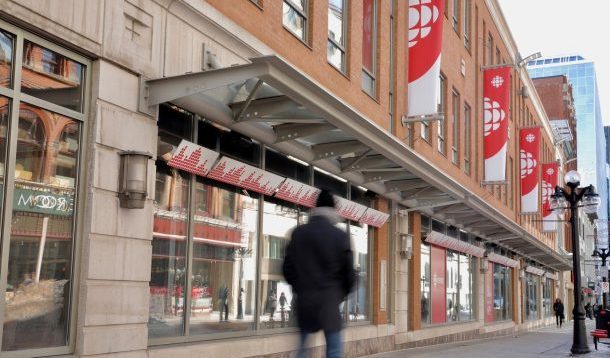
A federal plan to “modernize” the CBC will remain secret, the Department of Canadian Heritage said yesterday. It censored 21 of 22 pages of the confidential memo written weeks after Prime Minister Mark Carney won the 2025 election: “The government has recommitted to protecting Canada’s cultural sovereignty and identity by strengthening CBC.”

This content is for Blacklock’s Reporter members only. Please login to view this content. (Register here.)

Won’t Release Vets’ Accounts

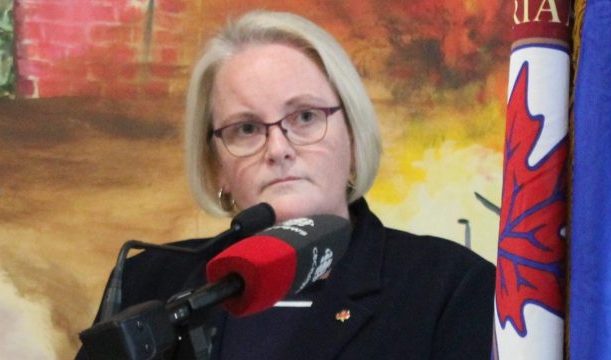
Veterans Affairs Minister Jill McKnight is delaying release of records sought by MPs regarding millions in unpaid benefits for Métis veterans of the Second World War. A $30 million fund approved by Parliament paid only a fraction to old soldiers, sailors and air crew: “It is difficult.”

This content is for Blacklock’s Reporter members only. Please login to view this content. (Register here.)

Minister Ignored Court Order

A federal judge has faulted Revenue Minister François-Philippe Champagne for disobeying a Court order in a tax case. The Minister’s office and Canada Revenue Agency failed to comply with a 2025 order to disclose emails and memos regarding treatment of a Jewish charity: “Orders of the Court must be obeyed.”

This content is for Blacklock’s Reporter members only. Please login to view this content. (Register here.)

Old Homestead Is Targeted

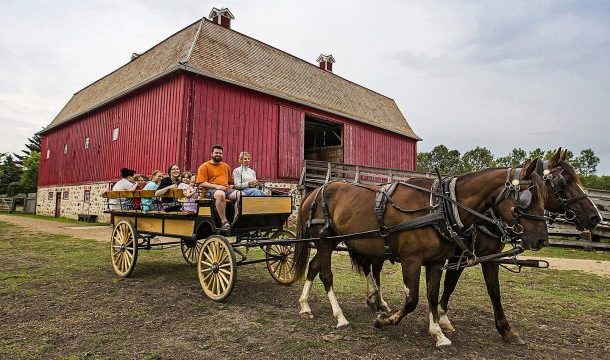
A historic site dedicated to 19th century Prairie homesteaders will be reimagined as a monument to “inequities on the Prairies” including mistreatment of Indigenous people, says a Parks Canada report. Celebration of European settlement at Saskatchewan’s Motherwell National Historic Site lacks diversity, said the plan tabled in Parliament: “Motherwell’s second wife is noted for her connection to the difficult history of the Residential School system.”

This content is for Blacklock’s Reporter members only. Please login to view this content. (Register here.)

Record Ballots From Abroad

More than 57,000 Canadians living abroad voted in the 2025 federal election, a record, according to an Elections Canada memo. More are expected in the next election with the passage of a cabinet bill granting citizenship to the grandchildren of Canadian citizens abroad: ‘There is increasing demand by international electors.’

This content is for Blacklock’s Reporter members only. Please login to view this content. (Register here.)

Pockets Millions On Security

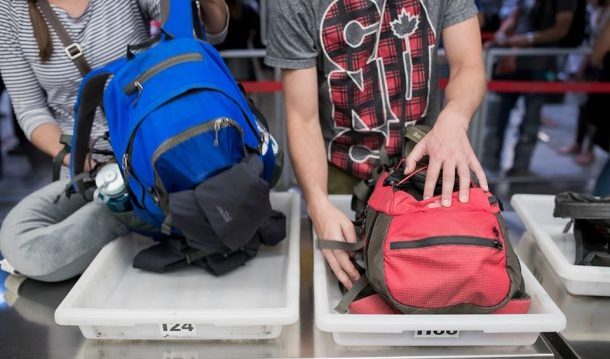
Cabinet last year pocketed a 25 percent profit on mandatory security fees charged airline passengers, records show. Advocates have sought relief from fees introduced in 2002 following the 9/11 terrorist attacks: “How much is collected from passengers?”

This content is for Blacklock’s Reporter members only. Please login to view this content. (Register here.)

Ottawa Lost: John Slept Here

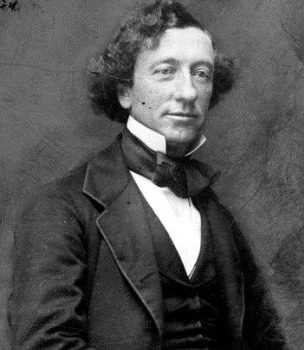
John A. Macdonald was a vagabondish fellow who never stayed in one place for long and occasionally had trouble paying the mortgage. Our founding prime minister had at least five homes in Ottawa. Few survive.

In 1865 he bought his first bachelor pad, a stone row house at 63 Daly Street near what is now a youth hostel. “I don’t know what you have got in the way of furniture that you can spare me,” he wrote his sister. Macdonald took in three boarders to help pay the bills.

A widower, he married his second wife Agnes in 1867. She set out to improve the place. In her diary Lady Macdonald complained the family home had become a caucus hangout: “Here, in this place, the atmosphere is so awfully political that sometimes I think the very flies hold parliaments on the table.”

There would have been a lot of flies. Daly Street had an open sewer that reeked in summer and left a residue of human waste mixed with snow and mud in winter. This first home is gone forever, destroyed in an 1873 fire. A second home, on Chapel Street, was demolished after the First World War and is today a parking lot.

In 1870 the Prime Minister again went house-hunting. He found a place at O’Connor and Nepean Streets, seven blocks south of Parliament Hill. It was a sturdy three-story brick home with a gingerbread veranda. A single photograph of the place exists, a grainy image published in a 1904 Ottawa travelogue The Hub And Spokes by Anson Gard.

The house on O’Connor was demolished. Today it is replaced by an economical grey, mid-century apartment tower across the street from a now-vacant convenience store that once peddled cigarettes and lotto tickets.

Macdonald would have appreciated the affordability of the neighbourhood. In April 1875, on being expelled from the House for election fraud, he was reduced to auctioning his furniture and even light fixtures to pay creditors.

From the auction catalogue: “One large bronze hanging lamp and burners with porcelain shade,” “large oak book case in two parts,” “one oval oak extension table.” Bidders were free to cart away the household treasures of the Father of Confederation. Macdonald took off for Toronto to await the resurrection of his fortunes.

With re-election in 1878 Macdonald returned to the capital and a new address, Stadacona Hall, a large gated home on what is now Laurier Avenue built by a lumber baron and fit for a prime minister. Macdonald lived here through his second term as leader. The place is still there, now home to the High Commission of Brunei.

In 1883 Macdonald purchased for $10,400 his last and most famous address, Earnscliffe, a Gothic Revival manor overlooking the Ottawa River. Here Macdonald spent his final years, and died in an upstairs bedroom in 1891.

Not for another 70 years would Parliament provide an official residence, forever ending the era when a prime minister might have lived next door.

By Andrew Elliott

Review: A Failure

Covid is a tale of failure by federal executives and political aides. They did not mean to cause death and suffering; these people are not monsters. They were merely reckless and incompetent in the manner of Titanic officers who kept a dance band and well-stocked liquor cabinet but no binoculars in the crow’s nest. The Public Health Agency of Canada was fully funded at $675 million a year and found money for climate change conferences but literally could not run a mask warehouse. It was their job to keep you safe. They failed.

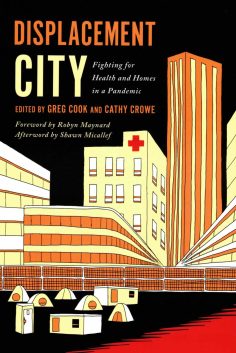
Displacement City is a story of failure. The City of Toronto budgeted $663 million a year for homeless and housing programs yet authors count 10,000 homeless people. The City has 75 years of experience in public housing and a six-figure CEO at the Toronto Community Housing Corporation, yet was reduced to arguing whether to install communal toilets at tent cities in municipal parks.

“In Toronto people who are poor have been living through crises for years,” write editors Greg Cooke and Cathy Crowe. “Prior to the pandemic over a hundred people were dying preventable deaths each year, many because of the overdose crisis. For years advocates had been demanding the City of Toronto declare a homelessness emergency and asking for additional resources. Now, all of a sudden, there was a health crisis.”

Displacement City is a passionate account of failure. It lists the names of homeless who died including many Jane and John Does. “Shelters were either full or unsafe,” authors quote one homeless person, adding: “Even before the pandemic the shelter system had high rates of violence, bed bugs and theft.”

Toronto’s response to failure, like the Public Health Agency’s, was to spend and spend and spend. No inquiry, no firings, nobody named names. Executives and political aides who could not wisely use $663 million to ensure homeless people did not freeze to death instead concluded the problem was not theirs.

At one point the City began leasing hotel rooms for use by the homeless. “Many of us were excited at the thought of our clients living in these hotels where they would have their own rooms with doors that locked, real beds, hot showers and functioning TVs they could watch freely, the very basics of a safe and dignified space,” writes one contributor. “However this excitement soon turned to frustration. The shelter hotels were run like regular shelters with bed checks and unnecessary rules such as not allowing couples to room together.”

This is what failure looks like. It is expensive and bureaucratic and pleases no one, neither “clients” nor ratepayers who discover they are financing free cable TV.

Identifying who is responsible for failure is hard. These people cover their tracks. Very often it takes Access To Information records and cross-examination under oath to find the truth.

Yet the consequences of recklessness and incompetence are plain as day. The system was fully funded. The municipality had paid experts and powerful friends. Liberals hold 24 of 24 Toronto seats. Still people died.

This is failure on a Titanic scale. Contributors to Displacement City are understandably angry. Some blame capitalism. One contributor complains the Mayor should have expropriated buildings to find apartments for the homeless. Another writes: “The City might have made life safer for encampment residents by allowing them access to basic amenities in the form of public washrooms, running water, clean electricity and fire safety.”

This is not a failure of humanity. It is a failure of management. It is the tale of Covid. There will be many, many more accounts to come.

By Holly Doan

Displacement City: Fighting for Health and Homes in a Pandemic, edited by Greg Cook and Cathy Crowe; University of Toronto Press: 320 pages; ISBN 9781-4875-46496; $29.95


Questions Atrocity “Hearsay”

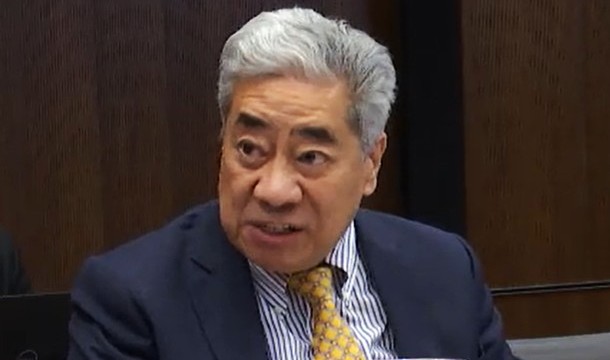
Liberal MP Michael Ma (Markham-Unionville, Ont.) yesterday questioned whether accounts of slave camps in China were “hearsay.” The remarks prompted an outcry at the Commons industry committee: “It is something I have never experienced before, that a Canadian politician would be defending China’s human rights.”

This content is for Blacklock’s Reporter members only. Please login to view this content. (Register here.)

Claim “Real Gains In Income”

The finance department’s senior director of forecasting yesterday boasted Canadians were enjoying “real gains in income.” MPs on the Commons finance committee questioned Brian Torgunrud’s claim by pointing to household debt levels, poverty rates and homelessness.: “I have a statistic here.”

This content is for Blacklock’s Reporter members only. Please login to view this content. (Register here.)

Bill Bans Campaign Bitcoin

Use of bitcoin to finance political campaigning would be outlawed under a cabinet bill introduced yesterday in the Commons. Government House Leader Steven MacKinnon said cabinet was unaware of any suspicious use of cryptocurrency in campaigns but was “trying to be as responsive as we can.”

This content is for Blacklock’s Reporter members only. Please login to view this content. (Register here.)