A large cabinet “loan” to Canada Post does not carry any interest or payment schedule, records show. Confidential terms of the agreement disclosed yesterday were sought by MPs suspicious that taxpayers would never see repayment: “We are just dumping money down the toilet.”
Monthly Archives: March 2026
RCMP Unfazed By Auditors
RCMP Commissioner Mike Duheme yesterday would not discuss failures identified in a federal audit showing the force is short thousands of members despite exorbitant spending on recruits. “We move forward,” he said in a statement.
Feds Would Hide Tax Names
Cabinet yesterday moved to limit the scope of an Opposition bill to publicly name corporate tax delinquents. “It’s an important measure of public transparency,” Conservative MP Adam Chambers (Simcoe North, Ont.), sponsor of the bill, told the Commons public accounts committee.
‘We Found 60 Billion Dollars’
Cabinet has found $60 billion in savings in unnamed programs, says Finance Minister François-Philippe Champagne. Budget documents tabled to date do not identify $60 billion in savings, and Champagne did not elaborate: “We should put the record straight.”
Forgot To Check For Results
A federal agency that spent $37.8 million last year to lower greenhouse gas emissions did not keep track of whether it cut emissions or not, says an internal report. Auditors complained of a lack of focus at the Clean Energy Innovation Research Centre: “Emissions are not consistently measured.”

Feds Cost Thousands Of Jobs
Policies enacted by two successive immigration ministers cost thousands of Canadian students’ jobs, says a federal memo. The Department of Employment for the first time admitted an 18 percent jobless rate for Canadian students was due to “large numbers” of foreign students, contradicting earlier claims by Ministers Sean Fraser and Marc Miller: “Labour market outcomes have been worsening for youth since early 2023.”
Agency Confirms Ballot Error
Hundreds of voters abroad were improperly registered to cast ballots in the 2025 federal campaign, according to Access To Information records. Elections Canada did not say what if any impact irregularities had, though results were close in four ridings that went to judicial recount: “We will take necessary steps to ensure that automated preventive measures are in place before the next election.”
Libertarians Off Fed Ballot
Elections Canada has stripped the Libertarian Party of its federal registration for failing to meet a filing deadline. The Party’s leader said he was quitting political life: “It has been a very frustrating experience on my part.”
Ottawa Lost: A PM’s Refuge
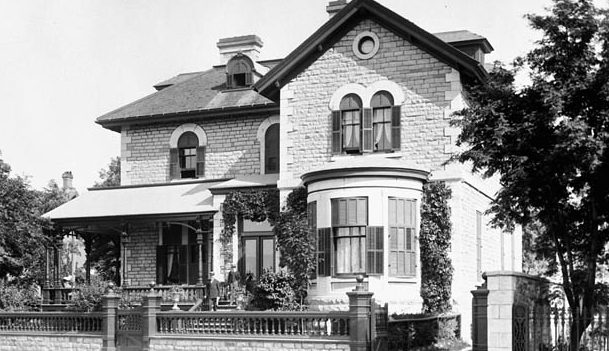
Alexander Mackenzie, Canada’s first Liberal prime minister, lived near Parliament Hill in a beautiful Gothic Revival home He was an honest, thrifty fellow who helped transform the country yet could not stand parliamentary life. “Politics is very low,” he wrote. Today the house is gone and forgotten, just like Mackenzie.
Born in Scotland, he arrived in Kingston, Ont. in 1842 as a near-penniless stonecutter. He became a successful contractor in Sarnia known for quality work. Mackenzie-built structures can still be found including the former Essex County Courthouse, now called Mackenzie Hall.
He was sharp-eyed, tight-mouthed and weather-beaten. Mackenzie did not dress well and hated to spend money. As prime minister he was pained at paying $128 for a political banquet and resolved never to entertain at home due to the cost.
Mackenzie landed in politics as a reformer, elected Liberal leader in 1873 and Prime Minister less than a year later. “Some people have a theory that a successful politician must necessarily depend on intrigue and doing crooked things,” Mackenzie said. “I determined to rule in broad daylight or not at all.”
He refused to campaign on public works spending for fear Canadians would think he was trying to buy votes. When federal contractors sent gifts for the Prime Minister’s wedding anniversary in 1878 Mackenzie had them returned. “I never felt so mortified in my life,” he said.
He grew so weary of reporters and patronage hounds Mackenzie built a secret staircase from his West Block office so he might evade questions. Cronyism and cynicism were enough to “sicken me of public life,” he wrote.
Mackenzie determined to clean up the place. He introduced Canada’s first secret ballot in 1874. Elections had been open ballot affairs with widespread bribe-taking. He established the Supreme Court and the Office of the Auditor General, the bane of grafters.
His home and refuge from the meanness of politics was at 22 Vittoria Street, a short walk west of Parliament Hill. From his veranda Mackenzie had a marvelous view of the Ottawa River. The Gothic home had a distinctive rounded bay window and the tooth-like corner stone patterning that Victorians enjoyed.
On losing the premiership in the recession of 1878, Mackenzie remained an MP but sold the Vittoria Street home in 1880. The house survived till 1928 when contractors demolished it to make way for MPs’ offices in the new Confederation Building.
And Mackenzie? He refused a title from the Queen – “We have no landed aristocracy in Canada,” he explained – and like all honest politicians of his era, died poor. When Mackenzie passed away in 1892 his estate was so modest MPs voted a $10,000 trust fund to support his widow.
By Andrew Elliott 
Book Review: System Failure
If mushrooms killed or hospitalized 10,700 Canadians every year MPs would order committee hearings and mushroom regulations would fly like confetti. Now replace the world “mushroom” with “traffic” and consider the fact accidents claim 10,700 casualties every year. This does not include 150,000 minor injuries.
Parliament for years has not enacted a single new traffic safety initiative. A bill that would have required installation of side guards on heavy trucks, C-344 An Act To Amend The Motor Vehicle Safety Act, died in the Commons in 2011. Ontario’s chief coroner said it would have saved bicyclists and pedestrians from being dragged to their deaths.
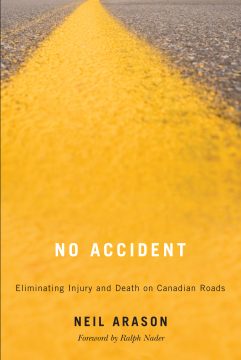
Author Neil Arason attempts to bring the country to its senses. No Accident is a compelling, plain-spoken appeal for what at first glance seems an incredible goal: to eliminate virtually all traffic fatalities. “The current situation is a system failure,” writes Arason, of the Canadian Council of Motor Transport Administrators. “Because safety has not been the starting point for the design of the system, what we now have is an untreated public health problem.”
The result is that every family in Canada has experienced the anguish of a traffic casualty. “Like most young reporters, I found ways to harden myself when sent to someone’s home to ask for a photo of a child who had just been killed in an accident,” newspaperman Robert Fulford recalled in his memoirs Best Seat In The House (1988 Collins). “Strangely, no such family ever sent me away empty-handed; all of them seemed anxious to co-operate, as if the appearance of their child’s face in the next day’s paper would make this event less terrible or less random. Several times a sad young mother said to me something like, ‘I always told her, ‘Don’t cross the street without looking.’” When I became a parent – and anxious about my own children – those words echoed in my memory.”
Yet traffic safety has always been one of the most hard-fought reforms, fueled in part by resistance of auto manufacturers; complaints about cost; and the conviction that driver error is almost always to blame. As a GM executive put it in 1956, “The seat belt craze isn’t doing anything for the brains of the guy driving the car. Sure, we need thinner pillars and better vision, but this just encourages the nuts. Put belts and shoulder harnesses on them and they think they can do anything.”
In 1960 Cornell University published landmark research proving seatbelts prevented death and injury. It took 27 years for all provinces to enact mandatory seatbelt laws. Arason proposes more reforms like crash-proof auto sensors and better-designed pedestrian crosswalks, but many remedies require no engineering whatsoever.
Drivers’ licenses for 16-year olds? Arason notes the age limit is based on a 1903 Missouri state law that most countries reject since young drivers are most likely to cause accidents: “Today most sixteen-year olds do not quit school to work on the family farm, but we continue to license them to drive anyway.”
Impaired driving at a 0.08 blood alcohol level? Arason argues the standard is based on flawed research conducted in 1963, and disputed by scientists who conclude impairment for most drivers begins after the first drink. The standard is 0.02 in Sweden, 0.03 in Poland, 0.05 in The Netherlands.
Fifty-kilometre city speed limits? A campaign to cut speeds to 30 km/hour in Newcastle, U.K. resulted in a 24 percent reduction in the accident rate. “Injuries cannot be produced without speed,” Arason writes. “Speed, after all, is a factor in all road crash injuries and deaths.”
No Accident is a damning and persuasive appeal for public safety, and a glimpse into what driving will be like in Canada once lawmakers get around to it.
By Holly Doan
No Accident: Eliminating Injury and Death on Canadian Roads, by Neil Arason; Wilfrid Laurier University Press; 344 pages; ISBN 9781-5545-89630; $29.99
Feds Admit PM Misled Media
Prime Minister Mark Carney misled media on his private meetings with Chinese Communist leaders, Privy Council records show. Documents written by cabinet aides directly contradicted Carney’s claims that he raised human rights and foreign interference with his Beijing hosts: “On human rights, with the President, yes, we did discuss human rights.”
See Outcry Over Immigration
Almost half of Canadians surveyed nationwide say immigration is “causing Canada to change in ways I don’t like,” according to in-house research by the immigration department. Two thirds complained immigrants must “do more to integrate.” The research followed Immigration Minister Lena Diab’s most recent cuts to quotas on a promise of “taking back control over our immigration system.”
Hortons Likes Foreign Staff
Cabinet agreed to ease some restrictions on migrant labour under lobbying by Tim Hortons franchisees, Access To Information records show. Operators claimed tens of thousands of jobs would go unfilled if they couldn’t hire foreigners: “The food service sector faces over 63,000 job vacancies.”
“Buy Canadian” Not Literal
Cabinet’s Buy Canadian policy does not mean a majority of supplies used in public works or home construction must be Canadian, Housing Minister Gregor Robertson said yesterday. “We’re not being rigid about this,” he told reporters.
Gun Owners In High Court
The Supreme Court yesterday agreed to hear gun owners’ challenge of Public Safety Minister Gary Anandasangaree’s blacklisting of “assault style” firearms. Two lower courts upheld the ban as reasonable though it was introduced without data showing it would fight crime: “There is no way to know exactly.”