
Wage disparity between union and non-union workers in Canada is down to about 10 percent, says a Commons committee report. MPs credited a “union threat effect” that prompted private sector employers to pay competitive rates: “The mere threat of unionization will drive employers to improve working conditions.”
Petitioner Hails Home Bakers
Parliament would honour home bakers and “promote national pride” every April 19 under a Commons petition sponsored by Conservative MP Adam Chambers (Simcoe North, Ont.). The date marks the passing of an Ontario homemaker credited with inventing the butter tart: ‘Support our domestic bakers and promote national pride.’
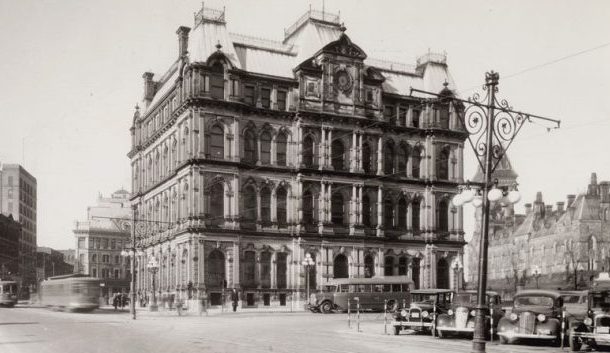
Ottawa Lost: Patronage Place
It was one of Ottawa’s greatest architectural losses, the original Customs House. It stood 62 years and even launched the career of a national leader, Mackenzie Bowell, whose primary achievement was growing the finest beard of any prime minister.
Customs revenue ran the country in the Confederation era. Taxes collected on liquor and goods were the main source of cash for the colony til the introduction of federal income tax in 1917.
The Customs building was constructed in the iconic heart of Ottawa at Elgin and Wellington Streets overlooking the Rideau Canal. It rose four storeys with a clock tower, designed in the grand Empire style by architect Walter Chesterton. The landmark took three years to build and opened in 1877.
Running the Customs House as the nation’s chief tax collector was Mackenzie Bowell, an editor and Orange Lodge Grandmaster from Belleville, Ont. He served 50 years in Ottawa without ever having to commute. Bowell kept a room at the fabulous Russell Hotel, simply walked across the street to the Customs building and another block up to the House of Commons.
Bowell was a master of patronage, stacking the Customs department with Conservative cronies. He made it a rule to fire any employee who attended Liberal meetings. In 1880 he wrote John A. Macdonald: “Everything in the whole system of government in connection with patronage is carried out on this principle: You consult your friends.”
Bowell operated the Customs house with unremarkable diligence. In 1894 he became prime minister on seniority following the sudden death of Conservative leader John Thompson.
Bowell spent 16 unhappy months in office. Today he is universally rated the country’s worst prime minister. He was “decidedly commonplace,” said Lady Aberdeen, a governor general’s wife. One historian remembered Bowell as a “bigoted, conceited and slightly paranoiac little man.”
Bowell was ousted in a cabinet revolt in 1896. A caucus colleague rated him “pompous and ponderous.” Seven cabinet members resigned after branding Bowell a dithering fool. The Ottawa Evening Journal called him “a leader who cannot lead.” He died in such obscurity in 1917 that Prime Minister Robert Borden did not attend the funeral.
And the old Customs House? It survived a fire in 1903, was restored with walls of nearly indestructible concrete, and lasted till 1938 when it was deemed to be in the way of plans for a National War Memorial. Bowell’s office was so well-built it took two months to dismantle the reinforced walls.
“The old building always held a warm place in the hearts of Ottawans,” a newspaperman wrote as the Customs House was demolished. “Even today citizens are noted looking up to where the well-known clock used to be in order to check their timepieces.”
By Andrew Elliott

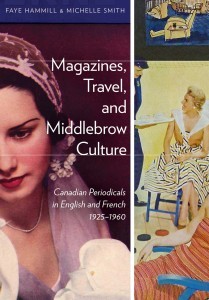
Review: When The World Was Bigger
In 1955 a round-trip flight from Toronto to Rome was a staggering $677, the modern equivalent of $6,100. It was the cost of a full order of household appliances or a good used car – not that it mattered. Most Canadians went their entire working lives without ever stepping on an airplane for a holiday. Not till 1944 did any province even mandate two weeks’ annual holiday pay for wage earners. A simple vacation was luxury, let alone travel abroad.
“Don’t you get tired of just reading about things?” the frustrated traveler George Bailey is asked in It’s A Wonderful Life. Bailey, like the film audience, accepted he could never get away. So, they dreamed. The phenomenon inspires this compelling book documenting the aspirations of the “middlebrow,” a pejorative first coined in 1924.
Travel “was a symbol of achievement, cultural literacy, savoir faire and personal means,” note authors Faye Hammill and Michelle Smith of the University of Strathclyde in the U.K. To read Magazines, Travel & Middlebrow Culture is to revisit an era when Middle Canada worked a six-day week and fantasized about the fine things in life.
“Magazines, by circulating fantasies of travel, were instrumental in forging a link between geographical mobility and upward mobility,” Middlebrow explains. “They constructed travel as an opportunity to acquire knowledge and prestige as well as to experience pleasure and luxury.”
Authors meticulously researched the contents of six periodicals over a 35-year period that lauded the merits of travel to places that readers would never see. “Money spent in travel is a sound investment,” Maclean’s wrote in 1927. “Nothing can take from you the returns it guarantees – broadmindedness, pleasant education, relaxation, recreation and lasting memories.”
Travel pages, then and now, were advertiser-driven. Authors calculate sponsorships by cruise lines, hotels and other tourism operators accounted for 10 percent of advertising over the period. Another 40 percent sold automobiles, meaning “the theme of geographical mobility was central to half of the consumer advertising in the magazines.”
The effects were occasionally bizarre. In August 1935 the monthly Mayfair ran its vacation number with long, overwritten articles extolling Canadian Pacific cruises to Egypt and China: “What a marvelous experience!”, Mayfair enthused. “Would you like a real change? Something that will give you an adventure in comfort, and comfort in adventure.”
Note the month, August 1935, the same period when the Prairie wheat crop was ravaged by frost, industrial unemployment hit 25 percent and Ontario’s premier announced the province “will be insolvent” if welfare payments kept up. Mayfair readers paid 25¢, the price of a ten-pound bag of flour, to see how the top one percent sought amusement.
“The magazine declined to engage seriously with the world beyond Canadian high society,” authors note. “Instead, it constructed an artificial realm in which only money, style and social capital counted.” The impact was a “startling lack of perspective” as witnessed by this July 1935 article headlined En Route: “During a recent European tour, Mr. B.W. Keightley of Montreal included an interesting visit to Germany, where he discussed the situation with many citizens including a smartly turned-out Nazi Storm Trooper.”
Mayfair halted publication in 1958. Other magazines reviewed by Middlebrow similarly vanished: the Canadian Home Journal in 1958, La Revue Moderne in 1960, La Revue Populaire in 1963. They live on only in this warm and engaging book, when Middle Canada for 25¢ could dream of trips they would never take.
By Holly Doan
Magazines, Travel And Middlebrow Culture: Canadian Periodicals in English and French 1925 to 1960, by Faye Hammill & Michelle Smith; University of Alberta Press; 256 pages; ISBN 9781-7721-120837; $49.95
Promises Quick Enforcement
Cabinet’s nominee to manage a registry of foreign agents yesterday promised quick results. Anton Boegman, former Chief Electoral Officer for British Columbia, told the House affairs committee he saw no excuse for further delays: “It is essential to start enforcing the rules promptly.”
Fast Train Is Insane, Says MP
Construction of regional high speed rail is a $90 billion catastrophe for taxpayers, says an MP whose constituency is on the route. Conservative MP Scott Reid (Lanark-Frontenac, Ont.) yesterday warned of “ruined lives” and wasted billions as the Commons passed the High Speed Rail Network Act: ‘Why on earth should people in British Columbia, Alberta or Newfoundland pay for this?’
“Early Warning” On Defaults
Analysis of millions of credit reports shows heavy use of credit cards is a two-year “early warning signal” of mortgage defaults, Bank of Canada researchers said yesterday. Findings were drawn from nine years’ worth of TransUnion Canada data: “Monitoring early signs of financial stress among mortgage borrowers is crucial.”
$170M More For Newsrooms
Subsidies for private sector newsrooms cost taxpayers $170 million last year, the Department of Finance reported yesterday. Publishers successfully lobbied for taxpayers’ aid seven years ago on a promise that subsidies would be transitional and temporary: “There does need to be a deadline.”
Third Appointee In 6 Months
Cabinet is looking for a third Budget Officer in six months. Interim Officer Jason Jacques yesterday said he had no word on reappointment with four days remaining in his term: “Things were partisan 20 years ago; they are certainly more partisan now.”
Admit ‘Pressure’ From Fraud
Fraud in Canada’s refugee system is difficult to gauge but may be significant, says Immigration Minister Lena Diab’s department. A “meaningful proportion of claims” from illegal immigrants and other refugee claimants are ineligible, it said: “Indicators provide a broader picture of integrity pressures.”
Illegal Migrants Keep Benefits
The Commons yesterday by a 198 to 134 vote rejected a Conservative motion to suspend free medical benefits for illegal immigrants. The vote followed pointed debate: “It is disgusting.”
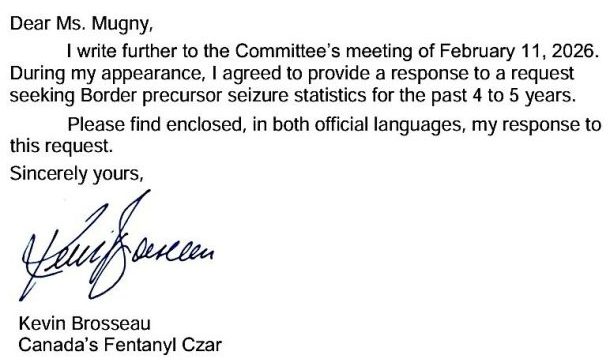
Figures Contradict Drug Czar
Seizures of fentanyl chemicals by Customs agents under Canada’s new “fentanyl czar” are a fraction of what they were three years ago, records show. Kevin Brosseau, the $286,000-a year Commissioner of Canada’s Fight Against Fentanyl, confirmed the figures after claiming “significant progress” since his appointment: “What’s your record?”
Chinese Vessels Skirt Security
The Department of Public Safety never undertook any security review of the subsidized purchase of Chinese vessels because rules don’t permit it, Minister Gary Anandasangaree said yesterday. “We had no authority to undertake that review,” he told the Commons transport committee.
Cabinet Rejects Fuel To Cuba
Cabinet yesterday gave Cuba an advance on $8 million in yearly foreign aid before the April 1 start of the budget year. Emergency shipments of Canadian petroleum products to ease fuel shortages were not considered, Foreign Minister Anita Anand told reporters: “Why aren’t you sending fuel?”
Predict Post Loans Are Lost
MPs yesterday said they doubted whether taxpayers will ever see repayment of billions in emergency loans for the post office. Cabinet in 13 months awarded a total $2.04 billion in credits to maintain mail deliveries: “Taxpayers are not going to see that money.”