
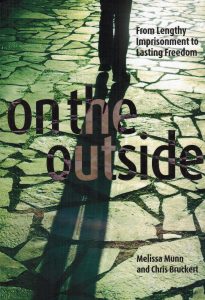
Review: The 74%

Twenty-six percent of all new federal prisoners have already served time, which begs the question: Whatever happened to the other 74 percent who served time and never returned? On The Outside looks for answers. The result is fresh and compelling research on life after prison.

The authors interview longtime inmates including those jailed for serious violent crimes that once earned the death penalty. One hides his past from his children and “aspires to a simple life filled with laughter.” Another complains he must learn how to buy groceries: “People have been cooking my meals for twenty-two years and all of a sudden I gotta cook my breakfast.” A third ex-convict is upset by the loss of civility in polite society: “Personal rudeness in the prison system is not tolerated under any circumstances, at least in the old days when I was there.”

On The Outside is no celebration of rehabilitation. Former inmates interviewed by the authors appear broken men, some guilt-ridden, some unapologetic. “The quest for normalcy was a preoccupation,” write the authors, former members of a prisoners’ liaison group at Collins Bay Penitentiary in Kingston, Ont.

Melissa Munn is a professor of sociology at Okanagan College, Chris Bruckert is a professor at the University of Ottawa’s Department of Criminology. Together they interview twenty ex-convicts. “We had come to know the men as individuals.”

The authors do not detail the men’s crimes and interestingly neither do most employers or acquaintances. One parolee says he was fired from a jobsite after a supervisor spotted his gang tattoo. However another recounts his experience in applying for a credit card at the bank: “I was very nervous because I didn’t want to reveal my past and she asked me my particular information and she checked my credit rating and she said, ‘You don’t have a credit rating.’ So I had to tell her where I was. And her comment to me was, ‘Well, banking’s our business, that’s your business.’ And I really appreciated it. I never forgot that comment.”

Common themes emerge. All the released prisoners had bad childhoods. Most came out of prison to work at entry-level jobs as janitors, lawn cutters, 7-Eleven clerks. None returned to their hometowns, and all considered incarceration the most important event in their lives. “It isn’t helpful being locked up every friggin’ day,” says one convicted murderer. “I mean, the whole atmosphere is not helpful.”

Yet On The Outside is no lament. If ex-convicts appear as sympathetic figures, it is only because readers are hearing their voices for the first time, like the man who refuses to wear black as reminiscent of his past as a biker, or the freed prisoner whose life turns after he buys a little house: “It puts you in a different class of people automatically.”

Or the man who recalls with dread the night he walked home after dark. “I haven’t been out at night when it’s dark for a long time”; “This kid walks up and taps me on the shoulder. I said, ‘Oh, gosh, lucky one of us didn’t die,’ because I almost had a heart attack and I was going to kill him because I don’t know who he was. All he wanted was a dollar”; “I had never been out at night and I never had anybody come up behind me and put their hand on my shoulder.”

By Holly Doan

On The Outside: From Lengthy Imprisonment To Lasting Freedom, by Melissa Munn & Chris Bruckert; UBC Press; 240 pages; ISBN 9780-7748-25375; $29.95


No Sympathy For Employers

Canadians are indifferent to claims of labour shortages by businesses that rely on foreign workers, says Department of Immigration research. Even people with mild views on immigration were “unpersuaded” by complaints from employers: ‘Some suggested they may depress wages and used foreign workers to drive down costs.’

This content is for Blacklock’s Reporter members only. Please login to view this content. (Register here.)

Do Not Get Trapped In Cuba

Canadians traveling to Cuba should expect to be stranded without electricity, food or fresh water, the Department of Foreign Affairs said yesterday. Diplomats updated a federal travel advisory warning conditions were so poor, drivers were fighting in gas station lineups: “Traveling across the island is extremely challenging.”

This content is for Blacklock’s Reporter members only. Please login to view this content. (Register here.)

More Research On Arctic Port

Cabinet yesterday said it will spend $248,600 for a study on how much it would take to upgrade Canada’s most northerly deepwater port. The Port of Churchill, Man. has been the subject of numerous postwar studies that questioned its commercial potential: “What is the viability of the Port of Churchill?”

This content is for Blacklock’s Reporter members only. Please login to view this content. (Register here.)

Majority’s Up To Terrebonne

Cabinet’s bid to engineer majority control of Parliament rests in a looming byelection in a Montréal suburb, Terrebonne, where Liberals won by a single vote over the Bloc Québécois in 2025. “We have a certain weight,” Bloc leader Yves-François Blanchet earlier told reporters.

This content is for Blacklock’s Reporter members only. Please login to view this content. (Register here.)

“Graves” Were Not Exhumed

The Tk’emlups te Secwepemc First Nation of Kamloops, B.C. yesterday confirmed it has not attempted to exhume the purported graves of 215 children at the site of an Indian Residential School despite receiving $12.1 million in federal funding for field work. The admission comes ahead of the scheduled release of Access To Information documents regarding the First Nation’s requests for funding for “exhumation of remains.”

This content is for Blacklock’s Reporter members only. Please login to view this content. (Register here.)

CBC’s OK To Hide Spending

The CBC is entitled to conceal internal details of corporate spending under the Access To Information Act, says a federal judge. The ruling came on a legal challenge by the Canadian Taxpayers Federation to find how much the CBC spent on advertising while executives pled financial hardship: ‘Disclosure could result in political interference and pressure to modify its spending.’

This content is for Blacklock’s Reporter members only. Please login to view this content. (Register here.)

Tell C.R.A. To Target Big Fish

The Canada Revenue Agency is revising the scope of audits to target the largest multinational corporations with offshore accounts. The initiative follows internal complaints that auditors misspent time chasing smaller corporations: “There have to be decisions about the fairness of the regime.”

This content is for Blacklock’s Reporter members only. Please login to view this content. (Register here.)

Air Refugee Claims Fall 73%

Refugee claims by travelers passing through Canadian airports fell 73 percent after cabinet reintroduced a Mexican visa requirement, records show. Inland claims also declined as cabinet cut foreign study permits at colleges and universities: “Ineligibility measures are about protecting the asylum system.”

This content is for Blacklock’s Reporter members only. Please login to view this content. (Register here.)

Feds Pulled 4,100 Pot Licenses

Federal regulators have suspended thousands of marijuana distributors’ licenses “for reasons of public health and public safety” including illegal diversion of cannabis into the black market, says a Department of Health memo. It follows widespread bankruptcies in the marijuana trade: “Health Canada has refused or revoked over 4,100 registrations.”

This content is for Blacklock’s Reporter members only. Please login to view this content. (Register here.)

Rewrites Broken 2% Promise

Canadians will be expected to make sacrifices to build up national defence, Prime Minister Mark Carney said yesterday. Carney reiterated a pledge he reneged on last year to spend 2 percent of GDP on military preparedness: “Can you outline what sacrifices?”

This content is for Blacklock’s Reporter members only. Please login to view this content. (Register here.)