CBC Radio has won a “free speech” ruling in the Federal Court of Appeal over use of the n-word. Judges quashed a CRTC order condemning a radio show deemed so offensive it breached the Broadcasting Act: “The decision makes no mention of CBC Radio’s freedom of expression.”
A Poem — “Eavesdropping”
In Heaven,
Moses chats with
Christ, Muhammad, and the Buddha.
I wonder if they figured out
which of their followers
got it right.
Would love to be a
fly on the wall,
if only they allowed
flies in Heaven,
if only they had
walls.
By Shai Ben-Shalom

Book Review — Nazis & Tin Foil
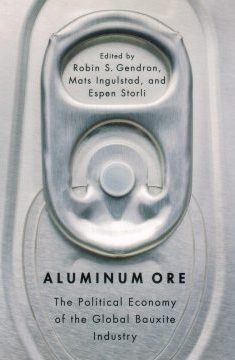
Read this book and you’ll never think the same way again in reaching for a roll of kitchen foil to cover your barbecued chicken. Authors in searing detail document aluminum production from open-pit Third World bauxite mines to toxic refineries to the $2.90 kitchen convenience. The supply chain is coldly efficient.
Aluminum Ore is stark and meticulously researched. Authors Robin Gendron of Nipissing University and two faculty members at Norway’s University of Science & Technology tell the very human story of an everyday commodity we only think we know.
Making one ton of aluminum requires 1,380 tons of water, produces 85 tons of industrial waste and 10 tons of greenhouse gas emissions. Its main source, bauxite, can only be refined through heating and cooling with caustic soda in a process that annually produces 120 million tons of toxic discharge the industry calls “red mud.” In Hungary, the 2010 collapse of a red mud reservoir at an alumina plant flooded villages, caused 131 casualties and nearly poisoned the Danube. In India, bauxite labourers are paid $2 a day and hundreds of thousands of villagers have been displaced to make way for strip mines and refiners’ plants.
“Bauxite has never been sold for a price commensurate with the damage done by mining it,” notes Aluminum Ore.
Best known as the misnamed tin foil, aluminum refined from bauxite has a long and compelling history rife with conflict. The process was patented in 1888. By 1916 a single corporation Aluminum Company of America exercised “autocratic control” over the industry, as one U.K. cabinet memo put it. Alcoa survived three anti-trust investigations between 1912 and 1937. Its largest stockholder Arthur Vining Davis is recalled not as a ruthless tycoon but the philanthropist who created a namesake charity best known for subsidizing TV shows on PBS.
Aluminum in early years was costly and had no obvious indispensable purpose. As late as 1914 the French Army used it mainly to manufacture uniform buttons. With technology it became a strategic raw material, a secret weapon “the supply of which could possibly decide the outcome of wars,” as Aluminum Ore puts it.
How indispensable? In 1935 France, then Europe’s largest bauxite miner, slapped export controls on sales to Nazi Germany. In 1940 U.S. President Franklin Roosevelt dispatched troops to Dutch Guiana to guard bauxite mines that accounted for two-thirds of the supply used to produce aircraft: “If this supply were interrupted in any way it would most seriously delay the production of aircraft which are so urgently needed,” FDR said.
Aluminum ore was rated so crucial to victory Germans dispatched U-boats to the sunny Caribbean in 1942 to sink freighters loaded with bauxite from Trinidad. Nazi wolf packs destroyed nearly a quarter of the bauxite fleet, prompting U.S. Army Chief of Staff George Marshall to write: “The losses by submarines off our Atlantic seaboard and in the Caribbean now threaten our entire war effort.”
Aluminum Ore recounts all this turmoil, environmental disaster and human conflict in a crisp narrative. A simple roll of kitchen foil will never look the same again.
By Holly Doan
Aluminum Ore: The Political Economy of the Global Bauxite Industry, edited by Robin S. Gendron, Mats Ingulstad & Espen Storli; University of British Columbia Press; 400 pages; ISBN 9780-7748-2533-7; $34.95
Aide Missed China Warning
Vincent Rigby, now-retired national security advisor to the Prime Minister, yesterday testified he never saw a memo warning that Chinese agents targeted a Conservative MP. Rigby told the House affairs committee he read thousands of documents: “There was a pandemic going on.”
Didn’t Know Of China Stock
The chair of the Trudeau Foundation yesterday testified he never knew a portion of the charity’s $125 million taxpayer endowment was used to buy shares in Chinese corporations. Edward Johnson said he was unaware of the stock purchases until a member of the board objected: “We told our financial managers to get rid of them.”
China Carefree Like Belgium
China is as carefree a travel destination as Belgium, according to risk ratings by the Department of Foreign Affairs. A member of the Senate foreign affairs committee yesterday questioned the claim given hostage takings and arbitrary detention of more than 120 Canadians in China: “I certainly accept at times there will be counterintuitive results.”
Deeper Mistrust Since Covid
The pandemic left Canadians with “increased distrust of government and science,” says a Public Health Agency report. Less than a quarter of people surveyed, 22 percent, said they were more likely to trust federal agencies: “Asked what the remedy might be for restoring trust, participants suggested being honest.”
MPs Pass Budget 177 To 146
The Commons yesterday by a 177 to 146 vote passed cabinet’s half-trillion budget bill. It followed a five-week filibuster by Conservatives: “If someone had a time bomb ticking away under their home, what would they do about it?”
Found “Partisan” Vax Trends
The Privy Council Office in a confidential August 13, 2021 memo said Liberal and New Democrat voters were more likely to get vaccinated than Conservatives. Prime Minister Justin Trudeau called a vaccine mandate election two days later: “We’re a government that is grounded in science.”
Lib MP Told To Follow Script
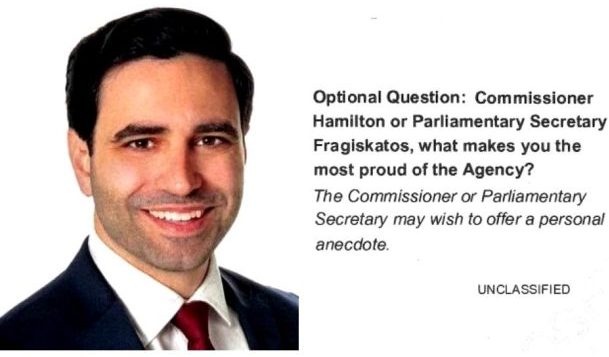
The Canada Revenue Agency in Access To Information records scripted a Zoom call with employees by Liberal MP Peter Fragiskatos (London North Centre, Ont.), parliamentary secretary for revenue. Fragiskatos was instructed to tell a “very touching” anecdote about an auditor he never met and praise the Agency’s work: “Wow, congratulations!”
Freeland Upset By Rate Hike
The latest interest rate hike will see “a lot of people struggling,” Finance Minister Chrystia Freeland said yesterday. The Bank of Canada raised its charge on interbank loans from 4.5 to 4.75 percent. The rate was 1.5 percent a year ago: “It is an issue that worries me a lot.”
First Random Pot Tests OK’d
The first federal employer to introduce random workplace marijuana testing has won a Federal Court judgment upholding the practice, it said. The Canadian Nuclear Safety Commission yesterday described random tests as essential though they were struck down by the Supreme Court a decade ago: “We are proud to have been the first.”
Postal Seizure Bill Proceeds
The Senate has given Second Reading to a bill allowing police to intercept parcels in the mail. Federal law dating from the Confederation era prohibits police from opening suspicious packages in transit: “This ban is far too broad.”
MP’s Nomination “Strange”
There were “clearly strange practices” in the nomination of MP Han Dong (Don Valley North, Ont.) as a Liberal candidate in 2019, David Johnston yesterday told the House affairs committee. Johnston admitted he never questioned Dong about his dealings with Chinese officials: “There clearly were strange practices, unusual practices going on,”
I Did Not Get It All: Johnston
David Johnston, 81, yesterday testified he did not see “every bit of information we would like to” before absolving cabinet of any wrongdoing in its handling of suspected election fraud involving Chinese agents. Members of the House affairs committee expressed astonishment that Johnston never bothered to talk to Elections Canada: “Are you saying you didn’t have all the material evidence?”