
Parliament should federalize rent controls and cover late payments for tenants “at risk of immediate homelessness,” says the only MP in the federal New Democrat leadership race. Heather McPherson (Edmonton Strathcona) yesterday said regulation must not be left to landlords and local authorities: “Affordable housing is non-negotiable.”
Vacancy Tax Barely Worth It
A now-suspended tax on foreign-owned vacant residences cost nearly as much to collect as it raised in cash, according to Canada Revenue Agency figures. Finance Minister François-Philippe Champagne announced repeal of the tax last November 4: “The form is six pages long.”
Reduce Salt Or Face ‘Actions’
The Department of Health this year will monitor industry’s compliance with a voluntary plan to save billions in health care costs by cutting sodium levels in processed foods. Non-compliance “will inform future actions,” the department wrote in a report to the Senate: “Industry needs to make additional efforts.”
More Research On Mistrust
The Public Health Agency yesterday budgeted $80,000 to have pollsters design future surveys regarding Canadians’ willingness to take medical advice from the government. It followed a 2023 report acknowledging “increased distrust of government and science.”
Freeland’s Silent On Conflict
Liberal MP Chrystia Freeland (University-Rosedale, Ont.) only days after consulting Canadian CEOs on investment in Ukraine yesterday accepted appointment as an advisor to Ukraine’s President for “attracting investment.” Federal law prohibits public office holders from using their office to further a private interest: “Oh, is it the right time to invest in Ukraine?”
Foreign Inaction “Insulting”
Cabinet is undermining a federal law to unmask foreign agents, the vice-chair of the Commons public safety committee said yesterday. Comments by Conservative MP Frank Caputo (Kamloops-Thompson, B.C.) followed disclosures the Department of Public Safety contemplated trivial fines against scofflaws found in breach of an Act of Parliament: “No surprise.”
Take Blame For Big IT Failure
Shared Services Canada, the federal IT department, promises it has “lessons learned” after blaming staff error for a days-long shutdown of electronic security checks and border controls last September. No one was fired, and no travelers or shippers were compensated for delays: ‘There were real world impacts.’
Calls Oil & Gas The Cleanest
The environment department in a briefing note for Minister Julie Dabrusin said Canadian oil and gas is “among the cleanest” in the world. The document is dated just weeks before cabinet agreed in principle to expand Alberta oil exports and suspend a Pacific Coast tanker ban: “Canada can produce among the cleanest oil and gas products in the world.”
Bad Year For Prison Breaks
The Correctional Service says 2025 was a bad year for prison breaks. The number of escapes from federal penitentiaries more than doubled. No reason was given: “Incidents were primarily ‘walkaways’ from minimum security institutions.”
$50 Fine For Foreign Agents
Public Safety Minister Gary Anandasangaree proposes to weaken a public foreign registry mandated by Parliament 19 months ago. Anandasangaree in draft regulations disclosed Saturday suggested penalties be as modest as a $50 fine and that cash payments to foreign agents remain hidden in the name of privacy: “Regulations would allow certain information not to be published.”
Fed Renege On NATO Pledge
Cabinet quietly reneged on its pledge to NATO allies that it would spend 2 percent of GDP on military preparedness by December 31. Defence Minister David McGuinty’s department had no public comment and would not release its internal estimate of military spending under Access To Information: “Aspiration without effort is just empty rhetoric.”
Billable Hours Up To $567M
Lawyers at the Department of Justice ran up nearly $600 million in billable hours last year, says an internal report. New figures followed data showing a third of cases were lost or settled: “There were approximately 43,000 ongoing litigation files.”
Gov’t Polled On Crime Fears
Canadians in Privy Council focus groups complain property crimes including auto theft are now commonplace and that Parliament must “toughen bail laws.” The in-house research concluded virtually all people surveyed rated crime a major issue: ‘A number thought the federal government should introduce harsher consequences for repeat offenders.’
Baffled By Autism Rate Spike
The Public Health Agency in first-ever national data confirms rates of autism diagnoses have skyrocketed in Canada but could not say why. The federal compilation of figures was “a valuable opportunity to address longstanding data gaps,” it said.
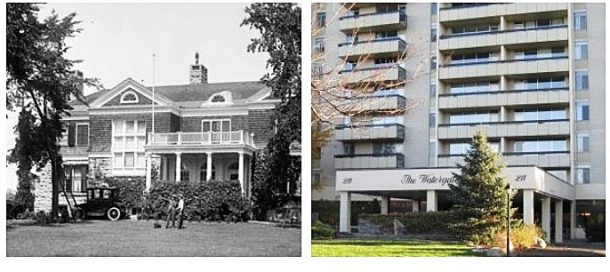
Ottawa Lost: A Hero’s Home
Why do some landmarks escape the wrecking ball, and others not? Gone forever is the Ottawa home of Robert Borden, WWI prime minister depicted on the $100 banknote. In 1962 it was pondered as a possible National Historic Site. In 1971 it was demolished by Cadillac Fairview Developments to make way for a grey complex with an unfortunate name, the Watergate Apartments.
It was “Glensmere,” a Queen Ann Revival mansion at 201 Wurtemburg Street on the Rideau River; for 31 years a place of repose and happiness for Borden and his wife Laura. Built in 1894 on park-like grounds, it was designed by the same British-born architect who designed the ornate interior of the Library of Parliament, Frederick J. Alexander. Glensmere was a generous combination of wood and stone, projecting gables and a wraparound verandah.
As prime minister Borden ended his workday by walking three kilometres from Parliament Hill home to Wurtemburg Street. Here this modest man spent contemplative moments gardening, bird-watching and practicing his golf swing. Here Borden entertained VIPs and plotted Canada’s war through two tumultuous terms.
“No Canadian prime minister faced quite the same preponderance of grave problems as proved his lot in wartime,” wrote a newspaperman in 1937. “At heart he was a man of simple tastes, unpretentious and democratic despite the wealth of high honours properly bestowed upon him.”
Maclean’s readers in 1927 voted Borden among the “greatest living Canadians.” When he died in 1937 grieving war veterans stood with heads bowed outside the Glensmere home and all along the road to Borden’s grave at Beechwood Cemetery. “Life is vain,” Borden wrote. “Life is short.”
Borden bought Glensmere in 1906. The house then was as unaffected as the man. It was so drafty a radiator froze and burst his first winter in the place. Borden complained the street was pot-holed, the grounds were a “jungle” of weeds and the city had left a derelict graveyard across the street overgrown with bushes where “undesirable characters” liked to hang out.
He spent the rest of his life improving the home and property. When the city reclaimed the neighbouring graveyard as a park Borden had it named in honour of John A. Macdonald.
In 1942 Borden’s nephew sold Glensmere to the Chinese Nationalist Government. It remained a legation until 1970, when it was lost to the wreckers.
In a cruel joke on Borden’s memory, a splendid house next door to his prized Glensmere not only stands but is now protected. Yet there is no plaque to commemorate Canada’s wartime prime minister lived on Wurtemburg Street. All that remains is an old iron fence with Gloucester limestone pillars, a silent sentinel to what once stood here.
By Andrew Elliott