
Canada “had a better pandemic” than other Western countries, says Prime Minister Justin Trudeau. Speaking to reporters, Trudeau selectively quoted statistics in crediting his cabinet with strong Covid management: ‘We had greater social cohesion than many other places.’
Claim Abuse Of Free Speech
Parliamentarians’ freedom of speech should be monitored to prevent anti-Muslim sentiment, the Canadian Muslim Public Affairs Council says in a Senate submission. The group claimed MPs and senators have used their protection from libel suits to “spread hate.”
Banks To Pay For Regulations
Banks, currency dealers, realtors and others face a yearly toll to finance enforcement of anti-terror regulations. The Department of Finance in a notice Saturday said the multi-million dollar cost of enforcement should be carried by business, not taxpayers; ‘The scheme is predictable and simple to administer.’
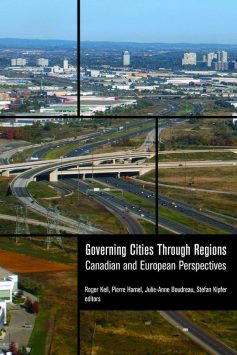
Review: City Life
For anyone who’s driven the Trans-Canada Highway from Winnipeg to Toronto by the north shore of Lake Superior, where your only companions are 2,000 kilometres of rocks and trees, an arresting thought: “Canada and Europe rank among the most urbanized areas in the world.”
So Governing Cities Through Regions draws readers into a compelling conflict that’s escaped the attention of most pundits and politicians. “There are now increasing tensions between the demands of more complex urban cities and economies, and the political constitutions and institutions of national affairs,” editors write.
Canada has no Minister of Urban Development. Alberta in 1994 shut down its regional planning commissions as an austerity measure. Planning was strictly voluntary. As Prof. Pierre Hamel of the Université de Montréal puts it, “This standpoint is anything but awkward to observers of the urban scene, as Canadians are increasingly living in cities and have never been more concentrated in city-regions.”
Governing Cities Through Regions spies the land. In Vancouver, municipal authorities run their own railway, SkyTrain, and their own navy, the SeaBus ferry system. The Greater Vancouver Regional Board manages its own dam and water reservoirs and a bureaucracy of 1,300.
In Toronto, the Community Housing Corporation manages $6 billion in property with 164,000 tenants, a bigger constituency than the City of Moncton. In Markham, Ont., where the city did not even exist in 1969, the district is home to 332,000 people and 400 corporate head offices.
“Institutional reform of metropolitan areas has remained elusive,” note editors of Governing Cities Through Regions. “In spite of various national and regional state efforts since the 1960s, most major North American and European metropolitan areas by the end of the twentieth century did not have true metropolitan governments.”
Editors compare Toronto and Montréal, Paris and Frankfurt, Winnipeg and another “typical slow-growth city”, post-Soviet Katowice, Poland. The contrasts are not flattering.
Montréal has the highest rate of low-income households in any major Canadian city, 29 percent. Winnipeg estimates 20 percent of inner-city streets are in such poor shape they must be rebuilt. Toronto’s dysfunction is legendary.
“One of the arguments of why regions matter is because the image that somehow the region consists of Toronto, which has pockets of poverty surrounded by a whole bunch of suburbs which are relatively middle class, is in fact not true,” a housing official tells editors. “The issues and needs are very similar across the region.”
Governing Cities Through Regions examines the problem, and identifies solutions. We are so much more than 2,000 kilometres of rocks and trees.
By Holly Doan
Governing Cities Through Regions: Canadian and European Perspectives, edited by Roger Keil, Pierre Hamel, Julie-Anne Boudreau and Stefan Kipfer; Wilfrid Laurier University Press; 416 pages; ISBN 9781-77112-771; $39.99

Here Is What The Judge Said
“In the report I chronicle the origins of the Freedom Convoy. I conclude it was not an organization with clear leadership. Rather it was a movement comprised of people who shared certain social, economic and political grievances, but also had countless individual views. Many of the protesters’ concerns long predated the Covid-19 pandemic. They were rooted in feelings of loss of place within Canadian society, alienation, economic anxieties and loss of faith in government.
“That said, the pandemic and responding public health measures were an important motivator that caused the Freedom Convoy to mobilize. Some will want my report to make findings or conclusions about Covid itself or the correctness of how government responded to it. Those people may be disappointed. My mandate is not about the pandemic or public health policy. Those are important topics but not one with which I have been tasked.
“I do however make two observations. First, the Covid-19 pandemic was perhaps a once in a generation crisis. Governments – federal, provincial, municipal – responded in good faith to circumstances as they understood them. Second, however one views those responses, they imposed real hardships on thousands of Canadians. People did not only lose family and friends to the disease, some also lost jobs, businesses, homes and savings. Many more such as health care workers laboured under extremely difficult circumstances.
“Truckers were another group that felt a heavy weight from the pandemic sometimes made more difficult by health measures put in place by government. When new rules that limited the ability of unvaccinated truckers to cross the Canada-U.S. border were announced, this served as a rallying point for those who disagreed with government policy. These individuals organized, mobilized and became what would be known as the Freedom Convoy movement.
“One of the most cherished rights enjoyed by Canadians is the right to engage in political protest. The ability of individuals and groups to publicly voice their dissent enriches and empowers our democracy. It’s hardly surprising that government health measures would cause some form of protest in response given their impact on people’s lives.
“What was surprising was the size and scale of these protests and the way in which they proliferated across the country. The majority of those who participated in the protest were animated by a genuine desire to engage in peaceful demonstrations so their voices would be heard by leaders in government. They wished to exercise their fundamental right to express their political views and they had a right to do so.
“However, like any large group, there was a diversity of views and intentions among the participants of the Freedom Convoy. Amongst the many who intended to protest peacefully were others who had more sinister goals or who were willing to engage in dangerous conduct to achieve their desired ends.
“For reasons I discuss in my report, what began as a massive protest evolved into something entirely unprecedented, an occupation of the core of the nation’s capital. The events of January and February 2022 were not limited to Ottawa. As I describe in my report, protests were occurring across the country in places such as Coutts, Alta., Emerson, Man. and Windsor, Ont. These protests were also diverse. They ranged from peaceful marches to blockades of critical infrastructure.
“The size and scope of these protests was truly unprecedented. Police and governments alike struggled to respond. Ultimately the federal government’s response was to declare a public order emergency. The question is what role I should play in assessing cabinet’s decision to invoke the Emergencies Act. There is no precedent that helps to answer that question…
“After careful reflection I have concluded the very high level threshold required for invocation of the Act was met. In particular for reasons I discuss in detail in the report, I conclude when the decision was made to invoke the Act on February 14, 2022 cabinet had reasonable grounds to believe there existed a national emergency arising from threats to the security of Canada that necessitated the taking of special temporary measures.
“I do not come to this conclusion easily as I do not consider the factual basis for it to be overwhelming. Reasonable and informed people could reach a different conclusion than the one I have arrived at.”
Says Recession’s Not So Bad
A looming recession “is not going to feel like what people think of when you say the word recession,” Bank of Canada Governor Tiff Macklem said yesterday. Macklem added, “We don’t have a crystal ball.”
66% Of Payouts Had “Issue”
Investigators in random checks uncovered problems with almost two-thirds of claims under the $100.6 billion Canada Emergency Wage Subsidy, says Auditor General Karen Hogan. The rate was so high it “requires you to really look more,” said Hogan: “We want to hope every Canadian is going to be Canadian and be honest, but to maintain the integrity of the tax system there are checks and balances that are needed.”
Gould Never Told The Union
Service Canada workers yesterday protested Social Development Minister Karina Gould’s haphazard lifting of the last federal mask mandate. Gould let the news slip at a committee hearing Tuesday ahead of a “consultation” meeting with the Canada Employment and Immigration Union: “You lack total respect for us. We are left with the only option, to respond in kind.”
Dep’t Conceals Hockey Audit
The Department of Canadian Heritage yesterday refused to disclose its full audit of taxpayer-subsidized Hockey Canada. An auditors’ summary concluded public funds were not used to finance out-of-court settlements of sex crime allegations: “There is something truly revolting here.”
Bankruptcy Bill Clears Hurdle
A bill to reform bankruptcy law to benefit pensioners yesterday passed the Senate banking committee, a key hurdle. Bankruptcy trustees made a last bid to amend the private bill: “Everybody loses money in a bankruptcy.”
Counts Few Racists, “But — “
Few Canadians are outright racists but many hold stereotypically bigoted views of Chinese people, says Senator Yuen Pau Woo (B.C.). The Liberal appointee complained Chinese Canadians are expected to renounce the motherland or be “seen as suspicious.”
Complaints Backlog Hits 38K
The backlog of air complaints at the Canadian Transportation Agency is up to 38,000, a new record, the Senate transport committee was told last night. The Agency has calculated it takes a year to process 15,000 complaints: “There is a lot of frustration.”
Rang Up $3M In Travel Costs
Julie Payette cost taxpayers nearly $3 million in VIP travel expenses as Governor General before pandemic lockdowns put a halt to her travels, new records show. Payette had publicly appealed to Canadians for self-sacrifice to reduce poverty and “help improve the lives of people.”
Fed Tree Plan A Slow Starter
Cabinet is off to a slow start on the 2019 promise by then-Environment Minister Catherine McKenna to plant two billion trees. Authorities complained seedlings take too long to grow: “We often get the question, where are those two billion trees?”
Biggest Lead Ban Since 1990
The Department of Environment yesterday introduced the most sweeping lead ban since Parliament outlawed the retail sale of leaded gasoline in 1990. Toxic lead wheel weights are now restricted. Regulators stopped short of banning hunters’ lead ammunition and fishing jigs and sinkers: “We now believe there is no safe level of lead.”



