Cabinet will not name federal officials that approved funding for an anti-Semite who fantasized on Twitter about shooting Jews. Diversity Minister Ahmed Hussen told the Commons heritage committee he was not personally to blame: “We trusted at that time that adequate vetting had been completed.”
Add 500,000 Foreign Workers
A change in immigration rules will see half a million foreign students eligible to work full time in Canada. “It’s good for our economy,” Immigration Minister Sean Fraser told the Commons: “It is a great day for international students.”
For 11 Years Of Thanksgiving
We are grateful this holiday to friends and subscribers for your support as Blacklock’s embarks on an 11th great year of independent, all-original Canadian journalism. On behalf of all our contributors, please accept our thanks. We’re back tomorrow — The Editor.
Ottawa Lost: Bagman Station
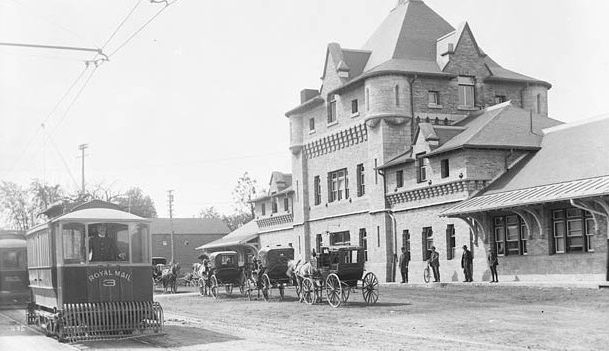
It was a monument to scandal. For 19th century visitors and VIPs, the last stop in Ottawa was Canadian Pacific Railway’s Broad Street station. It had no more frequent visitor than Prime Minister John Abbott, millionaire lawyer and CPR fixer. The station is gone now, the scandal forgotten. And Abbott is recalled only as the great-grandfather of actor Christopher Plummer.
The Broad Street station was designed by architect Edward Maxwell in the trademark chateau style the CPR made famous nationwide. It rang to the hiss and clang of steam locomotives on the Ottawa-to-Montreal run morning, noon and night.
Abbott traveled by free CPR pass between Montreal and Parliament Hill, but not always on public business. As counsel he incorporated the CPR and served as director. He also toted the cash used to buy votes in the House and Senate. Abbott was a key figure in the 1874 Pacific Scandal, “the most stupendous contract ever made under a responsible government,” as one newspaperman put it.
The CPR was granted $25,000,000 in subsidies, a land grant of 25 million acres, a 20-year monopoly on freight rates, free right-of-way through Crown lands and exemption from all local taxes in the West. In exchange the railway paid kickbacks to John A. Macdonald and his cabinet totaling $440,000.
“Even to railway promoters of the United States, accustomed as they were to the lobbying and corruption in the legislatures of their country, the lavish terms of this agreement caused astonishment,” wrote an MP.
Abbott kept a tally of all the payoffs but on the witness stand at a subsequent inquiry suffered a memory lapse. Asked if he acted as a CPR bagman, Abbott replied: “No, I don’t think I was –”
Public life made Abbott rich. He owned a fabulous mansion in Montreal, a 300-acre country estate on the west end of the island. Here he built a baronial house with a library and conservatories surrounded by farms, orchards and gardens. No wonder he didn’t have a residence in Ottawa. He could escape Parliament Hill, arriving at the Broad Street station at dinnertime and be in Montreal by 9 pm.
Despite the Pacific Scandal Abbott survived politically in the Senate. Named a caretaker prime minister in 1891, he served eighteen joyless months as leader. “I hate politics,” Abbott wrote. “Why should I go where the doing of public work will only make me hated?”
He remains the only prime minister who never made a public speech. When he died of cancer in 1893 Saturday Night magazine marveled the news “occasioned surprisingly little comment.”
The Broad Street train station burned in a 1900 fire. The old CPR tracks on what is now LeBreton Flats were removed by 1970.
By Andrew Elliott

Review – Nazis In Northern Ontario
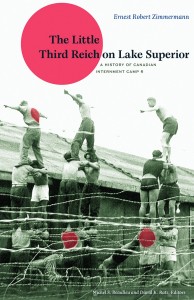
Hitler’s publicist once spent the winter in Red Rock, Ont., humming the Horst Wessel Song and cursing his fate. In the carnival of Canadian oddities, none is more curious than The Little Third Reich On Lake Superior. Historian Ernest Zimmerman of Lakehead University chronicles the strange events that saw 1,150 men and boys – Jews and Nazis alike – herded into bunkhouses northeast of Thunder Bay in the winter of 1940.
It was a “third-rate jungle prison,” one inmate recalled. Another complained it was like being kidnapped and dragged into the wilderness. “They deeply resented the treatment,” Zimmerman writes. “They resented being in foreign surroundings, away from home, and being treated as prisoners of war rather than refugees.”
Professor Zimmerman died in 2008, still working on his manuscript. His drafts and notes were compiled into this lively chronice by two Lakehead historians, Michel Beaulieu and David Ratz.
On May 30, 1940 Britain’s wartime cabinet asked Canada to take 35,000 enemy aliens off its hands. Note the date: German U-boats were prowling the Atlantic; Norway, France and the Low Countries had fallen to the Nazis; Britain feared imminent attack. “The rationale was that in the event of a German invasion, the threat of a ‘fifth column’ would be reduced,” Zimmerman writes.
Deportees were a mix of merchant sailors, Hitler youth, Jewish refugees and pretty much anyone with a German passport now branded a security risk. “Instead of using the deportation as an opportunity to distinguish real Nazis from actual non-Nazis, the selection process for deportation degenerated into a ‘mere juggling of numbers, as if a train timetable were being arranged, and not the disposition of human beings,’” notes Little Third Reich.
They were banished to Québec City aboard the Canadian Pacific liner Duchess Of York and put on a passenger train for the two-day journey to internment at an abandoned paper mill. Little Third Reich counts 26 such camps nationwide from Kananaskis Park in Alberta to Montréal’s St. Helen’s Island, future site of Expo 67. None were bigger than Camp R at Red Rock.
Refugees and Nazis “viewed each other with ‘horror and loathing’,” Zimmerman writes, yet camp life settled into a passable routine with few incidents save occasional fistfights and crude score-settling. When the camp commander ordered kitchen staff to prepare a kosher meal for Chanukah, Nazi cooks instead served bacon. “In general there is a fairly friendly atmosphere in the camp,” a visiting officer wrote. “However, there will always be tension while there are two intensely hostile groups.”
Inmates had radios and movie nights, swam in Lake Superior and organized boxing tournaments and a brass band. Food was plentiful – “never the same soup two days in a row” – and prisoners whiled away the hours at a woodshop making handicrafts to sell in the drugstore at nearby Nipigon, Ont. Ships in a bottle sold for $1.75. “There is just no variety at all,” lamented one inmate. “Every day, roll call, meals, another roll call, bed. You lose your sense of time.” There were worse ways to spend the war.
Camp R was home to minor celebrities. Inmates included a cousin of the Red Baron, a foreign correspondent for the liberal daily Vossische Zeitung, the first newspaper to serialize the anti-war novel All Quiet On The Western Front, and Ernst Hanfstaengl, a Bavarian bon vivant who’d served as publicity agent for Adolf Hitler in the early years and claimed to have invented the salute “Sieg Heil.”
The camp lasted sixteen months, a peculiar corner of the war in Northern Ontario. No plaque marks the site.
By Holly Doan
The Little Third Reich On Lake Superior by Ernest R. Zimmerman; University of Alberta Press; 384 pages; ISBN 9780-8886-46736; $29.95
OK’d Convoy At Parliament
Peter Sloly, former Ottawa police chief, last night said Freedom Convoy demonstrators were told by local law enforcement they could park outside Parliament. Testifying at committee, Sloly said it was only when truckers declined to leave after a few days that the protest became what he called a “national security crisis.”
Inflation’s All Ours: Macklem
Inflation in Canada is now home grown, Bank of Canada Governor Tiff Macklem said yesterday. Macklem and others for months had blamed rising costs on global developments: “Increasingly the inflation we’re seeing in Canada reflects what’s going on in Canada.”
Latest ‘Subsidy’ Worth $329M
Big publishers and TV networks including the CBC are up for more than a third of a billion a year under cabinet’s Bill C-18, the Parliamentary Budget Office said yesterday. Independent publishers opposed to the bill have called it another federal subsidy for distrusted media: “We expect news businesses to receive total compensation around $329.2 million per year.”
Feds Reject Atlantic Seal Cull
The Department of Fisheries yesterday said it has no plans for an Atlantic seal cull despite repeated appeals from MPs and senators. Legislators from Atlantic Canada have sought a cull over complaints predatory seals eat too many fish: “The department is not looking at a seal population control program at this time.”
Unsure If Bill Revives French
There is no guarantee a cabinet bill expanding bilingual mandates to the private sector will halt the decline in French, Languages Commissioner Raymond Théberge said yesterday. MPs at the Commons languages committee questioned how the mandate would apply in cities like Regina where francophones are outnumbered 200 to 1: “If we don’t do anything the decline will continue.”
Won’t Explain April 31 Notice
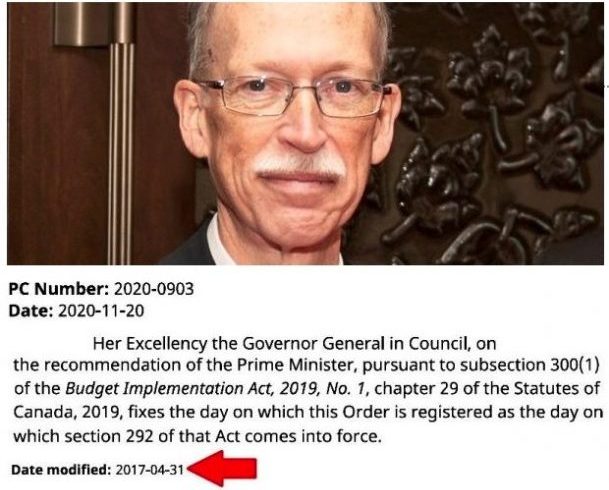
Records show the head of the federal public service, then-Privy Council Clerk Ian Shugart, certified a copy of an “April 31” website notice used to mislead a federal judge in a trademarks dispute. The notice included a “date modified” entry of April 31, 2017. April does not have 31 days: “There appears to have been a misunderstanding.”

Mendicino Records Censored
A member of the Commons ethics committee yesterday questioned censorship of records detailing attempts by now-Public Safety Minister Marco Mendicino to backdate documents in a Federal Court case. “We don’t know whether it’s obfuscation, whether it’s abdication or whether it’s a cover-up,” Conservative MP James Bezan (Selkirk-Interlake, Man.) told the committee: “The question was about Minister Mendicino’s involvement with the potential falsification of records.”
20-Month Complaint Queue
Air passengers filing federal complaints over poor service can expect to wait nearly two years, says the Canadian Transportation Agency. One consumers’ advocate called the backlog predictable: “There’s always room to improve.”
Paid $100B Without Checking
The Canada Revenue Agency “could have done some sort of screening” before paying out claims under the costliest pandemic relief program, says Auditor General Karen Hogan. The Canada Emergency Wage Subsidy cost taxpayers $100.6 billion including payments to companies in tax default: “The Agency had information where they could have vetted the eligibility of businesses.”
Commons Likes Taiwan 325-0
The Commons yesterday voted unanimously to endorse Taiwan’s bid for membership in the World Health Organization. The House passed a motion sponsored by Conservative MP Michael Barrett (Leeds-Grenville, Ont.) that it concur with a recommendation of the health committee to lift a China ban on Taiwanese participation: “Taiwan deserves a seat at the table.”