
Auditors at the Department of Veterans Affairs are questioning millions spent on an old navy cemetery. The department billed taxpayers $4 million for graveyard upgrades like plots that were never sold and trails that were never used: “There is no plan.”
Propose $900 Flood Coverage
Homeowners on flood plains face a mandatory $900 a year premium for additional insurance under a proposal yesterday by a federal task force. A national insurance program is need to save taxpayers the cost of ad hoc disaster aid, it said: “It is the country’s most common and costly natural disaster.”
“Perfect Storm” Of Inflation
Inflation is a “perfect storm” for wage earners, says an Ontario labour arbitrator. Private sector wage settlements across Canada this year are averaging as high as three percent or more in a bid to catch up with the cost of living: “What was once hoped to be ‘temporary’ is proving stubborn and persistent.”
Number One Worry: Inflation
Inflation is the leading worry for Canadians with many questioning if the country’s best years are behind it, says internal Department of Finance research. Canadians told Minister Chrystia Freeland’s pollsters the cost of living was a bigger worry than crime, terrorism or climate change: “Wages have not kept up.”
Never Knew Of Grant: Miller
Crown-Indigenous Relations Minister Marc Miller yesterday said he had no idea his office approved a Canada Summer Student grant for a group whose anti-Semitic senior consultant campaigned against Jews as “human garbage.” Miller said the funding should be returned: “He’s held horribly anti-Semitic statements that we should have known about earlier.”
“Leaning In” On Censor Bill
Cabinet is “leaning in” on a pending bill to censor legal internet content and will introduce the legislation as soon as possible, Public Safety Minister Marco Mendicino said yesterday. The effort has stalled since first proposed in 2019: “Others within our government are leaning in on this and will bring forward the legislation as quickly as possible.”
Lawsuit Over C.R.A. Software
A federal judge has certified a class action lawsuit against the Canada Revenue Agency over hacking of thousands of online accounts by CERB cheats. The Agency acknowledged flaws in its software allowed hackers to steal taxpayers’ ID to claim $2,000 pandemic relief cheques: “Did these attacks not demonstrate there was a total failure of the systems?”

July Blackout Highly Relevant
Rogers Communications Inc. must answer for a July 8 blackout in pressing for its takeover of rival Shaw Communications, Chief Justice Paul Crampton of the Federal Court has ruled. Rogers executives had questioned the relevance of the internet shutdown that affected 12 million customers: “We work hard to bring the best value for money for our customers.”
Minister Approved Job Grant
Crown-Indigenous Relations Minister Marc Miller’s office approved a Canada Summer Student grant application by a Montréal group linked to anti-Semitic slurs. Cabinet at the time required applicants to swear an oath to “respect individual human rights.”

Fed Consultant Claimed Press Controlled By “Two Zionists”
A federal contractor paid as a media consultant by the Department of Canadian Heritage for years claimed Zionists controlled newspapers in Canada. Friends of Jews “monopolize North American media,” wrote Laith Marouf: “The majority of Canadian media is owned by two Zionists.”
Drunk’s Lawyer Found Error
A drafting error by the Department of Justice will save a convicted drunk driver from a six-year license suspension, a judge has ruled. “Mistakes happen,” said the Ontario Court of Appeal: “They happen everywhere. One appears to have happened here.”
Gave Vax Suits Little Chance
The Public Service Alliance of Canada, the largest federal union, never challenged vaccine mandates in court because they “would have little chance of success,” it said. The comments came in a labour board hearing on the Alliance’s representation of members: “It was decided the best approach would be to handle files case by case.”
Air Canada Excuse Dismissed
Air Canada has been ordered to pay $1,000 each to a Fort St. John, B.C. couple whose flight was delayed more than nine hours due to “crew constraints.” A similar July 12 ruling against WestJet is being challenged in Federal Court amid fears airlines now owe clients millions in compensation: “Assessment must be made on a case by case basis.”
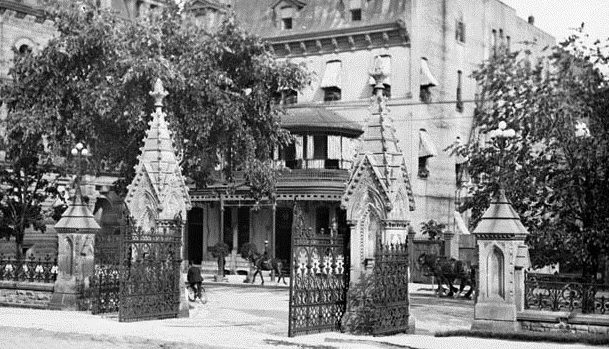
Ottawa Lost: Bennett’s Club
In 1911, when Richard Bedford Bennett first arrived in Ottawa as the bachelor MP for Calgary West, his choice of accommodation was the Rideau Club. No finer meal could be had. Bennett loved food. “He believed if he put on weight he would present a more impressive appearance,” a friend recalled.
In the end Bennett ate his way to diabetes and heart disease and the Rideau Club burned to the ground. But once both were in their glory.
Bennett was a self-made millionaire and corporate lawyer. He was brash, opinionated, obsessive, mercurial, philanthropic and a workaholic. Bennett put in 16 hour-days amassing his fortune.
He said tersely of his time in Calgary: “I went West. I worked. The country and I grew with it.” In Calgary Bennett was somebody. In Ottawa this tall, portly man was a backbencher. His first impressions of both the capital and parliament were thin.
“I am sick of it here,” he wrote a friend. “There is little or nothing to do, and what there is to do is that of a party hack or departmental clerk or messenger.”
In 1911, the Rideau Club opened a stately new four-story headquarters at Wellington and Metcalfe Streets in Ottawa, a stone’s throw from Parliament. The club was a terra cotta beauty and Conservative institution. John A. Macdonald was first club president. Prime Minister Robert Borden used the clubhouse for cabinet meetings.
One newspaperman observed, “Ottawans who cared not at all for the Rideau Club as a club cared a lot about the building. It presented an elegant, finely proportioned but unobtrusive façade that stared steadily across Wellington Street, decade after decade, towards the parliament.”
With its upholstered lounges and elegant dining, it was an obvious attraction for the Calgary MP. A light lunch for Bennett was a dozen oysters with pie and maple syrup. He snacked on chocolates by the box. A lifelong chum Max Aitken recalled: “His daily breakfast was immense: a plate of porridge, bacon and eggs, plenty of toast, honey or marmalade.”
At the Rideau Club Bennett never lingered in the cigar lounge. He loathed smoking and could not stand a dirty ashtray. And the bar? “I promised my mother I would never drink and I never have,” he said, though Bennett took his meals with a glass of crème de menthe and laced his soup with tumblers of sherry.
Bennett served six terms in the House. He relocated in time from the Rideau Club to the Chateau Laurier Hotel where Bennett kept a suite. He won the Conservative leadership and served as prime minister, from 1930 to ’35. In retirement Bennett bought an English manor where his gardener recalled he liked to eat buttered asparagus by the pound.
Bennett died of a heart attack at 76. He remains the only prime minister buried outside Canada. And the Rideau Club? It went up in flames Oct. 23, 1979. A century of furnishings, artwork and irreplaceable mementos were lost. The elegant landmark was reduced to a smoldering shell. Today the site is a paved lot.
By Andrew Elliott

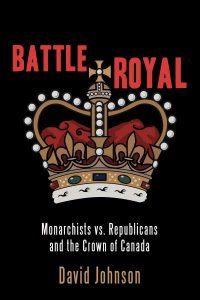
Review: Not 1952
Many Canadians recall when a portrait of Her Majesty was displayed in every post office and hockey rink and a thumping rendition of God Save The Queen was a staple of service club luncheons. Much has changed since a monarch last ascended to the throne in “an age of deference,” as David Johnson puts it.
“We are coming to the end of an era,” Johnston writes in Battle Royal. “Elizabeth II, a seemingly near permanent feature of life for so many people, is in her twilight years. At any point in the next decade or so the Queen will die and her son Charles, Prince of Wales, will become king. Monarchists will rejoice at this succession, following the ancient protocols of English common law, but republicans will grimace.”
Battle Royal is a crisp examination of where Canadians stand or fall on the relevance of the monarchy. Even die-hard republicans can’t bother with the tedious chore of changing the Constitution Act to replace the new king with a Canadian head of state, but this is not the point, notes the author. “This we know: The monarchy will continue to exist in Canada once Elizabeth II is gone, and the Canadian vice-regents will carry on their work as they always have,” writes Johnson of Cape Breton University. “There is a world of difference, however, between existing and thriving.”
At the last succession in 1952 the relevance of English monarchs to the World War II generation was unquestioned. Elizabeth remains the only queen who knows how to fix a carburetor, as a 1945 mechanic in the Auxiliary Territorial Service.
The House of Windsor was celebrated as tangible proof of English superiority. Canadians in 1952 still recalled the gruesome fate of lesser royal houses. Seven foreign kings were assassinated from 1900 to 1934 like Alexander I of Serbia, “a flabby young man with pince-nez who had a taste for clumsy experiments in absolutism,” wrote journalist Rebecca West in 1941. Alexander’s killers found him cringing in a secret closet of his Belgrade palace, shot and stabbed him and his Queen Draga and tossed their naked corpses off a balcony. Not very British.
But this is now. Professor Johnson captures the moment perfectly. Deference is gone and Canadian monarchists have no new ideas to make the institution fresh or relevant. As Battle Royal explains, “The country needs a head of state; the head of state has always been a monarch; therefore the country needs a monarch as head of state. While this logic is completely illogical to a republican, it satisfies the monarchists’ reverence for the past and their need for a sense of order.”
“The monarchist defence presented here is far from new,” Johnson writes. “In 1915 Spanish Princess Eulalia wondered how the British people would be any better off if they abolished the royal family. ‘They would gain as little,’ she said, ‘as if by a popular uprising, the citizens of London killed the lions in their zoo. There may have been a time when lions were dangerous in England, but the sight of them in their cages can now only give a pleasurable holiday shudder of awe – of which the nation will not willingly deprive itself.’”
Battle Royal is thoughtful and smartly written, and so unvarnished in its treatment of Canada’s head of state it could never have been published in 1952.
By Holly Doan
Battle Royal: Monarchists vs Republicans and the Crown of Canada, by David Johnson; Dundurn; 288 pages; ISBN 9781-4597-40136; $26.99