
A public outcry yesterday prompted the Commons industry committee to convene emergency hearings on a Rogers Communications blackout that affected customers nationwide. The committee will meet Friday to schedule testimony on why service to some twelve million Rogers subscribers was disrupted for days: “This is deeply upsetting and unacceptable.”
“Low” Chance Of Repayment
Taxpayers have a “very low” probability of seeing millions used to finance a foreign loan program, records show. A total $64,292,000 was termed repayable though there is little chance it will be ever be repaid, officials admitted: “The likelihood of the department being reimbursed is very low.”
Cool On Transgender Sports
Transgender men have an unfair advantage in women’s competition, says a briefing note by the federal department that funds amateur sport. The Department of Canadian Heritage has sidestepped public comment on allowing biological men to compete as women: ‘Transwomen are physiologically stronger.’
CBC Voter Questions Scripted
CBC producers helped “carefully craft” questions posed by voters to then-Opposition Leader Erin O’Toole in an election campaign broadcast, an Ombudsman’s report said yesterday. “They worked with each of the four participants to make sure their questions were focused and phrased effectively,” wrote Ombudsman Jack Nagler.
‘File Shuffling’ Cost Millions
Taxpayers have lost millions in benefits paid to undeserving claimants under a Canada Pension Plan program, says a federal audit. Management of payments appeared to be a “continuous shuffling of files,” wrote auditors: “Reassessment is very complex work.”
Soccer Counts As Vet’s Injury
A broken hip at an army soccer game qualifies as a service-related injury, a federal judge has ruled. Attendance at the game was mandatory, noted the Federal Court: “He jumped to field a ball, twisted in the air, landed awkwardly on his left leg and fell to the ground.”
$663K Saves French In Yukon
The Department of Social Development spent more than $660,000 preserving French in the Yukon, records show. The territory is home to 85 unilingual francophones, according to Census data: “I understand the importance of being able to grow up, work and live in one’s own language.”
“I Order Enterprise To Pay”
A car rental company that once settled a million-dollar federal claim for false advertising has been ordered to refund a British Columbia driver who rented a faulty SUV. Enterprise Rent-A-Car Canada Co. had blamed the driver for problems with the vehicle: “Enterprise does not dispute this claim and agrees to pay it. There is no indication that it has.”
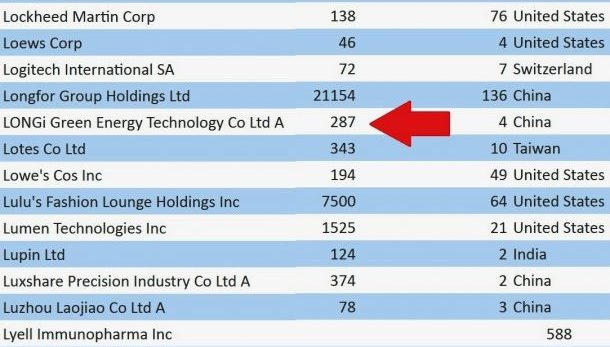
Invest Millions In China Firm Accused Of Slave Connection
A federal agency invested millions in a green energy firm accused of profiting from slave labour in China, records show. The Canada Pension Plan Investment Board disclosed in its latest filings it holds shares in a company named in a human rights report: “We are responsible for anything that is in our portfolio.”
Press Broke Russia Sanctions
The Canadian Parliamentary Press Gallery is in breach of federal sanctions against the Kremlin. Cabinet would not comment on Gallery dealings with a blacklisted entity, the official Russian news agency Itar-Tass, in breach of Special Economic Measures Regulations: “The Russian propaganda machine must answer for its lies.”
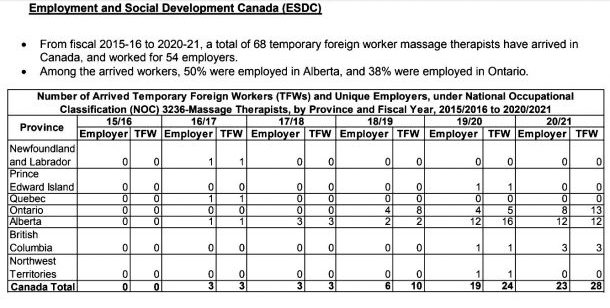
Foreign Masseuses Were OK
The Department of Employment granted dozens of permits to foreign “massage therapists” working as migrant labour in Canada, records show. Employers were not checked for links to human trafficking: “The department does not conduct criminal investigations.”
No Mask, No Pay Says Judge
A Loblaw Companies Ltd. manager suspended without pay for declining to wear a Covid mask is not entitled to damages for constructive dismissal, a judge has ruled. No mask, no pay, said the Court: “He refused to do so.”
Question Convoy Bank Freeze
The federal Privacy Commissioner is being asked to determine if the Freedom Convoy bank freeze complied with an Act of Parliament. Committee testimony from bankers suggested the blacklisting of convoy sympathizers may have breached the Privacy Act, said an MP: “What was the information shared?”
A Poem: “News Online”
You caught me
surfing the web.
I only wanted to read
the top stories.
It’s not my fault
they were topless.
(Editor’s note: poet Shai Ben-Shalom, an Israeli-born biologist, writes for Blacklock’s each and every Sunday)

Review – The Grey Man In A Grey Suit
In Ottawa in 1941 Oscar Skelton, Canada’s first deputy foreign minister, was driving on O’Connor Avenue on his lunch break when he suffered a fatal heart attack and ploughed his Packard into a streetcar. Back at the office, Skelton had secretly filed away a memo seething with frustration. His biography by acclaimed historian Norman Hillmer is worthy of a Chekhov novel: the unassuming functionary whose daily plodding concealed a boil of thwarted aspirations.
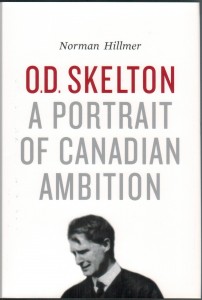
A Portrait Of Canadian Ambition is outstanding: “His grey exterior and natural reticence covered a vast range of ambitions – for an extraordinary life, for power and influence, for social standing and prosperity, and for an important place in the remaking of Canada as an independent and progressive country,” writes Hillmer, professor of history at Carleton University.
Skelton “blended in with prosaic Ottawa,” Hillmer notes. He wore tweed suits even in summer. His taste in literature ran to Agatha Christie novels. Canadians were “middle of the road, harmless people,” Skelton wrote. He liked English landscape paintings and lived in Rockcliffe Park, an Ottawa neighbourhood so dull that to this day many streets still have no sidewalks, presumably because there is no place to go.
Skelton from 1925 was head of the Department of External Affairs, a minor ministry with 140 employees that was the first to open Canadian consulates in foreign countries. Until the 1920s Ottawa relations were handled through British missions abroad.
Skelton was a 19th century man with all the narrowness that implied. “Skelton’s Canada was a white Canada,” Hillmer explains. The deputy minister did not like Jews, Blacks or Asians and privately groused about Catholics. Dining once in an inexpensive restaurant in nearby Hull, Que. – “a God-forsaken hole,” he wrote – Skelton complained of “a good deal of quarreling & staggering & foul language” by French-speaking mill workers.
Public service was good to Skelton. He was paid $10,000 a year in 1937, a handsome salary in Depression years, and lived in a six-bedroom house with servant quarters. “He would never be prime minister, but there was no question in his mind that he would have been a better one than Mackenzie King,” Ambition notes.
Skelton wanted more, for Skelton and his little department struggling to find a diplomatic role in the age of dictators. He was an early and vigorous critic of the Nazis and pleaded with Mackenzie King not to pay an embarrassing 1937 courtesy call on Hitler. The Fuehrer was a “paranoiac mystic” with a “disordered mind,” Skelton wrote. The Nazis were “dangerous and disgusting” in their persecution of Jews and “cursed with an inferiority complex which compels dangerous swaggering.”
“Skelton was inclined to the belief that the world was full of carnivorous animals,” Hillmer writes. Witnessing the unraveling of peace and 1930s appeasement, the deputy foreign minister privately despaired that Canada would tumble into another disastrous world conflict.
He committed his fears to a confidential memo written September 10, 1939 as Ottawa went to war. How “fantastic and insane” it was, he said, “for Canadians to allow themselves to be maneuvered and cajoled every quarter century into bleeding and bankrupting this young country because of age-long quarrels of European hotheads and the futility of British statesmen.”
The memo was filed away, unread, till a decade after Skelton’s death, an epilogue to a little grey man in a little grey suit.
By Holly Doan
O.D.Skelton: A Portrait of Canadian Ambition, by Norman Hillmer; University of Toronto Press; 465 pages; ISBN 9780-80200-5342; $34.97