A Liberal-appointed senator declined comment after misrepresenting a news story to question if Canadian Jews committed war crimes. Records show Senator Yuen Pau Woo (B.C.) garbled facts to post a provocative message on his Twitter account: “Why has the media been so one-sided?”
A Poem: “Help The World”
Poet Shai Ben-Shalom writes: “A welcoming gas station by the Canada-U.S. border offers two kinds of coffee: a regular House Blend and a pricey, Fair-Trade, Organic-Certified brand…”
Book Review: ’68
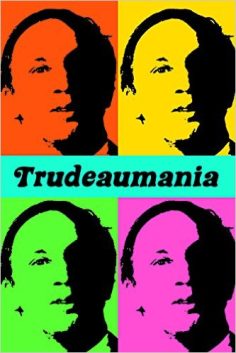
1968 is so layered in mythology it takes a surgeon’s scalpel to cut to the facts. Historian Paul Litt of Carleton University deftly slices and trims until the truth emerges in Trudeaumania. Even in death Pierre Trudeau remains a polarizing figure. Professor Litt traces the phenomenon to that long-ago campaign.
Yes, Trudeaumania was invented by media, writes Litt: “Yet the media could not have made Trudeau without a complicit audience.” Most strikingly, it could never happen exactly the same way again. The ’68 phenomenon was a collision at the intersection of time and place. Many political fixers have schemed to recreate the experience, and many have failed.
“For those caught up in the mania, 1968 was a historic turning point in which Canada left its dowdy colonial past behind and assumed a new autonomous identity as a model modern liberal democracy,” writes Litt. “They may have been deluding themselves, but since nations are fictions with real-world effects, Trudeaumania had lasting influence.”
Professor Litt is a tireless researcher and honest correspondent. He is the first to chronicle worries over Trudeau’s sexuality, serious enough to alarm Liberal organizers. Hard-bitten CBC newsman Norman DePoe once interviewed Trudeau at the Chateau Laurier pool, “known in Ottawa as a gay pickup spot,” recounts Litt. “Trudeau reclined in a lounge chair with his chin on the back of a hand supported by a folded wrist, a bit of body language coded fey in the popular culture of the day.”
Trudeau was an unlikely champion of youth culture with acne scars and thinning hair. He was 49 that year and lied about his age in the Parliamentary Guide, writes Litt. “Trudeaumania” was coined as a dismissive putdown by conservative commentator Lubor Zink, a National Newspaper Award-winning columnist with the Toronto Telegram. Zink rated Trudeau “conceited, tactless, ruthless and dangerous,” and to his last days in the Parliamentary Press Gallery in 1995 maintained Trudeau was a Red.
Nor was all Canada agog for Trudeau in 1968. It took him four ballots to win the party leadership over Robert Winters, a corporate CEO. Trudeau never won 50 percent of the popular vote. His Party lost eight seats in Atlantic ridings that year and 424,000 Canadians voted Social Credit, arch-foes of the hippie culture.
“Protest movements and the counterculture defined the Sixties because they ably exposed systemic injustice and establishment hypocrisy, were highly publicized by the media, and reflected the adolescent alienation of the rising baby boom generation,” notes Trudeaumania. “But only a small minority, even among the young, seriously challenged authority or lived the counterculture.”
But something did click in ’68, the first election in which boomers cast ballots. Trudeau was the first Prime Minister born in the 20th century. His contemporaries in Parliament were First War veterans in black Homburgs who campaigned with bagpipers. Trudeau by contrast entertained CBC-TV cameras by sliding down banisters in an era when the network monopolized a one-channel universe. Three million viewers a week watched Don Messer’s Jubilee. Trudeau by contrast was electrifying.
“It was television that first introduced Trudeau to the public, put him on the leadership radar screen with its coverage of his legal reforms, and made him a national celebrity,” writes Professor Litt; “Even as it unfolded, Trudeaumania was distinguished by a self-consciousness about the very process that enabled it. Contemporary commentators fretted terribly, regularly and publicly about whether the media were subverting the democratic process.”
One 1967 CBC-TV feature showed Trudeau “zipping around Ottawa in a sporty foreign convertible” with “an upbeat, jazzy soundtrack and shots of the Peace Tower off-kilter at a rakish forty-five-degree angle,” writes Litt. “The mod mode of presentation signaled this fresh face in cabinet was a trendy, ‘with it’ kind of guy, someone to keep an eye on.”
Nearly a generation after his death, Liberals still speak of the age of Trudeau. The facts are even better than the myth.
By Holly Doan
Trudeaumania, by Paul Litt; University of British Columbia Press; 424 pages; ISBN 9780-7748-34049; $39.95

Demanded Fed Prayer Rooms
Cabinet advisor Amira Elghawaby lobbied government managers to install Muslim prayer rooms in federal buildings though only two percent of employees self-identify as Muslim, records show. Failure to accommodate Muslim prayers in business hours was “Islamophobia in the workplace,” she wrote in notes disclosed through Access To Information: “Islamophobia is a clear and present danger to our social fabric.”
CBC Sues To Keep Info Secret
The CBC in a Federal Court filing says disclosing the number of paid subscribers to its $72-a year Gem streaming video service is too “commercially sensitive.” MPs have challenged the network to confirm ex-CEO Catherine Tait’s public boast that “millions of Canadians” subscribe: “It might be that Gem is useless and should have been torched a long time ago.”
Calls In RCMP On Corruption
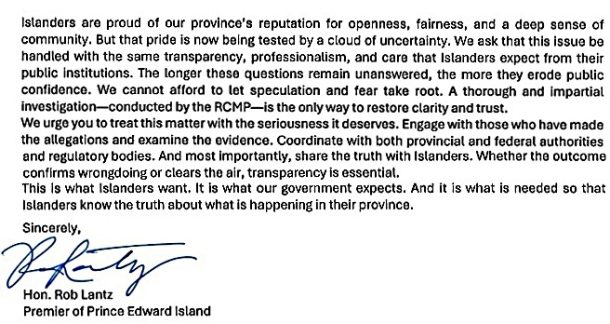
The Premier of Prince Edward Island yesterday called in the RCMP to probe provincewide allegations of corrupt practices by Chinese foreign agents. Premier Rob Lantz sidestepped calls for a judicial inquiry under the federal Inquiries Act: “I share your concerns and I believe you deserve answers.”
Feds OK 35-yr Benefits Claim
The Department of Veterans Affairs 35 years after the outbreak of the Persian Gulf War says it will rewrite regulations to pay full benefits to soldiers, sailors and air crew who served in Operation Desert Storm. MPs on the Commons veterans affairs committee complained “legal semantics” meant reduced disability benefits available to 4,458 Canadian volunteers: “The government agrees.”
PM Shelves Anti-Fraud Squad
Prime Minister Mark Carney yesterday reannounced the hiring of 1,000 new RCMP but appeared to shelve a 2021 Liberal Party promise to create a $200 million Canadian Financial Crimes Agency. Cabinet will leave it to the Mounties, he said: “We are delivering.”
Was On The Job For Palestine
Cabinet advisor Amira Elghawaby used her office to advocate for federal employees “speaking out on Palestinian issues” and lobby against B’nai Brith, records show. Censored documents detailing activities of the $191,300 Special Representative on Combating Islamophobia were disclosed yesterday through Access To Information: ‘Racism takes various forms including failing to acknowledge Palestinians as an Indigenous people.’
Ask MPs To Permit Digital ID
Canada’s airports are petitioning the Commons finance committee to introduce digital identification for domestic travelers. Current regulations require only that air passengers carry government-issue photo ID like a driver’s license: ‘It will enhance security.’
We’re A World Leader: Joly
Industry Minister Mélanie Joly yesterday called Canada a world leader in artificial intelligence. A Commons committee says Canada actually ranks 21st: “Canada ranked 21st out of 38 OECD countries.”
Reliable Power ‘Challenging’
Keeping the lights on “could be a reliability challenge” as utilities attempt to meet climate targets, the Canada Energy Regulator said yesterday. The federal agency invoked an energy alert in Alberta in the winter of 2024 that saw the province narrowly avert rolling blackouts in -40°: “Higher electricity consumption could make it difficult.”
Petition For Rule Against Lies
Parliament would pass regulations against lying public office holders under a Commons petition yesterday sponsored by Liberal MP Yvan Baker (Etobicoke Centre, Ont.). A similar petition sponsored by a Liberal colleague in July drew more than 34,000 signatures: “Disinformation and manipulation by public officials and political figures at all orders of government erode trust and degrade informed debate.”
43 Investigations Confirmed
Forty-three investigations of misconduct from bullying to forgery are confirmed by the Privy Council, Treasury Board and Department of Finance. “We need to hold ourselves to the highest standard,” said Privy Council Clerk Michael Sabia.
Ties Immigration & Medicare
The Commons health committee has voted for the first time to investigate immigration’s impact on medicare. Hearings proposed by Conservative MP Dan Mazier (Riding Mountain, Man.) coincided with a Department of Immigration marketing campaign that asked foreigners, “Did you know Canada has public health care?”