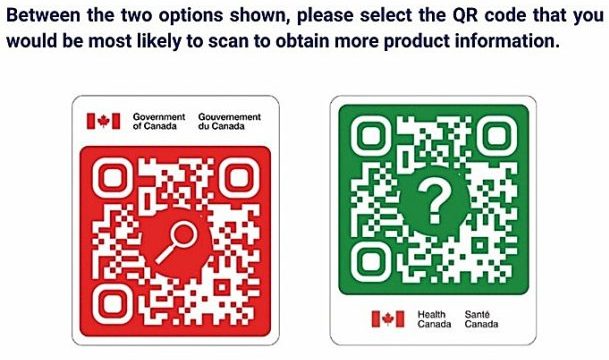
The federal government in pre-election focus groups shopped various slogans to persuade Canadians to support a cap on oil and gas emissions, according to in-house research by the Privy Council Office. Depicting energy companies as hugely profitable corporations that could afford clean technology was most popular, said a report: “Asked whether they had seen, read or heard anything about the federal government’s action on this front, only a small number indicated they had.”
Says Privacy Is Now Pivotal
Privacy Commissioner Philippe Dufresne yesterday called this a “pivotal time” for fundamental rights in Canada. Dufresne avoided all mention of his 2023 dismissal of privacy rights under pandemic mandates: “At a time when the personal information of Canadians is being collected, used and shared at an unparalleled pace and volume on a global scale, effective privacy protection requires more than the status quo.”
No Privacy On Police Radio
A federal judge has dismissed a class action lawsuit by RCMP members who complained that monitoring of police radio calls breached their Charter right to privacy. The case followed a 2017 New Brunswick investigation into organized crime: “An individual choosing to share personal information while at work in a work-related communication channel does not translate into having an objective expectation of privacy.”
Photo Fiasco Was “Friendly”
Canadian diplomats described as “pleasant and friendly” a 2024 visit to the West Bank that cost a Liberal cabinet minister her job. Ex-Addictions Minister Ya’ara Saks (York Centre, Ont.) acknowledged Jewish constituents were upset aftershe posed in an official photograph holding hands with a Holocaust denier: “I have been asked this many times.”
Press Feared Opposition Win
“Uncertainty of the political landscape” is impacting subsidized newspapers, says the Manitoba daily that led the national campaign for a $595 million media bailout. The publisher of the Winnipeg Free Press did not identify any political party by name but noted loss of taxpayers’ aid would hurt the business: “We anticipate circulation to remain challenging.”
Visa Cut Refugee Claims 75%
Refugee claims by air passengers fell 75 percent after cabinet reintroduced visas on Mexicans, Canada Border Services Agency figures show. Taxpayers saved millions when the visa rule was brought back into force on February 29, 2024: “Do you regret not doing it earlier?”
Borrowers Lack ‘Self-Control’
A third of payday borrowers have “self-control issues,” says a Bank of Canada report. Researchers said a significant number of people who borrow money at exorbitant rates were in “households that suffer from temptation.”
Arctic Shipping OK In Theory
Global warming in theory would make the Northwest Passage a viable route for commercial shipping, says a Department of Environment report. However the region remains ice-bound and hazardous, it said: ‘Insurance is costly.’
Sunday Poem: “Apple, Inc.”
CEO Steve Jobs
wanted my money.
In return
he will grant me with access
to something
attractive to look at,
fun to touch,
that will keep me busy
for quite a while
and I will always
come back
for more.
A trick
as old
as the oldest profession.
By Shai Ben-Shalom

Book Review: An Immigrant’s Tale
Canada is not the kind of country that wakes up in the morning to the sound of trumpets and drums. No MP ever gave a speech entitled “Canadian Exceptionalism” and if somebody tried, a voice in the back of the room would say: “In fairness, Belgium makes pretty good chocolates.”
Yet we enjoy an extraordinariness most dramatically illustrated in the immigrant experience, and none more unusual than the story documented in Reflections On Malcolm Forsyth. The composer in his dying days devoted his last breaths to a national tribute.
“His last major work was A Ballad For Canada written for the National Arts Centre Orchestra,” recalls Robin Elliot, Senior Fellow at the University of Toronto’s Massey College: “By the time of the premiere, Forsyth had been hospitalized with pancreatic cancer and knew he did not have long to live. He was released from hospital on oxygen tanks, a flight to Ottawa was arranged, and he was in the National Arts Centre to receive a standing ovation after the first performance of the work on June 9, 2011. He then returned to Edmonton and died less than a month later.”
Reflections On Malcolm Forsyth has obvious interest for musicologists, but also tells an uncommon and compelling tale of an immigrant who fell under Canada’s spell. Forsyth in his earlier works adapted in his compositions the Zulu rhythms of his native South Africa. In the end his Ballad For Canada embraced an uber nationalism with musical accounts of northern lights and shipwrecks, leaping salmon and crashing Atlantic waves. He was “generating a sense of belonging,” writes Mary Ingraham, Dean of Fine Arts at the University of Lethbridge.
Forsyth emigrated from apartheid South Africa in 1968. He was no civil rights activist. Forsyth’s father was deputy mayor of Pietermaritzburg. He skipped out six months after the country imposed mandatory military service.
Nor was Forsyth a lovable figure. He was brusque, crusty and argumentative, and married three times. “He could put people off,” writes his widow Valerie. “He loved a good debate but, if taken too far, he would eventually get agitated.”
A former student, Professor Allan Gordon Bell of the University of Calgary, recounts an initial meeting. “In the fall of 1974 at my first composition lesson with Malcolm Forsyth, he declared, ‘I can tell you nothing about composition. Understood? Good, now let’s get started.’”
For all that, Forsyth spent 42 years on the Prairies writing, playing, teaching. “He brought great pride to our city,” wrote Edmonton bandleader Tommy Banks. He won Juno Awards and the Order of Canada, was 1989 Composer Of The Year and wrote a brass fanfare for national telecast at the Calgary Winter Olympics.
Facing death, he thought of Canada. “In his selection, manipulation and musical settings of the poems he chose, we find evidence of a profoundly poetic musical artist reveling in and reminiscing on the place he called home,” write Prof. Ingraham. “‘Canada is the land,’ he declared; ‘It’s a vast, vast space….’”
By Holly Doan
Reflections on Malcolm Forsyth, edited by Mary Ingraham and Robert Rival; University of Alberta Press; 288 pages; ISBN 9781-77212-5030; $34.99

Trust With USA Broken: Bank
Canadians should expect “permanent effects” of the tariff war that may outlast tariffs themselves, Bank of Canada Governor Tiff Macklem said yesterday. “Trust has been broken,” he said.
Debt Struggle For Two Thirds
Most mortgage holders are struggling to pay household expenses, says a federal report. The Financial Consumer Agency of Canada noted more people are relying on credit card debt at 19 and 20 percent interest to get by: “Two thirds of mortgage holders are struggling to meet their financial commitments.”
Warns Of Jobseekers’ Fakery
Federal jobseekers who claim to be Indigenous are not required to prove it, says a Public Service Commission memo. The agency said it was reviewing the practice to ensure claimants were actually First Nations, Métis or Inuit: “There is no policy requirement for additional proof of Indigenous identity.”
Judge Orders Blogger’s Arrest
A Canadian blogger faces arrest for defying a Court order to remove offending posts. “False information has consequences,” said the British Columbia judge in the case: “The spreading of misinformation or lies is not in the public interest.”
Honours Canadian Casualties
The Ukrainian Canadian Congress yesterday said it awarded commemorative medals to families of 11 Canadian war casualties who volunteered to fight in defence of the motherland. Volunteers who join Ukraine’s foreign legion are disqualified from Canadian veterans’ benefits: “Our community is eternally grateful.”