
Federal regulators have again delayed introduction of compensation rules under an air passenger rights code promised last December. Airlines require more time, said the Canadian Transportation Agency: “I wouldn’t trust them with a cup of water.”
Poppy Claim Didn’t Add Up
More than 8 in 10 Canadians claim to wear a poppy on Remembrance Day, though data show the Royal Canadian Legion doesn’t distribute that many poppies. The claim in a Department of Veterans Affairs poll follows Elections Canada data that people also “over-remember” voting: “This is not at all uncommon.”
Pride Sued Over Copyright
Organizers of publicly-funded Pride Toronto face a six-figure federal lawsuit for statutory damages under the Copyright Act. A non-profit copyright collective accuses parade managers of ignoring multiple requests to pay royalties for music broadcast at their annual festival: “I am not sure about punitive damages.”
Feds Outlaw Teen Drinks
Health Canada effective tomorrow will ban the sale of pre-mixed, high-alcohol canned drinks. The amendments to Food & Drug Regulations follow the death of a 14-year old schoolgirl: “Certain drinks skewed to a very young crowd really don’t need to be sold.”
Satirical Website To Pay $24K
The publisher of a parody website lampooning what claims to be one of Canada’s best-read newspapers has been ordered to pay $23,532 in damages. Satirists explained readers would have to be “dyslexic or illiterate” to confuse Le Journal de Montréal with its comic counterpart Journal de Mourréal (Mourreal’s Diary): “Its not up to us to take readers by the hand.”
Press Question Press Bailout
A reporters’ association invited to join a federal press bailout panel yesterday said the work is so secretive it may quit the process before it begins. Heritage Minister Pablo Rodriguez asked eight groups to suggest criteria on which Canadian publishers will receive $595 million in subsidies.
“Everything should be public,” said Karen Pugliese, president of the Canadian Association of Journalists. “I’m a journalist. If there is some privacy issue – and I can’t imagine what it would be – they can explain that in public, and let the public decide.”
Minister Rodriguez in a statement said he would determine final members of the “independent panel of experts” assigned to make recommendations by July 31 on criteria for subsidy seekers. “We are reaching another milestone,” said Rodriguez.
The actual awarding of subsidies to A-listed “qualified Canadian journalism organizations” will be left to unnamed cabinet appointees under Bill C-97 The Budget Implementation Act. Criteria can be changed by cabinet at any time. “The government will decide whether or not to change certain criteria,” Maude Lavoie, Finance Canada director general of business tax programs, said in May 14 testimony at the Senate national finance committee.
The Journalists’ Pugliese said her group only learned of its invitation to the expert panel through a late phone call, and questioned the entire process. “We even had a hard time finding out who we should speak to,” said Pugliese. “We had a sense a lot of decisions had already been made.”
“We got a call from the Department of Heritage on Tuesday saying they would be letting us know we’d get an invitation,” said Pugliese. “We just found out. Our participation is not a given. We have a lot of questions.”
“We consulted our members and this is very controversial,” said Pugliese, director of news for APTN of Winnipeg. “There are concerns the government should not even be appointing this panel.”
The eight groups invited to “submit a name of a candidate to take part in the work of the independent panel of experts” were the Associations de la Press Francophone; Canadian Association of Journalists; Fédération Nationale des Communications; Fédération Professionnelle des Journalistes du Québec; National Ethnic Press & Media Council; News Media Canada; Québec Community Newspaper Association; and Unifor.
“Done Behind The Scenes”
Bill C-97 proposes a 15 percent tax credit to a maximum $75 for subscribers of federally-approved websites – an $11 million annual cost – and 25 percent payroll tax credits to approved publishers to a maximum $13,750 per newsroom employee. The payroll subsidies are worth $360 million over four years, by official estimate.
The Journalists’ Pugliese noted digital start-ups are disqualified unless they have at least two employees and cover narrowly-defined news content. Cabinet also failed to commit to ensuring all deliberations are public, and that publishers who apply for aid and do not receive it are named alongside A-listed newsrooms, she said.
“We want all applicants to be public,” said Pugliese. “People want to know. This came up in consultations we had with members. Why shouldn’t that be public? What would be the reason not to do that?”
Another reporters’ association said it asked to join Minister Rodriguez’ expert panel to ensure subsidies were not misspent by news corporations, and was not accepted. “We asked to be included,” said Martin O’Hanlon, president of CWA Canada of Ottawa. “We wanted to be involved, and we were excluded.”
CWA Canada represents 6,000 members with newspaper guilds and typographical unions nationwide. “We would like more transparency here,” said O’Hanlon.
“We told a government official we wanted to be informed, then a lot of stuff was done behind the scenes, and all of a sudden an announcement is made about an expert panel,” said O’Hanlon. “We thought we had an important contribution to make for media workers – exclusively media workers – since this program is supposed to be about preserving journalism.”
“We have some pretty strong views on who should be eligible for federal funding,” said O’Hanlon. “Our biggest concern is that anybody who gets public money should not be using that to pad executives’ pay. It’s all about ensuring the money really goes to journalism.”
Minister Rodriguez yesterday also announced the appointment of seven groups to divvy up grants under a $10 million-a year Local Journalism Initiative promised in cabinet’s 2018 budget. Rodriguez’ department in an earlier Access To Information memo estimated the grants would create 60 to 80 jobs nationwide.
Appointees to the grant panel were the Association de la Press Francophone; Canadian Association of Community Television Users & Stations; Community Radio Fund of Canada; Fédération des Télévisions Communautaires Autonomes du Québec; National Ethnic Press & Media Council; News Media Canada; and Québec Community Newspapers Association.
By Staff 
Check If Migrants Cut Wages
The labour department yesterday commissioned new research to determine once and for all whether migrants lower Canadian wages. A 2016 federal study concluded foreign workers did lower pay in some trades, by as much as two percent: “We can’t have this as part of a business plan to keep wages low.”
See Conflict On Health Panels
Health Canada scientific advisory panels are rife with appointees who’ve taken money from pharmaceutical companies, says a Canadian Medical Association Journal author. Conflict rules are so weak the department does not publicly record members’ votes on matters affecting drug sales: “This lack of information is troubling.”
Interview Smokers For $145K
Most smokers tell Health Canada they consider themselves hardworking, friendly and responsible citizens. The department spent $145,412 on focus group interviews with smokers as part of a campaign to get millions to quit by 2036: “I enjoy it and don’t want to.”
Rules Illegals May Claim E.I.
Migrants working illegally in Canada may claim Employment Insurance benefits, a Tax Court judge has ruled. The order came in the case of 14 Guatemalans at Victoriaville, Que. who were denied a claim since they had no valid contract with their employer: “They were easy targets.”
Couldn’t Read Decimal Point
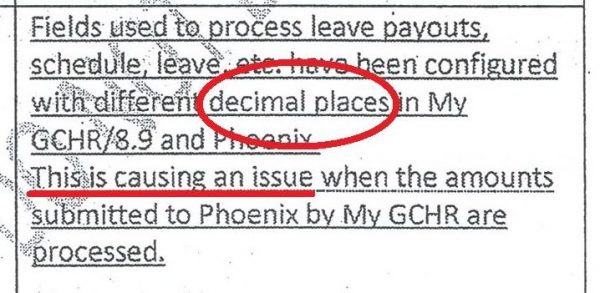
The bungled federal Phoenix Payroll System failed in part because it couldn’t read decimal points, say Access To Information records. The program has cost taxpayers $2.6 billion to date, by official estimate: “This is causing an issue.”
Bank Cautions On Credit
Canadians continue to run up home equity lines of credit despite rising interest rates, says the Bank of Canada. The bank said the trend may be “concealing emerging financial distress” by consumers: ‘Households were continuing to borrow even as borrowing conditions tightened.’
Just Mild About Privacy Fine
Cabinet yesterday proposed “increased discretion” in fining companies that conceal breaches of Canadians’ privacy. Regulations last November 1 set maximum penalties at $100,000. No penalty has yet been imposed: “Organizations may want to comply but have difficulty understanding what they need to do.”
Inquiry Hired At $300/hour
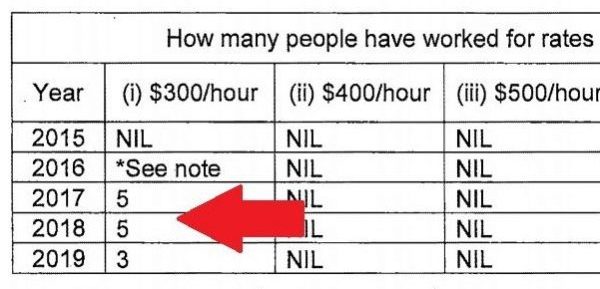
The National Inquiry into Missing and Murdered Indigenous Women and Girls paid contractors $300 an hour, records show. The $92 million Commission yesterday would not say who it hired, or why: “We will find the truth.”
Need Prompt Payment Bill
A first-ever federal law guaranteeing prompt payment to subcontractors on public works should be amended to guard against bankruptcy of general contractors, says a bond association. Losses due to insolvency in construction totalled more than $500 million last year, the Commons finance committee was told: “It’s real. It’s not hypothetical.”