
The number of homeless veterans has declined steadily, by at least 17 percent in the past two years, says a Department of Veterans Affairs memo. Managers credited in part a program that pays tax-free emergency grants in hardship cases: “I could literally save their life.”
Feds Track Kids’ Screen Time
Most high schoolers of the Covid generation spend far in excess of recommended “screen time” on the internet, says a Public Health Agency report. New findings drawn from questionnaires with 26,000 students nationwide followed warnings that pandemic school closures disrupted childhood activities like sports and clubs: ‘Frequent internet use has become especially common.’
Covid Impact On Start-Ups
Retail startups in Canada are down by more than a fifth since the pandemic, says new Department of Industry research. It followed a 12 percent rise in bankruptcies last year to near levels not seen since the 2008 financial panic: “This report is one of the first to examine the impact of Covid-19 on entrepreneurship.”
Defiant Union Lands A Deal
A four-day strike by Air Canada flight attendants ended this morning after management came to terms, says the Canadian Union of Public Employees. The tentative agreement at 4:23 am Eastern came a day after strike leaders defied a picket ban imposed by the federal cabinet: “We will not turn our back on these workers.”
“Never Give Up”: Poilievre
Opposition Leader Pierre Poilievre last night reclaimed a Commons seat. “I will never give up,” he said after winning a byelection in Battle River-Crowfoot, Alta. with 80.4 percent support: “The road to success is never a straight line.”
Gov’t Corrects Record On PM
Parks Canada yesterday hurriedly issued a public designation of Brian Mulroney as a national historic person. It followed disclosures the agency’s Historic Sites and Monuments Board voted in secret session to delay for 25 years a public honour for the late Prime Minister that was previously awarded promptly to his Liberal predecessors: “We will continue to monitor this situation.”
Too Reliant On Forces’ Aid
The nation is too reliant on the Canadian Armed Forces for firefighting, Emergency Management Minister Eleanor Olszewski said yesterday. Cabinet for years has proposed to federalize wildfire response by creating a Canadian version of the U.S. Federal Emergency Management Agency: “You know, this is not their primary responsibility.”
‘Blackface’ Firing Overturned
A labour board has overturned the 2021 firing of a Toronto schoolteacher for wearing an awkward Halloween costume. The appearance of blackface was inadvertent and unintentional, an arbitrator ruled: “He was asked if he was aware of the controversy over Justin Trudeau appearing as Aladdin in blackface.”
Organ Donor Story Unproven
Labour Minister Patty Hajdu yesterday would not substantiate her claim a legal strike by 10,000 Air Canada flight attendants threatened deliveries of life-saving medicine and organ tissue. Hajdu was previously cited for fabricating stories to justify strike bans “This is simply unacceptable.”
Widen Tax Auditors’ Powers
Tax filers face $50 a day fines and mandatory oaths under threat of perjury for failing to cooperate with the Canada Revenue Agency. Finance Minister François-Philippe Champagne outlined the proposals Friday in draft amendments to the Income Tax Act: “These proposed amendments are intended to enhance the efficiency and effectiveness of tax audits.”

Time For “Sexy Drag” Show
Department of Immigration employees are invited to workday festivities marking “public service pride week” at an undisclosed cost, according to an internal staff notice. Events include a workday bingo game Thursday with a “sexy drag rock star.”
Cite Climate Grief Counseling
Climate change is causing “ecological grief” in First Nations, says a federal report. The Department of Indigenous Services said more funds are required for climate counseling under a “wellness program” already budgeted at nearly $1.6 billion: ‘Wildfires can create ecological grief.’
No Comment On Postal Cuts
Public Works Minister Joel Lightbound will not comment on his department’s attempt to fast-track a review of proposed Canada Post service cuts. The department in the past has discussed elimination of daily mail delivery at a saving of more than $70 million a year: “Most Canadians are willing to accept changes in the delivery of mail once they were made aware of some of Canada Post’s financial challenges.”
A Poem: “Natural Buoyancy”
Neither drowning nor
Staying afloat.
The polls
Indicate
What the
Elect need.
It’s a form of
Mob rule.
But at the edge,
Families
Recede
And make due.
A breaking point,
Or a shift in the plan?
A man can breathe on the prairies.
By W.N. Branson 
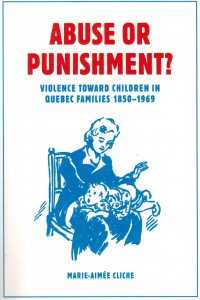
Review: Wait Till Father Gets Home
If the government can’t run a passport office, it can’t regulate the subtleties of parenting. Still they try. For twenty years advocates have sought repeal of section 43 of the Criminal Code that sanctions “reasonable” spanking to correct youngsters’ behaviour. It was written in 1892 by a Catholic justice minister with nine children, and survived numerous court challenges and parliamentary hearings.
Québec author Marie-Aimée Cliche examines the practice: “Once it was accepted that the aim of parenting was to bring children up in the way they should, without spoiling or terrorizing them, what was the appropriate method to achieve this objective?”
Abuse or Punishment? is a lively investigation of spanking rooted in Biblical law and family culture. Cliche examines corporal punishment in Old Québec dating from the 19th century, but the research would interest any parent anywhere. This, from the first-ever Canadian parenting guide published in 1851: “Have you ever seen the little boy who can never be satisfied, who asks for bread and jam but throws it on the floor after a single bite?”
“This little one will drown his parents with sadness if they are unable to correct his bad behaviour,” concluded the guide. “One should strike children only rarely, when other means of correction have proven ineffective.”
The modern debate dates from 1994 when police in London, Ont. charged a father with assaulting his five-year-old daughter in a parking lot. It had been a long hot day. The Peterson family was on a road trip from Warrenton, Ill. Little Rachel Peterson pushed her two-year old brother out of the car then slammed the door on his fingers. Father David Peterson spanked her six times when a passerby called police. Mr. Peterson was arrested, fingerprinted, strip-searched and spent the night in a London jail.
Peterson was acquitted at trial under section 43. The judge found him a “responsible, reasonable and caring parent.” The verdict prompted a Regina social worker to challenge the Criminal Code sanction, unsuccessfully. Justices ruled in 1994 that ordinary spanking was not, in fact, child abuse.
The judgment upheld conventional wisdom, Cliche notes. In 1864 Québec judges concluded spanking of six-year-olds was permitted so long as punishment did not involve “arbitrariness, whim, anger or ill-humour” and was proportionate to the “nature of the offence.” Then and now, Rachel Peterson probably had it coming.
Abuse or Punishment? is fresh and beautifully researched. If use of physical force in parenting is technically legal, Cliche observes it has always provoked unease. She cites Canadians’ reaction to the Gagnon Trial of 1920, the most notorious case of child abuse of the era, when a Québec farm couple were convicted in the torture killing of a stepdaughter who was daily beaten, burned with a fireplace poker, tied to a table leg and forced to eat excrement and cleaning powder.
Cliche notes that long afterward, “Madame Gagnon” was an everyday reference for parental abuse. The case inspired four novels, a 1951 film and a popular Québec stage play so powerful the actress who played the abusive stepmother was personally accosted after performances.
Then and now, parenting is an inexact science by fallible humans who mainly do their best. Abuse recounts a 1945 guide from Courrier de Radio Parents that remains as valid as the day it was published: “Draw the child’s attention to what is being asked,” the guide advised; “Only ask of what is strictly necessary, what is important, and forget the rest.”
“Warn them 10 or 15 minutes in advance that you are going to ask them to do something,” said the guide. “Think hard before giving an order, give it in clear, precise manner, display firmness, do not make conditions or concessions” and “resort to authority or force only when children have deliberately and knowingly refused to obey.”
By Holly Doan
Abuse Or Punishment? Violence toward Children in Quebec Families, 1850-1969; by Marie-Aimée Cliche; translated by W. Donald Wilson; Wilfrid Laurier University Press; 408 pages; ISBN 9781-7711-20630; $36.74