
Health Canada says the nation’s most common weed killer is safe despite a 2015 World Health Organization warning that it’s “probably carcinogenic”. The makers of glyphosate, sold under the brand name Roundup by Monsanto Co., face some 5,000 U.S. lawsuits alleging the herbicide poses a health risk: “The department’s final decision will stand.”
A Sunday Poem: ‘Welcome’
Signs posted in Ottawa, Toronto, Winnipeg:
“It’s Okay To Be White”.
Why wouldn’t it be okay?
Signs carried in U.S. rallies:
“All Lives Matter”.
Why wouldn’t they matter?
Signs on park benches, Germany, 1935:
“For Aryans only”.
Why shouldn’t Aryans have a place to relax?
(Editor’s note: poet Shai Ben-Shalom, an Israeli-born biologist, examines current events in the Blacklock’s tradition each and every Sunday)

Review: The Crisis
In a free, rich, peaceful, capitalist country like Canada there should never be any prolonged shortage of anything. Yet Canadians are told we face a crippling shortage of labour. How can that be?
CBC Radio’s Cross-Country Checkup in 2015 told the story of the Star Café of Maple Creek, Sask., population 2000, an uncommonly high-toned restaurant for a small Prairie town. It sells prawns and $22 jambalaya, though Maple Creek is 1,400 kilometres from the nearest live seafood market.
Owner Tina Creswell said she had to hire a chef from Guyana and would close if not for migrant labour. “We had to turn to foreign workers,” said Creswell. “We’ve been advertising continually”; “Was it because you offer such cheap wages?” asked host Rex Murphy. “We pay what we can,” replied Creswell. No figure was mentioned.
Maple Creek is not a closed economy. It has no wage and price controls. Star Café management might hike pay to attract a Saskatchewan chef, or change the menu, or adjust their model, or cook the prawns themselves. Millions of small business people make these decisions every day. I am one of them.
It cannot be the industrial policy of the Government of Canada to ensure even cafés are too big to fail, or that employers are guaranteed federally-regulated access to Third World labour so the people of Maple Creek might affordably dine on prawns. If higher wages mean higher prices that drive Maple Creek to buy $6 Subway sandwiches instead, the customer has spoken and is never wrong. Ronald Reagan called this the magic of the marketplace.
Yet Canadians are subject to media laments and “endless corporate hand-wringing” over labour shortages, writes Prof. Bob Barnetson of Athabasca University. “This self-interest should make us cautious about skills shortages,” he says.
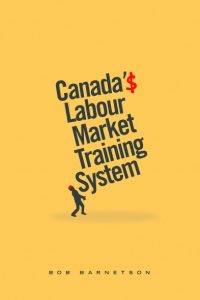
Barnetson in Canada’s Labour Market Training System puts his case to the reader with a genial writing style, extensive research and damning graphs. Claims of a labour shortage crisis are artificial, he writes. Where rare shortages occur they are isolated and short-lived, or reflect employers’ reluctance to “do their part in training, e.g. hire apprentices,” he says.
“This reality sits uneasily with media coverage of skills shortages,” writes Barnetson. “In addition to overstating the degree of labour shortages that exists, media coverage often fails to differentiate between absolute shortages (a situation where there are no qualified potential workers available) or relative shortages (a situation where there is no qualified workers prepared to work for the wages and working conditions on offer).”
Proponents omit the parentheses, he explains. There are 454,000 apprentices in Canada. One of them must know how to cook prawns. If not, we will go prawn-less. Instead, writes Barnetson, authorities built a Byzantine labour system that sees fish processors hire migrants in Atlantic counties with 16 percent local unemployment.
“Governments and educational institutions are characterized as out of touch with the needs of employers,” writes Barnetson. “And students and workers are said to be too ill-informed, naïve or lazy to get the training they need to be competitive in the labour market. Mostly ignored in this discourse is the low and continually declining level of employer-sponsored training.”
By Holly Doan
Canada’s Labour Market Training System, by Bob Barnetson; Athabasca University Press; 190 pages; ISBN 9781-7719-92411; $29.99
CRTC To Monitor Fake News
The CRTC yesterday proposed regulation of podcasts and streaming video on news websites to combat “false or misleading information”. The agency said it did not intend to act as a federal censor: “The goal would only be to encourage them to adopt Canadian journalistic standards.”
Wants CBC “Accountability”
A new CBC ombudsman promises more accountability. Jack Nagler earlier defended a secret payment of nearly $100,000 from Parks Canada to have the CBC cover a Parks Canada story. ‘It would save us both money. That’s it.’
Email Panic Over Cushions
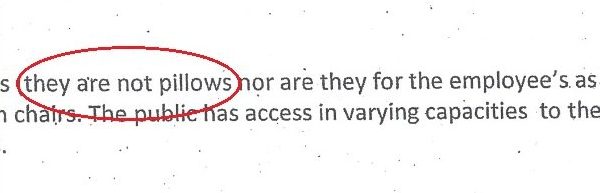
Federal employees were driven to a panic by complaints of waste from the Canadian Taxpayers Federation, according to Access To Information emails. Staff exchanged dozens of messages on how to justify spending $24,636 on seat cushions for the Canadian Embassy in Mexico: “They are not pillows.”
First Test Of Cannabis Zones
The first challenge of municipal marijuana regulation under cabinet’s Bill C-45 is headed for Alberta’s highest court. Cities have warned of numerous problems with zoning and bylaw enforcement: “Slow down.”
‘Respect’ For Chinese System
A $215,000-a year Canada-China Legislative Association now touring the People’s Republic earlier wrote a report citing “mutual respect” for its political system, and once visited a Huawei Technologies Co. plant. The group claims it is protesting the arbitrary detention of Canadians in retaliation for the arrest of a Huawei telecom executive in Vancouver: ‘It’s a testament to our relationship.’
Surveyed 20 People For $46K
Industry Canada spent more than $46,000 to ask 20 people how they liked using a federal website. The research was proportionately the costliest since the Canada Revenue Agency spent more than $47,000 to ask 67 poor people how they filed their tax returns: ‘There was widespread satisfaction.’
Three Drone Injuries In 3 Yrs
Transport Canada yesterday said it will spend $2.6 million a year regulating drone hobbyists though it knows of only three minor injuries in three years related to the pastime. The department counted 141,800 drone enthusiasts in Canada: “We do not know the full extent of the incidents.”
Late Result On Beef Scandal
A federal Office of the Inspector General for meat inspection created in 2014 should now have its work plan finalized by January 31, says the Canadian Food Inspection Agency. The Office opened following a tainted beef scandal seven years ago: “It was all preventable.”
Internet Rated #1 Addiction
A Department of Health study rates social media as the leading addiction among young people. Canadians under 24 are more likely to spend time on Facebook than smoking, drinking or partying: “Who do you follow on the social media you use?”
Worse Fires In 1950 & 1825
Environment Canada scientists yesterday blamed climate change for British Columbia forest fires described as “record-shattering”. They weren’t. The worst provincial fires occurred in Alberta in 1950 and New Brunswick in 1825: “You see these extreme forest fires.”
Shoving’s No Firing Offence
A federal judge has upheld a complaint of wrongful dismissal by a truck driver fired for pushing his foreman. Workplace violence is wrong but should not draw automatic dismissal, the Federal Court ruled: “He was a good employee.”
More Fallout From Tax Fraud
Tax Court has again upheld steep penalties against taxpayers who enrolled in a cross-Canada fraud. Auditors have sought 50 percent penalties for gross negligence against participants in the now-defunct Fiscal Arbitrators scheme: ‘They were taken by refunds.’