
Senate Liberals yesterday shrunk to their smallest caucus since 1896 with the departure of a longtime member. Liberals now risk losing official party status in the Senate for the first time since Confederation: “It’s very painful.”
Electric Car Plan In Trouble
Cabinet is dropping its own deadline for a national plan to promote electric cars. Transport Minister Marc Garneau repeatedly promised results by year’s end. Garneau declined comment: “It would be very, very challenging to reach those targets.”
Guilty Of Killing Rare Fish
Alberta dirt bikers face large fines for killing a rare species of fish in a motocross race. A Lethbridge court cited racers for breaching the Fisheries and Species At Risk Acts by speeding through streams that are home to trout near extinction: “Trout died as a result of this race.”
Probe Of Election Bias Claim
The Federal Court of Appeal has cleared the way for a human rights challenge of elections under the Indian Act. The decision came in the case of a woman who claimed she was disqualified from running for council because her husband was Caucasian: “She was not a person of good character.”
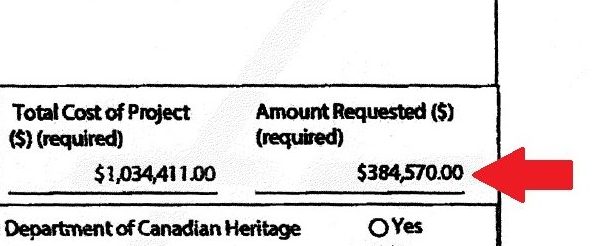
$385K Grant For News Lobby
A newspaper lobby group, the Canadian News Media Association, has received nearly $385,000 in federal grants – the equivalent of more than half its annual budget – to encourage people to buy newspapers, according to Access To Information records. The funding was never announced. Costs include having $160-an hour publicists encourage celebrities to pose for Instagram photos reading a newspaper.
“We simply don’t have the resources to plan and execute campaigns of this scope and scale on our own,” wrote Bob Cox, publisher of the Winnipeg Free Press, in a letter to the Department of Canadian Heritage: “Even well-informed people often do not realize what is at stake.”
“The Winnipeg Free Press might also be in trouble,” wrote Cox, chair of the News Media Association. The daily has been in print since 1872. “This is the most serious crisis we have faced in our history,” wrote Cox.
The department approved the funding but yesterday did not comment. The Association’s grant application Call To Action proposed to seek endorsements from unidentified “high-profile Canadians, from traditional media ‘influencers’ to authors to politicians to business leaders, to showcase their passion for newspapers on their social media channels by asking them to share a photo of themselves on Instagram reading their favourite newspaper.”
“We will undertake a proactive national awareness campaign,” said Call To Action. “This campaign will be designed to drive consumers to take action, showing their support for the Canadian newspaper industry by signing an online petition. The success of this campaign will subsequently be leveraged with advertisers to encourage them to advertise in newspapers.”
The lobby group also suggested local papers sponsor screenings of “a high-profile film that promotes the essential role of newspapers in society, i.e. the 2015 film Spotlight.” The Academy Award-winning movie is about an American newspaper, the Boston Globe.
“I Couldn’t Agree More”
Heritage Canada approved a grant totalling $384,870. The subsidy is more than all federal grants of $284,532 paid to the News Media Association in the period from 2013 to 2018, and worth 52 percent of the Association’s annual budget of $729,174.
Subsidies include payments to News Media staff billed at $75 an hour, according to accounts, and $160 an hour for the Association’s publicist, Craft Public Relations of Toronto. The Association also proposed to spend $75,000 on Facebook ads, though publishers in their grant submission complained American social media like Facebook get too much advertising.
“As local advertising dollars move to international digital giants like Facebook and Google, we need to take every opportunity to tell our story and reaffirm the critical role our newspaper, and newspapers like us all across the country, play in Canadian democracy,” wrote Peter Kvarnstrom, president of community media for Glacier Media Group Inc., a Vancouver-based chain of 71 weeklies.
“Canadians have said they believe democracy would be threatened if established news organizations were no longer able to fulfill their civic news function and I couldn’t agree more,” Kvarnstrom wrote the department. “In an era of clickbait reporting, #fakenews and filter bubbles, strong, independent local news has never been more important.”
Cabinet proposes in 2019 to detail a $595 million, five-year subsidy for news media deemed reliable. The Department of Canadian Heritage as recently as September 29, 2017 vetoed any newspaper bailout.
“Our approach will not be to bail out industry models that are no longer viable,” said then-Heritage Minister Mélanie Joly. “Rather, we will focus our efforts in supporting innovation.”
Joly’s department has estimated any bankruptcy of the nation’s largest newspaper chain, Postmedia Networks Inc., would leave 28 cities without a daily newspaper. Postmedia is a member of the board of the News Media Association.
Postmedia this year paid its CEO $5.04 million in salary and bonuses, according to a Management Circular obtained November 28 by the online Halifax Examiner. Other executive pay included $2.2 million to Postmedia’s chief operation officer, and $1.2 million to its chief financial officer.
By Staff 

Must Preserve Bullet Holes
Parliament must preserve bullet holes from a lone gunman’s 2014 attack on the Centre Block, says a Conservative MP. Multi-billion dollar renovations to the building should not conceal evidence of the incident, the Commons committee on House affairs was told: “These are records of something important that happened here.”
Death Prompts Alcohol Curb
Health Canada yesterday proposed to restrict alcohol in flavoured canned drinks following the death of a Québec schoolgirl. The Commons health committee urged reforms in a June 19 report: ‘It represents a significant health problem.’
House Prices Rise With Oil
Rising oil prices tend to hike the cost of housing in cities nationwide, says a Bank of Canada report. Economists did not speculate on whether falling oil prices had the opposite effect: ‘We find this even in cities such as Québec City or Winnipeg where oil production is virtually non-existent.”
Cut Tax Credit Claims 11%
Corporate claims for a contentious federal tax credit fell 11 percent after the previous Conservative cabinet cut benefits, records show. The Canada Revenue Agency had described the program as so generous it was akin to an open bar for lobbyists: “It is one of the most generous systems in the world for supporting business.”
Research Graft In Prisons
A federal report says low pay for guards may contribute to graft in the prison system. The Correctional Service acknowledged it has little data on the extent of contraband smuggling by its own employees: ‘Remarkably little research has been conducted.’
Gov’t Cannabis Ads Pulled
Federal cannabis ads were pulled by Google and YouTube for breaching corporate rules on narcotics, says Health Canada. One website operator, TripAdvisor, rejected all marijuana public service announcements: “The advertisements were not approved.”
Feds Miss Air Code Deadline
Transport Canada yesterday acknowledged it won’t meet its own deadline to enforce an air passenger rights code by year’s end. Enforcement is delayed at least six months though Parliament last May 23 passed a bill mandating automatic compensation for poor service: “We’re almost there.”
Feds Change Migrant Permits
The Department of Immigration suspects hundreds of cases of abuse of migrant workers occur annually. It proposed first-ever regulations allowing Temporary Foreign Workers to quit their job without facing expulsion from Canada: ‘The power imbalance favours the employer.’
Seek Disclosure On Spending
The Senate’s $114 million-a year administration should be subject to federal disclosure laws, says cabinet’s leader in the chamber. The remark follows one Manitoba senator’s unsuccessful year-long attempt to find out how much Senate managers spent on legal fees and out-of-court settlements in staff harassment claims: “I certainly believe sunlight kills germs.”
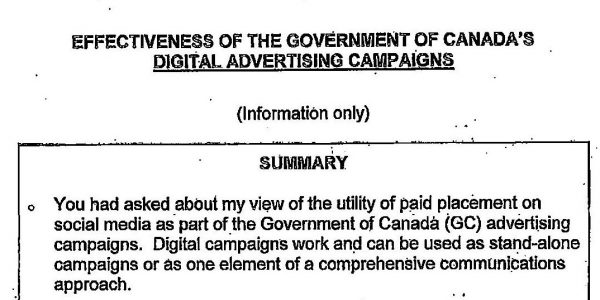
Won’t Cancel Facebook Ads
The Privy Council Office in an Access To Information memo defends millions spent advertising with Facebook and Google. Newspaper publishers have called the policy a Canadian job killer: “Those ad dollars are being sent offshore.”