
Federal agencies should drop references to “golden years” when speaking to pensioners, says in-house research by the Department of Social Development. Seniors complained the term is patronizing: “There is nothing golden about getting older.”
OK’d $250K For Stage Plays
The Department of Canadian Heritage budgeted a quarter-million dollars to commission stage plays observing 1969 Criminal Code amendments on homosexuality, according to Access To Information records. “The total budget for this project is potentially substantial,” wrote staff.
Happy Kids Sell Foreign Aid
The Department of Foreign Affairs in pre-election research paid pollsters $78,964 to test voters’ response to images promoting foreign aid. Photos of laughing children were most popular: “Simple information should be used.”
Feds Hid 60% Over-Spending
The Department of Canadian Heritage went sixty percent over-budget on Flag Day observances then hid actual spending from taxpayers. Expenses for the 2015 anniversary of the Maple Leaf flag were buried in 3,773 pages of Access To Information records withheld by the department for four years. Managers did not comment: “A significant portion of what was included under the events actually has nothing to do with the events.”
Cusswords Not Contempt
The Federal Court has dismissed a contempt charge against a Canadian Union of Public Employees advisor for cussing an employer. Profanity is not a personal attack per se, said the Court: ‘It is a slang expression used to tell someone where to go.’
Forgot To Lock The Doors
Saskatchewan’s privacy commissioner has faulted a public agency for leaving its office doors propped open overnight in the Town of Melfort, population 6,000. The place was so quiet nothing was stolen: “Locked offices should be required.”
Sunday Poem: “The Game”
Former cabinet minister
Peter MacKay
says Andrew Scheer
missed an open net.
As though he wants Scheer
to be a better forward.
But MacKay,
taking his own shot
at the Conservative’s leadership,
wants Scheer to be
a poor goalie.
(Editor’s note: poet Shai Ben-Shalom, an Israeli-born biologist, examines current events in the Blacklock’s tradition each and every Sunday)

Feds Tell U.N. To Butt Out; No Local Veto On Pipelines
The Department of Natural Resources in a confidential report told the United Nations to stay out of the Trans Mountain pipeline debate, warning First Nations do not “have a veto over government decisions”. The report followed complaints the project could breach a U.N. treaty on racial discrimination: “Canada’s response will not be made public.”

Feud Looms On Foreign Tax
The head of the largest Liberal-appointed Senate group yesterday would not commit to passing a $217 million-a year tax on foreign real estate speculators. Senator Yuen Pau Woo of Vancouver previously ridiculed “stories about rampant foreign buying” blamed for rising prices: “Of course all of us have political views.”

Too Few Francophones Apply
Not enough French-speaking people apply for senior jobs as broadcast regulators, the Department of Heritage complained in an Access To Information memo. Staff asked to review résumés of candidates applying for six-figure jobs with the CRTC: “The Minister’s Office is concerned.”
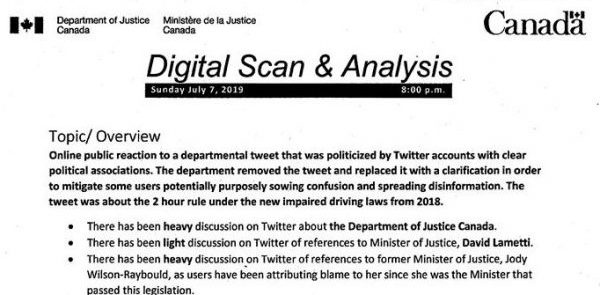
Complain Of Political Tweets
The Department of Justice in an Access To Information memo complains it’s been targeted by political Twitter users with “clear far right leanings”. Staff compiled Digital Scan & Analysis bulletins with monitoring of parliamentarians’ accounts: ‘Some users purposely seek to spread confusion.’
11% Of Loans Had No Impact
Federal agencies spend an average of more than $18 million a year managing a loan and subsidy program for companies in rural Canada, says a Department of Industry report. More than a tenth of borrowers said it “did not achieve any results”.
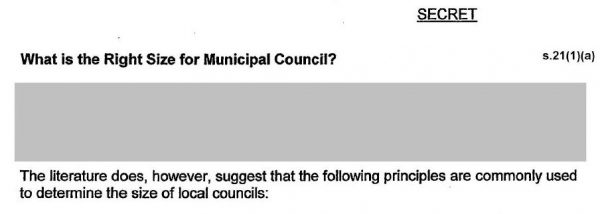
Feds Fret Over Council Cuts
Senior federal employees in a confidential memo claimed Conservative cuts to the size of Toronto’s city council raised fundamental questions about democracy. The Privy Council memo questioned the right size for a city council, but was inconclusive: “It is difficult to say.”
CTV Cited For ‘Jarring’ Story
A national media ombudsman yesterday faulted a CTV affiliate for broadcasting “jarring” video of a fatal stabbing in a suppertime newscast. “Clearly that is not appropriate!” wrote one viewer who complained: “Footage of someone being stabbed to death?”
‘I Deeply Respect The Senate’
Senator Lynn Beyak yesterday said she attended mandatory sensitivity training in a bid to avert expulsion from the Chamber. Beyak, a former Rainy River, Ont. realtor, was suspended last May 9 without pay on complaints she posted racist mail on her website: ‘I look forward to working hard for all the people.”