
Many Canadian researchers resent diversity, equity and inclusion criteria used to determine who qualifies for federal funding, says a submission to the Commons science committee. The document cited one instance in which a researcher was asked if they were LGBTQ for a project that had nothing to do with the LGBTQ community: “It is regrettable that criteria unrelated to science, excellence and merit are influencing funding decisions.”
Bar Fight Spoils November 11
An army corporal has been censured for picking a barroom fight after attending Remembrance Day ceremonies. Score-settling on a mournful day to honour Canadian war dead marked “a significant shortfall of expected military decorum,” wrote a Court Martial judge: “Conduct yourself in a manner that would honour the sacrifices of those who have gone before us.”
EV Sales “Weaker”: Regulator
A federal regulator yesterday predicted weaker 2025 sales of zero emission vehicles just ahead of mandatory quotas. MPs on June 17 voted 194-141 to uphold the federal mandate that requires 20 percent of 2026 new vehicle sales be zero emission: “Weaker sales in 2025 are likely.”
UFO Spotters Urged To Call
Dr. Mona Nemer, cabinet’s $393,000-a year science advisor, recommends the government create a UFO agency to take calls from Canadians who claim to spot alien life. Nemer in an Access To Information report said it was likely “only a matter of time before it is discovered” but noted people who claim close encounters are typically ridiculed: “Report sightings without fear of repercussions.”
Would Curb Anti-Arab Talk
Muslim groups yesterday in a report proposed regulation of parliamentary “disinformation” against Arab Canadians. Amira Elghawaby, cabinet’s $191,000-a year Special Representative on Combating Islamophobia, said immediate action was required: “How would that work?”
Bankers Won’t Make Change
Scotiabank yesterday declined comment on its refusal to make even small change for walk-in customers unless they open an account. The Bank’s new policy follows introduction of a cabinet bill abolishing cash transactions of $10,000 or more regardless of the source or circumstances, the first restriction of its kind: “We don’t have comment at this time.”
Rate Russia As Biggest Threat
Canadians surveyed by the Department of National Defence rate Russia as the leading threat to national security. Other responses included China, the U.S.A. and “immigration policies.”
Knew Ballot Date Beforehand
Federal election managers knew the approximate date of the 2025 campaign call months before it was public, Access To Information records show. Elections Canada to date has not explained numerous irregularities in the vote given the ample warning: “It appears we will have an election call on March 25 or 26.”
PM Stands By Housing Target
Prime Minister Mark Carney yesterday reiterated his pledge to double housing starts to 500,000 per year though federal figures show the target is impossible to achieve. Carney offered no explanation: “We build bigger and faster.”
Gov’t Tries To Verify Claims
The Department of Social Development yesterday said it is hiring researchers to study actual impacts of its $200 million-a year school lunch program. Then-Prime Minister Justin Trudeau announced the program 16 months ago on claimed benefits that appeared to be inflated: “The goal is to build a strong, evidence-based program.”
Show Humility, RCMP Told
Mounties should conduct themselves with more “humility,” says a federal report. The RCMP acknowledged it was not obvious what the reference meant in practical policing: “The status quo isn’t working.”
Gov’t Extends Gaza Permits
Immigration Minister Lena Diab yesterday said she was extending special permits for Gazan refugees but would not specify if a cap of 5,000 will remain unchanged. Diab’s department also declined to discuss costs of tax-free grants that pay $3,000 per adult and $1,500 per minor child: “The humanitarian crisis in Gaza is devastating.”
MPs Demand China Contract
The Commons transport committee by a 5 to 4 vote has summoned all confidential records detailing $1.1 billion in federal financing to buy Chinese-made vessels for British Columbia Ferry Services Inc. “We can stop this loan,” said Conservative MP Dan Albas (Okanagan Lake West-South Kelowna, B.C.), sponsor of the motion.
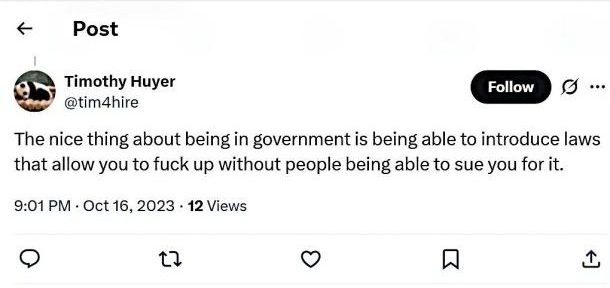
Twitter Code Hits First Staffer
A lawyer at the Department of Finance in Ottawa, Timothy Huyer, is the first federal employee to withdraw tweets under a new Treasury Board policy prohibiting vulgar and partisan social media posts. Huyer tweeted 9 to 10 times in a typical workday including messages ridiculing Conservatives and profane posts like one that boasted: “The nice thing about being in government is being able to introduce laws that allow you to f—k up without people being able to sue you for it.”
NDPer Sidelined At Hearing
New Democrat MP Gord Johns (Courtenay-Alberni, B.C.) complained of “an affront to democracy” after being sidelined at a Commons committee hearing. Other parties signaled they had no interest in making concessions to New Democrats after they were reduced to seven seats in the April 28 election: “I think I have a lot to offer.”



