
Parliament must correct unconstitutional loopholes in cabinet’s Pay Equity Act or face court challenges, the Commons finance committee was told yesterday. One part of the bill is similar to a Québec law struck down 14 years ago: “We will end up before the courts if this section remains.”
Don’t Need Consent For Data
Statistics Canada yesterday defended a proposal to collect personal banking information on 500,000 households – the equivalent of more than a million people – without individuals’ consent. “We have to have high-quality data,” Chief Statistician Anil Arora told the Commons industry committee.
$24M In Electric Car Loans
Cabinet has awarded more than $24 million in low-interest corporate loans for electric car recharging stations though few Canadians use them, accounts show. A third of loans went to a single Québec company: ‘It is to increase awareness.’
Will Monitor Election Slander
Election Commissioner Yves Côté says he could prosecute media for breach of federal law in a case similar to the National Post’s defamation of an Alberta Conservative candidate. The newspaper paid $650,000 for publishing a mid-campaign commentary by then-columnist Don Martin, now host of CTV News Channel’s Power Play program: “A charge could be laid.”
Senators Like Shipwreck Bill
The Senate transport committee last night expressed support for a federal bill to clear Canadian harbours of wrecked and abandoned boats. Transport Canada counts some 500 derelict freighters, barges, fishing boats and other vessels with millions in environmental clean-up costs: “It’s not fair to put that load on the taxpayer.”
Same Carbon Cheque For All
Canadians rich or poor will receive identical carbon tax rebate cheques next year, officials yesterday told the Commons environment committee. The Department of Industry in an Access To Information memo earlier warned of greater impact on “vulnerable groups”.
Spot Loopholes In Equity Act
A federal Pay Equity Act allows cabinet to exempt whole industries from correcting wage rates, says the labour department. Officials told the Commons finance committee the provision was intended to promote flexibility: “I’m just reading what’s on paper.”
Unions Seek Quick Repeal
Union executives yesterday urged the Senate national finance committee to quickly repeal curbs on federal employees’ right to strike. The Supreme Court in 2015 struck down a similar Saskatchewan law as unconstitutional: “This must be taken off the books once and for all.”
MPs Warned On Drug Prices
Trends in drug prices are unsustainable, a federal regulator yesterday told the Commons health committee. Canadians spent $16.8 billion on brand-name medicines last year: “The best drug in the world won’t bring value to society if no one can afford it.”
Fed Up With Omnibus Bills
Omnibus budget bills are now so unwieldy MPs are voting on legislation they haven’t read or don’t understand, say critics. The Speaker of the Commons yesterday ordered that the latest 851-page bill be split into separate votes at Second Reading: “Mistakes can be made.”
Climate Claim Unconfirmed
Environment Minister Catherine McKenna’s claims of climate change fatalities are contradicted by new data. McKenna repeatedly pointed to a surge in deaths in a July heat wave in Québec as proof of the need for a national carbon tax. Figures show the death rate in July was the same as last year.
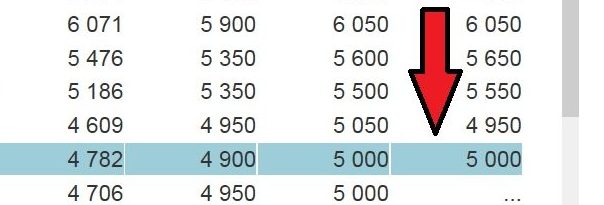
The Québec Institute of Statistics said deaths across the province for the month totaled 5000, the same as the identical period last year. Deaths for July were comparable to the ten-year average and below a peak of 5,072 deaths in July 2010, when average temperatures were two degrees cooler.
“The number of deaths in July is identical to last year’s estimate,” said Frédéric Payeur, a demographer with the Institute. “It is in fact a bit counter-intuitive since we heard about many heat wave-related deaths last summer. We will update this number tomorrow, but I don’t expect the new preliminary estimate to be much different.”
Final estimates will be completed by 2020, said Payeur. “We will need to look into precise causes of deaths for a proper estimate of heat wave deaths,” he said. “It is difficult. In these kind of deaths, causality is not straightforward.”
Various media reports last July claimed 93 “suspected deaths” in Québec including 53 in Montréal in a two-week period due to a heat wave. Media attributed figures to unnamed local authorities. No comparable figures were reported in Ontario though the same heat wave extended through the Great Lakes and St. Lawrence River valley.
Environment Minister McKenna cited the deaths in promoting a 12¢-a litre carbon tax under the Greenhouse Gas Pollution Pricing Act. “We are all paying the cost of extreme weather events like floods, like droughts, like forest fires, and 90 people died in Québec this summer because of extreme heat,” McKenna told the Commons on October 26.
“We’re seeing the impacts of climate change across the country, whether you live in the West, where you see these extreme forest fires; you live in the Prairies where you see droughts and flooding; or you live in the East, where you see extreme heat that’s literally killing people,” McKenna told reporters October 29. “We need to work together. We owe it to our kids.”
Environment Canada data show temperatures in Montréal were unmistakably higher this past July, though the number of deaths was not. Average daytime highs were 30° compared to 25° for the same period in 2017.
Overnight lows in July remained above 20° for 11 days, compared to 9 days for the same period last year. Québec’s Ministry of Health did not comment on the statistics.
“The Ministry entrusts the National Institute of Public Health of Québec with the mandate to produce an annual monitoring report on the impacts of extreme heat,” said Marie-Claude Lacasse, spokesperson for the ministry. “This report will be finalized at a later date.”
Canada’s deadliest heat wave occurred in Manitoba and Ontario in July 1936. Deaths numbered 1,180 by official estimate, including 400 drownings amid 40° temperatures. The 1936 heat wave forced factory shutdowns in Winnipeg, cooked fruit on the trees in Hamilton, buckled a Canadian Pacific Railway trestle at White River, Ont. and was blamed for 64 forest fires.
Health Canada in a 2018 study Qualitative Research On Health Professionals’ Awareness And Perceptions Of Heat Health Issues concluded that “extreme heat is not viewed as a major problem”. Doctors surveyed by department pollsters described heat-related deaths as “very rare” in Canada.
By Staff 
Gov’t To Name, Shame Banks
Cabinet proposes to name and shame scofflaw banks that breach consumer protection regulations, and increase 20-fold the maximum penalty for violations. The provisions in omnibus budget bill C-86 follow complaints of weak enforcement by the federal Financial Consumer Agency: “We were promised a financial consumer code.”
Few Victims Receive Payment
Most crime victims never receive court-ordered compensation, says Department of Justice research. Analysis of thousands of orders issued by courts in one province, Saskatchewan, found only about 1 in 10 are paid in full though sums are modest, typically less than $1,500: “I think it is bulls—t.”
Canada Leads In Piracy
Canadians are leaders in stealing copyright material online, the Commons industry committee was told yesterday. The Department of Industry estimates 26 percent admit to illegally accessing music, e-books, movies, software, TV shows and video games: ‘It is a pervasive problem.’
Say They’re Just Like Kijiji
The Department of Public Works says its government surplus auction website is just as good as Kijiji. Members of the Commons public accounts committee yesterday questioned returns on sales: “Anything that will make us look better, we’ll look at it.”