
Cabinet will decide by November 30 whether to repeal a requirement that federally-funded historical projects tell a “positive national story”. The Department of Canadian Heritage recommended repeal of a current policy that emphasizes “national pride”.
“Tension” In Housing Aid
CMHC in a report cites “tension” in providing housing aid for welfare recipients over minimum-wage workers. The comment comes as cabinet finalizes a bill on a promised National Housing Strategy: ‘These are reflections of societal values and fairness.’
Gov’t Polls On GM Labeling
The Department of Agriculture is polling growers and food processors on Canadian labeling of genetically modified ingredients. The initiative follows the Commons’ 2017 defeat of a New Democrat bill to mandate GM labels: ‘The Canadian government is feeling that push.’
Feds Eye Dormant Accounts
A labour department report hints cabinet should use millions in Canadians’ dormant savings accounts to finance loans and grants for charities. A similar U.K. program, the first of its kind, reported net losses in five of its first six years: “The private sector cannot solve all of society’s problems.”
Cabinet Gains New Powers
Cabinet has given itself new powers to skirt public scrutiny in imposing regulations. A parliamentary committee complained the directive allows cabinet to spring new rules on the public without notice: “A citizen has nothing, zero; a small business has nothing. You’re on your own.”
No, No, No Pipeline Hearings
Cabinet for a third time has rejected parliamentary hearings on its $4.5 billion purchase of the Trans Mountain pipeline. A Liberal majority on the Commons Indigenous and northern affairs committee voted 5 to 4 against summoning the finance minister for questions: “Who would not be frustrated?”
Laundry Lawsuit Names Feds
An appliance maker is taking Health Canada to Federal Court in a bid to block public disclosure of records concerning a 2016 washing machine recall. Samsung Electronics Canada Inc. claims a right to scrutinize government records before they’re released: “Health Canada refused.”
Army’s Dog Of Choice Is —
The Canadian Armed Forces is giving preference to a Belgian sheepdog in buying new animals for its canine units. The Malinois is the same breed used by U.S. Navy Seals in the 2011 capture of Osama Bin Laden: “The dogs will not stop.”
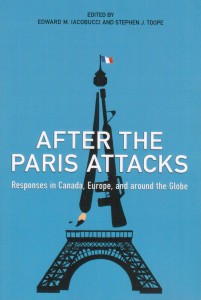
Review: Oh Charlie
Three years after the Charlie Hebdo shootings in Paris, it is not too soon for a frank analysis of what happened and what it meant. Officialdom’s immediate reaction to the murders of 12 people, including an editor and policeman, was to observe the rituals of mourning and free speech.
The Prime Minister read ghostwritten remarks calling press freedom a “cherished democratic principle”. TV networks mused over whether to broadcast Charlie cartoons: CBC French did, CBC English didn’t. The Parliamentary Press Gallery did not even mention Je suis Charlie at its first directors’ meeting after the shootings, instead debating how to hustle up corporate sponsors for its annual wine and cheese party.
Nobody asked if it could it happen here, because it already did. Tara Singh Hayer, editor of the nation’s largest Punjabi periodical, was assassinated in a $50,000 contract killing in 1998 in Surrey, B.C. Most young journalists have never heard of Hayer; fewer still have any emotional investment in press freedom whatsoever. The honest ones shrug and mutter, ‘I’m just trying to make a living.’
The University of Toronto Press wondered if we might try a little harder. The resulting After The Paris Attacks is a compilation of commentaries and thoughtful analyses from a March 9 campus conference. Organizers asked, what happened? And, what did it mean? The answers are compelling.
Charlie Hebdo is an unfunny, racist periodical sued 48 times in 22 years for defamation and hate speech. “Everyone agrees, including Charlie Hebdo, that its form of satire is offensive, rude and scurrilous,” writes Prof. Simone Chambers, director of the U of T’s Centre for Ethics; “The debate is not about the right to offend, which is largely unquestioned, but about the ethical choice to offend.”
Even this is not a capital offence, though it appears a uniquely European interpretation of journalism and good taste. Charlie Hebdo staffers aimed to provoke. In an odd epilogue, editors this month suspended a columnist who criticized Islamic fundamentalists. Charlie management declined interviews on the suspension. So much for free speech.
More interesting is the response to the shootings. “The assault quickly became elevated from a crime, or even an ordinary terrorist attack, into a symbolic attack against the French Republic itself,” says Mohammad Fadel, an associate professor in the U of T’s law faculty. Foreign heads of state attended a Paris memorial; Je suis Charlie was embraced by Twitter commentators as a summons against Muslims with guns.
Interesting, writes Fadel, but what would happen if it was a Christian gunman? What if the ideals under assault were multiculturalism, tolerance, and freedom of religion? Then what? Here the commentary is electric.
On July 22, 2011 Norwegian white supremacist Anders Breivik bombed government buildings in Oslo and shot children at a Labour Party youth camp. Breivik tracked his 72 victims like a hunter potting game. He was sentenced to 22 years in prison, the maximum in Norway, and left a hate-filled manifesto.
“Despite the magnitude of the killing, it did not produce a sense of crisis, emergency, or self-criticism among liberal European or North American political and cultural elites,” Fadel writes. There was no gathering of world leaders. Nobody Tweeted Je sui multiculturalism. The Norwegian killer’s obvious political motives were dismissed as the product of a diseased mind, and not a reflection of the white Christian community per se.
“Breivik’s attack was not taken to represent anything other than himself,” says Fadel. “There were no massive international rallies in support of Breivik’s victims, nor did international leaders fly en masse to Oslo to mourn the victims as martyrs to a noble international ideal, like multicultural tolerance, for example. While numerous articles pointed out the role that organized anti-Islam advocacy groups, particularly in the United States, played in supplying Breivik with the ideas he used to fill his 1500-page manifesto, 2083: A European Declaration of Independence, the media were not filled with hand-wringing about radicalization among young white men, nor was there a call to establish systematic surveillance of right-wing websites or intellectual networks, or to shut down their sources of funding.”
Fadel continues, “How can we account for the differences in the cultural treatment?” To ask the question is to answer it. The reaction to Charlie Hebdo was revealing, and disquieting. In France, in Norway, in Canada, it is as though officialdom “can never be sure of Muslims’ loyalty,” Fadel explains.
Now that’s free speech.
By Holly Doan
After The Paris Attacks, edited by Edward M. Iacobucci & Stephen J. Troope; University of Toronto Press; 256 pages; ISBN 9781-4426-30017; $23.00

Forecast 2,000 Cannabis Co’s
The Department of Health predicts Canada will see a crowded market of nearly 2,000 cannabis growers, distributors and retailers once recreational marijuana is legalized October 17. Tax authorities earlier predicted a ten-fold increase in wholesalers alone by 2023: “Organized crime does not share its data with us.”
Gave $140,000 To Publisher
The National Research Council has given a $140,000 grant to an online news publisher for “U.S. market support”, according to accounts. The award comes as the Department of Canadian Heritage reviews a proposed $10 million-a year fund to save jobs at daily newspapers: “I think you can see the reality.”
Citizen Sues For CSIS File
A St. John’s woman is suing for access to her surveillance file held by the Canadian Security Intelligence Service. The agency’s own research shows Canadians are wary of domestic spying in the name of public safety: “Freedom of information in this country is completely destroyed at this point.”
Must Account For Every $1
Travelers who leave the country with a big bankroll must be prepared to account for every dollar, says a federal judge. The decision came in the case of a British Columbia man who forfeited $10,296 under the Proceeds Of Crime And Terrorist Financing Act: ‘His burden was to remove suspicion it was derived from crime.’
Fed Exhibit Honours Rapper
A new federal exhibit on refugees honours a Toronto rapper alongside a Nobel laureate and former governor general. The Canadian Museum of Immigration said it had no complaints to date over the tribute to K’naan Warsame, whose performances include explicit lyrics: “K’naan is an internationally-recognized artist and humanitarian.”
NAFTA Emails Flood Gov’t
The Department of Foreign Affairs says it’s received tens of thousands of emails over NAFTA talks. About half originated from Open Media, an advocacy group one critic accused of using auto-email forms easily manipulated to manufacture a “grassroots backlash”.
“Since June 2017 the government has received over 46,500 emails and submissions related to the North American Free Trade Agreement,” said John Babcock, spokesperson for the department. “These emails raise issues on specific areas of the negotiations, including intellectual property.”
Nearly half the emails, more than 22,000, were generated in the past week through an August 29 Open Media website form targeting Foreign Minister Chrystia Freeland. The Vancouver-based group in a notice New NAFTA Agreement Would Threaten Canadian Digital Rights urges visitors: “Send an email to Minister Freeland telling her our rights are worth standing up for”.
Laura Tribe, Open Media executive director, yesterday confirmed the original email form allowed individuals using any computer from any location to send an unlimited number of messages to the Minister’s office. The website has since been modified to restrict indiscriminate emailing, she added. “One person sent in 100 comments yesterday,” said Tribe. “That is why we have now put protections in place.”
“This is absolutely not a fake protest,” said Tribe. “The insinuation that people are not speaking out is not valid.” Tribe said 22,222 “unique individuals” used the Open Media form to email cabinet in the past week.
One U.S. academic said he earlier tested the Open Media web form by sending 24 separate messages to the foreign minister without email verification. Mathematician Dr. David Lowery of Atlanta, a lecturer at the University of Georgia, said in a commentary he was “able to easily impersonate you from outside Canada” using a keystroke program.
“I automated 24 spam emails and received 25 separate verifications from Open Media that my emails were sent to Freeland,” wrote Dr. Lowery. “It should be noted the ‘thank you’ email included a solicitation for money. And by ‘automation’, I mean I just had to hit the ‘back’ button on my browser and then ‘send’ button the webform. Not exactly brain surgery.”
“The Interview May Be Over”
Lowery, a recording artist and copyright advocate, accuses lobbyist-funded groups of manufacturing electronic protests against intellectual property rights: “Spamming activities by the likes of Open Media seem designed to overwhelm the channels through which ordinary constituents communicate with government officials. It drowns out the voices of ordinary citizens and replaces them with robotic corporate and special interest-crafted messages.”
Open Media opposes any NAFTA terms that would expand third-party legal liability for internet service providers over republished content. The group is subsidized by Google and telecom providers. “It is not a conflict,” said Tribe; “I’m not sure where your questions are going and I think the interview may be over.”
The group also opposes any extension of current copyright protection from 50 to 70 years after a creator’s death, describing the measure as “dangerous” and costly. “The new NAFTA agreement contains an intellectual property chapter that could trade away Canada’s digital rights by extending copyright terms,” wrote Open Media; “U.S. negotiators and media corporations pushing these unfair rules just won’t take no for an answer.”
Canadian songwriters, publishers and performers’ unions in testimony at parliamentary hearings have repeatedly appealed for a 70-year rule as an essential revenue source that helps support new talent. “Our artists are struggling,” Laurie McAllister, director of the Alliance of Canadian Cinema, Television and Radio Artists, said in June 12 testimony at the Commons industry committee.
“The middle class artist is disappearing,” said McAllister. “Many live at or below the poverty line. It’s not because they’re not good.”
Petitioners noted the 50-year rule under Canada’s Copyright Act is among the lowest of G7 countries. Copyright is protected for 70 years in the U.S. and European Union.
“Holding onto that copyright over an extra twenty years can translate into thousands of dollars if a good deal is in place,” Margaret McGuffin, executive director of the Canadian Music Publishers Association, said in May 31 testimony. “One or two songs in a catalogue can make a huge difference to the viability of a music publisher.”
“Most of our members are small or medium-sized businesses,” said McGuffin. “These companies all represent and invest in thousands of Canadian songs, songwriters and composers who are heard daily on the radio, on streaming services, in video games, and in film and television productions around the world.”
By Staff