
The Federal Court of Appeal has dismissed a British Columbia woman’s claim for First Nations tax-exempt status on millions in income. The Canada Revenue Agency complained of “improper manipulation” of tax laws in the case: “It is abusive of the exemption.”
Executive Hiring Is Up 56%
The number of executives in the federal public service has grown 56 percent since 2000, says the Treasury Board. Three departments combined – environment, finance and justice – now have 31 deputy, assistant deputy and associate deputy ministers: “During the same period, the overall federal public service grew by 24 percent.”
Copyright Act Worth $103
A Winnipeg novelist has told the Commons industry committee her income from royalties and licensing fees totaled $103 last year due to free photocopying under the Copyright Act. “Most artists have not seen compensation,” said one MP: “There is something deeply wrong.”
Feds Silent On Airline Pot
The federal airport security agency yesterday declined comment on how it proposes to regulate legal marijuana. The Canadian Air Transport Security Authority in 2017 suspended a longstanding policy of calling police whenever cannabis was found in travelers’ luggage.: “It is expending increased effort to manage marijuana incidents.”
Senators Taunt Atlantic MPs
Cabinet yesterday had no proposals to break a parliamentary deadlock over shippers’ rights in a federal rail bill. Two Conservative senators challenged Atlantic MPs to defy their leadership and amend the legislation: “They can end this really quickly.”
Broke Law At Crown Agency
A Crown corporation has fired a senior employee for illegal conduct involving contracting and leaked data. Managers at Export Development Canada made no mention of the incident in April 24 testimony at the Commons trade committee: “We’re not perfect.”
No Free Speech In Nt’l Parks
Parks Canada is defending an obscure regulation allowing staff to censor permit holders’ signs or literature for objectionable content. A parliamentary committee said the rule is a clear violation of free speech: ‘Change the regulation or it’s wiped off the books.’
VIP Menu: Alpen & Couscous
Access To Information records obtained by the Canadian Taxpayers Federation detail menus approved for Prime Minister Justin Trudeau and cabinet when traveling aboard Canadian Armed Forces aircraft. Catering charges totaled $576,723 in a fourth-month period last winter: “If you have any edible flowers that would be ideal.”
No Compromise On Rail Bill
The Commons on May 22 will vote to reject shippers’ amendments to a rail bill twice approved by the Senate. One MP described the impasse as a game of ping-pong over the rights of freight customers: “How can we explain the refusal to treat all regions of Canada fairly?”
A Poem: “The Summit”
No two
could be more different
than the North Korean Leader
and the American President.
One fascinated with military,
wants nuclear capabilities
at the expense of social services.
Obsessed with appearance
he turned hairstyle
into trademark.
He doesn’t trust
his neighbour to the south
and wants an insurmountable obstacle
along the border.
Nor does he trust the free media,
or even his closest advisors.
They don’t last long on the job.
And he doesn’t like to be confused
with facts.
The other…
(Editor’s note: poet Shai Ben-Shalom, an Israeli-born biologist, examines current events in the Blacklock’s tradition each and every Sunday)

Review: All Wrong On Climate Change
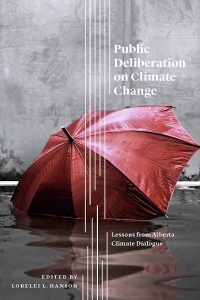
Cabinet’s climate change program is a demonstrable fiasco swallowed in acrimony, evasion and costly litigation. Authors of Public Deliberation on Climate Change ask, is it possible Parliament is incapable of getting the big jobs done?
The Commons finance committee was in session May 1. MPs noted the finance department had a 2015 memo detailing the cost of a carbon tax to Canadian households, but censored all the numbers. How much would it cost? “I would prefer not to expand,” replied Gervais Coulombe, a department tax director.
On March 22, the Commons environment committee met. MPs asked, what’s the impact of the carbon tax on emissions? “I don’t have that number offhand,” replied Deputy Environment Minister Stephen Lucas. He coughed up the data five weeks later. It’s 55 percent short of the emissions target.
Here is Parliament’s climate change debate in a nutshell, a hodgepodge of secret math, evasive testimony and exasperated MPs. In the absence of coherent leadership it’s become “a proxy for political battles”, as Public Deliberation puts it.
Authors recount the experience of a series of research projects and workshops called Alberta Climate Dialogue to a) identify the problem and b) ponder solutions. Public Deliberation is not a scientific paper; it’s a compelling, human explanation of how the whole climate debate has gone wrong.
In Parliament this is a clash of competing narratives, where one side asks, “Why should Grandma pay 14 percent more for home heating oil?” and the other side replies, “Okay, what’s your climate plan?”
“People tell stories to get a handle on a complex and uncertain world,” writes contributor Gwendolyn Blue, a Climate Dialogue researcher. “The language we use and the stories we tell do not innocently reflect reality. Rather, our stories actively shape the ways in which we perceive, understand, discuss and act in the world.”
Public Deliberation identifies a natural tension in the climate change debate. It is real. “Deliberations focused on wicked issues present an additional layer of complexity,” note authors. “Intractable problems that involve competing values and tensions – where time is not costless and those most responsible for the problem have the least immediate incentive to do something about it – challenge existing public policy engagement processes at many levels.”
That’s a damning indictment of a multi-billion dollar question. Two contributors to Public Deliberation, Tom Prugh of the Worldwatch Institute and Public Agenda’s Matt Leighninger, warn there is more at stake here than a 14 percent hike in home heating oil. “There are signs that twenty-first century public institutions are not up to the challenge of dealing with wicked problems like climate change,” they write. “For this failing, and a host of other reasons, the trust and confidence citizens once had in their public institutions is in very sharp decline.”
Incompetence is not inevitable. Skillful leaders can address complex issues with time and care. Proponents of free trade systematically dismantled a century of industrial tariffs by appointing a 1982 Royal Commission with cross-country hearings, opening negotiations in 1986, putting the question to voters in 1988 and bringing free trade into force in 1989. It was so methodical even free trade critics were left to say, “Okay, if that’s the way you want it – ”.
On climate change, cabinet opted for the shotgun approach instead. They should have read Public Deliberation.
By Holly Doan
Public Deliberation on Climate Change: Lessons from Alberta Climate Dialogue, edited by Lorelei L. Hanson; Athabasca University Press; 242 pages; ISBN 9781-77199-2152; $34.95
Cites Post Office Bullying
Public Works Minister Carla Qualtrough yesterday cited Canada Post for an unacceptable culture of harassing employees. Qualtrough told the Commons government operations committee she personally interviewed postal workers who complained of workplace bullying: “There are tensions.”
1,559 Cut For Refusing Oath
More than 1,500 community groups have been denied federal funding for failing to sign a government oath, according to Department of Employment Records. The new Canada Summer Jobs policy is the target of a federal lawsuit: “It’s deeply concerning.”
MP Would Revive The C.C.F.
The long-disbanded Cooperative Commonwealth Federation party would return to the Commons for the first time since 1961 by a legislator’s request. Independent MP Erin Weir (Regina-Lewvan) yesterday said he is petitioning the Speaker to sit as a Saskatchewan CCFer.
“I represent that political heritage,” said Weir. “My great-grandfather was a CCF candidate for Parliament in 1957 in Prince Albert, John Diefenbaker’s riding. There is a history and a heritage that I and a lot of other Saskatchewan people are tremendously proud of.”
The CCF, founded in 1932 as a farmer-labour party, disbanded 57 years ago with the establishment of the New Democratic Party. Saskatchewan’s provincial CCF carried the name until 1967 when delegates at a Saskatoon convention voted to rebrand themselves as New Democrats.
“This is the party I represent,” said Weir. “This is a tradition that is worth carrying on. The heart and soul of this movement was in Saskatchewan.”
Weir said he submitted a request to the Speaker of the Commons to be formally identified as a CCF Member of Parliament. “I’m going to defer to the Speaker,” he said. “MPs can make submissions to the Speaker about how they choose to be designated. The decision rests with the Speaker.”
The party elected its first government at the Saskatchewan legislature in 1944. CCF initiatives included the nation’s first Annual Holiday Act in 1944 mandating two weeks’ paid leave for private sector employees; introduction of the 40-hour week; passage of Canada’s first Bill Of Rights, a 1946 law prohibiting discrimination on the basis of race, colour or religion; and the first public hospital insurance program, in 1947.
The Saskatchewan party under then-Premier Tommy Douglas was also the first to rename jails as “correctional institutions”, and the first to introduce no-fault auto insurance. The national party at its peak in 1945 elected MPs in British Columbia, Saskatchewan, Manitoba, New Brunswick and Nova Scotia.
The federal party’s longest-serving leader, Major Coldwell, a former secretary-treasurer of the Canadian Teachers Federation, died in 1974. “He wanted to call it the Social Democratic Party,” Coldwell’s daughter Margaret Carman said in a 2009 interview. “He’d known poverty. His father was a butcher, and we lived in Saskatchewan in the Depression years.”
“He thought all people were entitled to a decent life, that no one should suffer from poor housing and poor health,” said Carman. “His whole life was devoted to improving conditions for the common man.”
By Tom Korski
‘My Income Is $12,000…’
A bestselling children’s author has told the Commons industry committee she took a 90 percent pay cut due to free photocopying under the Copyright Act. MPs are conducting a statutory review of the Act for the first time since 2012.
“The world watches as Canadian schools download and copy curated content in a government-sanctioned theft,” said Sylvia McNicoll of Burlington, Ont. “I’m trying to make a living. It’s impossible. I must tell my student the same.”
“I am drawing my pension and cashing in my registered retirement funds,” said McNicoll. “After that, I will sell my house. What does that mean for future writers and cultural workers? Your job must become your hobby. You do it on your lunch break.”
The current Act includes a “fair dealing” provision that permits free photocopying of works for private study or personal research. The Supreme Court in a 2012 decision Alberta v. Access Copyright expanded private study to include photocopying of textbooks and literature for classroom use. A federal judge in 2017 faulted York University for using free photocopies in millions of student course packs.
McNicoll told the committee she has seen her novels photocopied wholesale by public institutions. “My grandson recently brought home a photocopied story in a duo-tang folder, a Canadian-authored retelling of an Indigenous tale – Canadian illustrated, Canadian published, edited. The photocopied story was 100 percent complete.”
McNicoll, whose bestselling children’s novels have been republished overseas, said in 2012 her income was more than $46,000 including $2,579 in royalties. “I just finished preparing my income tax for 2017,” said McNicoll. “My income is down 90 percent to $12,000,” she said.
Royalties totaled less than $400. The author said she published two novels last year. “It’s down from two mortgage payments and three weeks of groceries, to one week of grocery money,” said McNicoll. “Groceries have gone up.”
“This photocopying, of course, negatively impacts the publishing industry and the cultural workers involved,” said McNicoll. The Association of Canadian Publishers in earlier April 26 testimony said licensing fees fell 89 percent under the photocopying provision of the Act.
“We are suffering real time damage triggered by this Act,” said Glen Rollans, Association president; “The rights you protect for me are not taken away from anyone. They are protected for everyone.”
Eight provincial education departments – all but Ontario and Québec – on February 20 filed a Federal Court lawsuit for the right to continue waiving fees on photocopied textbooks. The lawsuit covers copying by 92 school boards in the eight provinces.
By Staff