A federal employee is entitled to full pay for time spent shoveling the driveway, a labour board has ruled. The decision came in the case of an immigration department staffer who blamed winter snowfall for arriving three hours’ late for work: ‘The snow was so high it was impossible to get the car out’.
E.U.-Banned Pesticides Okay
Health Canada will wait till as late as 2018 in deciding whether to halt the sale of pesticides linked to bee deaths. Chemicals currently used by Canadian growers are restricted in the European Union: “2018 is entirely unacceptable”.
Fed Memo Warns Of Bubble
A federal financial watchdog warns of a real estate bubble in Canada’s most expensive city due in part to undisclosed millions in foreign investment from China and the U.S. The 2015 staff memo to the Superintendent of Financial Institutions was obtained through Access To Information: “Prices and average incomes are seemingly untethered”.
Fear All-Canada Pact Is Lost
Lawmakers are protesting the expiry of a little-known pact that promised to lower interprovincial trade barriers. Consumers Council of Canada research earlier showed few people, only 1 in 10, had heard of the Agreement On Internal Trade: “This thing has passed by like a ship in the night”.
Govt Web Scheme Goes Awry
A federal scheme to merge all government websites into a single super site has met a backlash from taxpayers, according to Access To Information memos. The Treasury Board is attempting to collapse some 1,500 current websites into a standard Canada.ca site by year’s end: “Feedback so far has been universally negative”.
E-Cig Rules Postponed Again
Health Canada proposes more study of electronic cigarettes a year after a Commons committee urged marketing bans and restrictions on sales. The Canadian Medical Association protested the delay in any regulations, not expected now till 2017 at the earliest: “E-cigarettes containing nicotine should not be authorized for sale”.
Mandate Equity, MPs Told
Parliament should replace its complaints-based pay equity system with legal mandates, MPs have been told. The advice from the former chair of a Pay Equity Task Force is the same recommended by the panel in 2004: “Everyone agreed this could not go on”.
See Cash In Toxic Mine Sites
Abandoned mine sites represent opportunities in reclamation, says a mining executive. More than 70 percent of some 10,000 contaminated sites logged in a federal registry are old mines: “They have a lot of value”.
Bill Settles 152-Year Dispute
A Liberal bill to end a 152-year old dispute over Confederation has been introduced in the Commons for a second time. The private bill would proclaim Charlottetown, not Québec City, as the cradle of the nation: “There is a little controversy”.
30 Sec. Tax Scrutiny Nets Fine
A taxpayer who spent 30 seconds flipping through a fraudulent return prepared by his insurance agent has been hit with a 50 percent penalty. Tax Court ruled Canadians have no excuse in signing a false return whether they read it or not: “He could not be bothered”.
Bill Hails Minority Languages
A Senate bill would see cabinet draft a multilingualism policy. Minority language groups outnumber francophones in every province west of the Great Lakes, according to Statistics Canada: “We very much need to speak many languages”.
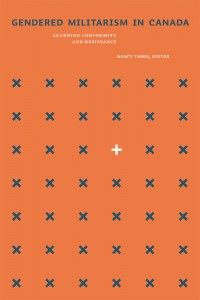
Book Review: Our Uniform Fetishism
Canada in the First World War with a population of 8 million lost 61,000 dead. The tiny Kingdom of Serbia, half our size, lost 1.1 million. By any measure of modesty or good sense Canadians have some nerve in boasting of our wartime exploits as a defining moment in history. Yet the sheen of reflected military glory even today is irresistible to certain politicians who promote a “national identity that is masculinist and militarized”, writes Prof. Nancy Taber of Brock University.
Gendered Militarism in Canada examines the contradiction. It is a thoughtful book. Editor Taber brings street cred to the topic; she is a former Sea King navigator.
“I quite enjoyed serving in the military and was proud to do so,” Taber writes. “Gradually however, I began to question first my place in the military and then the military’s place in society. This question stemmed from my experience as a woman in a male-dominated institution. Always having to be on my toes, knowing I was somehow different, was an undercurrent throughout my service despite my overall success. Near the end of my short service contract (four years of university plus nine years of service) I studied for a master’s degree in adult education. It was at this point I began to problematize the enactment of gender in the military.”
Plans for the nation’s 150th anniversary drafted by the previous Conservative cabinet stress military themes as a predominant feature of the Canadian experience, though most Canadians have never served in the military – least of all the front bench of the previous cabinet.
The effect is peculiar.
Sesquicentennial observances in Heritage Canada’s Key Milestone Anniversaries On The Road To 2017 include the 1866 Fenian Raids, a series of pointless skirmishes in four municipalities including Emerson, Man. where 40 American raiders ransacked a customs office; the Battle of the Somme (we lost); Battle of Passchendaele (lost again); Dieppe Raid (lost); and Battle of Hong Kong (lost).
The role of the military in Canadian life is an interesting point of debate among historians and Legion members, but not a predominant cultural theme. Odd, then, that officialdom tried to make it so with obscure remembrances of the War of 1812 and a former prime minister who liked to pose in an air force bomber jacket. “What discourses of citizenship are being promoted, privileged and taught through these events and artifacts?” writers Taber.
“It is often stated that the military action by Canadians was and is necessary for the freedom of the country,” says Taber; “This reverence of soldiers above others is reflected in the words of Canadian Defence Minister Peter MacKay who stated that they ‘are the best citizens in our country.’”
Gendered Militarism sees this fetishism glamorizing the he-man infantryman as “strong, stoic, heroic, emotionally invulnerable, self-sufficient, a patriarch, a breadwinner, a protector, and one who is willing to risk personal safety for the good of the community. He is rarely overwhelmed and he is always ready to fight for a worthy cause.”
This bears little resemblance to the country many recognize – not least of all the rest of the world – as uniquely defined by sub-Arctic climate, spectacular geography and one of the planet’s largest Indigenous populations.
This is our national identity. Just ask the Serbs.
By Holly Doan
Gendered Militarism in Canada: Learning Conformity and Resistance; edited by Nancy Taber; University of Alberta Press; 272 pages; ISBN 9781-7721-120844; $34.95

RCMP Pot Firing Overturned
An RCMP staffer fired for smoking marijuana at a police party has won compensation at a federal labour board. The ruling by the Public Service Labour Relations & Employment Board is the first since the panel was named in legislation to adjudicate Mountie disputes: ‘He never went to work drunk’.
Seek Tougher Border Scrutiny
A Senate bill for independent oversight of the Canada Border Services Agency has “some pieces missing”, says a civil rights group. The bill follows 14 deaths in Agency custody, including two in the past month: “Police should not investigate police”.
1954 Water Regs Are Updated
Industry protests have prompted Health Canada to ease long-delayed regulations on safe drinking water aboard commercial public transport carriers. Rules for testing of E.coli bacteria and other contamination have been under review since 2005: ‘The cost is small enough’.