
Parks Canada has raised fee revenues by up to 42 percent since 2006 amid agency complaints of declining attendance at parks and national historic sites. Documents show the department collects tens of millions of dollars a year in admission and camping fees: “Parks are national treasures that are becoming less and less accessible”.
Postal Execs Fight Pay Equity
Canada Post is accusing of running the clock on a pay equity dispute dating back 23 years. The Crown corporation earlier waged a separate 28-year battle on pay claims by women clerks that was finally settled by the Supreme Court: “The length of this case offends the public conscience”.
MPs Reject Showboat Ad Ban
A proposal to submit all government advertising to a third-party auditor has been blocked by the Commons’ Conservative majority. Federal advertising has cost taxpayers more than $750 million since 2006, by official estimate: ‘That buys a lot of insulin pumps for kids with diabetes’.
Auditor Loses Tax Court Bid
A former Canada Revenue Agency auditor has been cited in Tax Court for incorrectly claiming tens of thousands of dollars in business losses. The purported losses followed a failed attempt to launch an in-flight magazine for airline passengers: ‘He did not feel the need for due diligence’.
Lakes Feud Will Cost Millions
Canadian shipowners are pledging $1.5 million in new research in a bid to comply with U.S. environmental rules feared to restrict trade. The U.S. earlier ordered that Great Lakes shippers plying Atlantic waters must install costly equipment to treat ballast water before calling on American ports: “We’re under scrutiny”.
Says Aqua Rules To Proceed
Cabinet will proceed with amendments permitting aquaculture operators to use pesticides in fish habitat, says Fisheries Minister Gail Shea. The plan followed a petition from 124 scientists and conservationists asking that cabinet withdraw proposed changes to the Fisheries Act: ‘They actually provide more clarity’.
Seal Photos Face Federal Ban
The Senate will consider a legal ban on photographs of the Atlantic seal hunt. Amendments to federal regulations would permit RCMP to seize any camera, and allow the government to sue any publisher for “defamation” in using hunt photos: “Are licenses issued so people can observe what happens in slaughterhouses?”
Commons Kills VIA Rail Bill
The Commons has defeated a bill mandating better VIA Rail service and allowing employees to buy up to 10 percent of the company. Conservative MPs rejected the private bill as costly and disruptive to freight service: “It is a significant financial risk”.
Still Cannot Beat 1913 Record
The government is using statistical averaging in mistakenly claiming immigration is at an all-time high. The Department of Citizenship acknowledged it ignored century-old data in claiming current levels set a record: ‘They are trying to claim the immigrant vote’.
Bill To Limit Interest At 21%
Parliament should ban interest charges over 21 percent under federal usury laws, a Senate committee has been told. A private bill would abolish higher rates charged by payday loan companies, credit card issuers, utilities and other firms: ‘Bell Aliant in Atlantic Canada has an interest rate for non-payment on time of 42%’.
Pesticide Fees Up 50 Percent
Health Canada proposes a 50 percent increase in most fees on pesticide manufacturers, the first increase in charges since 1997. The fees would still not cover most costs associated with reviewing farm chemicals worth $2.2 billion a year in sales, the department said: “If we made our fees too high, it would potentially be a disincentive to industry”.
No God, Then No Tax Credit
A group denied Canada Revenue Agency status as a charity for its promotion of “cosmic” oneness has lost a bid to take its case to the Supreme Court. Justices declined to hear an appeal from the Humanics Institute of Ontario: “There was no god in this, which is generally a requirement”.
A Poem — “What Combat?”
The Quarter of Combat
in the city of Paris.
Used to be the site of animal fights,
public hangings.
Nowadays, it’s a residential neighbourhood
and a landscaped, 61-acre park
featuring a lake, a waterfall,
and a miniature Roman temple.
To repeat our top military commanders,
there are no Canadian soldiers in Combat.
For all we know
they are 10,000 km away,
somewhere in northern Iraq.
(Editor’s note: poet Shai Ben-Shalom, an Israeli-born biologist, examines current events in the Blacklock’s tradition each and every Sunday)

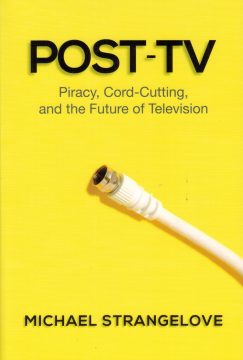
Book Review: Free Beer — Tomorrow
Pat and Mike, two rival saloonkeepers on Main Street, were complaining of poor sales when they hit on a scheme. Pat took a dollar and went to Mike’s to buy a glass of beer, then Mike took the same dollar and returned the favour at Pat’s. On it went, Pat and Mike swapping the same dollar for beer. By month’s end both had phenomenal sales, and no income to refill their empty kegs.
So author Michael Strangelove hits on a peculiar analysis of what ails television. He complains media companies insist on charging for content to recover production costs while kids today just like free beer. “Free, easy, simple and feature-rich – this is not something that can be yanked out of consumers’ hands without a fight,” says Post-TV. Um, yes, but television, like beer, costs money to make. How would Post-TV suggest that television networks get cash to keep refilling the program schedule? The question does not interest Strangelove.
Post-TV documents an industry in transition. Thirty-nine percent of Canadians subscribe to Netflix and other unregulated internet TV services, according to the CRTC. They are still outnumbered by cable subscribers (47%), but the writing is on the wall: “The internet is transitioning into an alternative vehicle for watching television and movies,” Strangelove writes. “This in itself would not amount to much except that at the same time content and audiences are spiraling out of control. There are rumours and dire forecasts of the end of network broadcast television. There is the possibility that the internet will devastate the television and film industry in the same manner that it gutted the music industry.”
The phenomenon raises questions of federal regulation and the future of programming. Of Canadians under 34, the Netflix generation, only 28 percent tell the CRTC they consider “community programming” important. Internet TV is neat for watching Family Guy reruns, but who is left to cover the local school board? And if ad-sponsored network television is dead, where will media companies find the money to subsidize their news divisions?
Details, details, dismisses Strangelove, a lecturer at the University of Ottawa’s department of communications. He did not interview any TV executives for his book. The main fact worth noting is kids today “prefer to get their news online for free or from the Daily Show,” he writes.
“It is the changing habits of the young that are transforming the music, news and publishing sectors,” Post-TV insists; “The younger generation of internet users is the canary in the coal mine and will indicate if death is in the air for the incumbent television industry.”
It’s not, of course. Paid media remain the only reliable source for sports, news, documentaries and public affairs, the programming millions buy. More importantly, it remains the only means of meeting the cost of coverage. Netflix doesn’t interview school board trustees; YouTube doesn’t read the federal budget; and piracy remains a crime, though Strangelove celebrates theft: “The general trend has been towards the mass criminalization of everyday behaviour and increasingly draconian penalties for downloading something that is otherwise of marginal worth.”
There is something odd. Post-TV is not available for free on Strangelove’s website. The book is financed by taxpayers’ grants through the Canada Council For The Arts and still costs $28.48. It appears when you work as a university lecturer and heavily-subsidized author, you can opine on media economics and leave it to someone else to figure out how to fill the keg. Pat, meet Mike.
By Tom Korski
Post-TV: Piracy, Cord-Cutting, and the Future of Television, by Michael Strangelove; University of Toronto Press; 360 pages; ISBN 9781-4426-14529; $28.48
Says Lawyers & Janitors Alike Must Report Under Union Bill
Lawyers, accountants and everyday contractors including janitors doing casual work for unions will be required to tell the government of their political activities under Bill C-377, a Senate committee has been told: “If that’s not an intrusion in privacy, what is?”