
Confidential government research is contradicting claims a cabinet initiative to align industry regulations between Canada and the U.S. will lower consumer prices. A consultants’ report says the pact may result in marginal gains amid “false expectations”, and warns harmonization “could cause significant harm to Canadian distributors, retailers and consumers.” The cabinet study was released through Access to Information.
Dioxins Higher Than Mexico
Levels of airborne dioxins are higher in some regions of Canada than they are in Mexico, according to the Commission for Environmental Cooperation. The research concluded levels are as much as 10 times those in Mexico despite an overall decrease of atmospheric dioxins in Canada: “What is the source?”
One Big Answering Machine
Shared Services Canada proposes to merge all toll-free government phone lines into a single, mammoth “cost-effective” automated answering system. The proposal follows earlier complaints of maddening experiences in trying to call federal departments. Shared Services declined an interview: ‘The government is nameless, faceless and difficult to contact’.
1938 Raw Milk Ban Upheld
The Supreme Court has declined to overturn a 76-year ban on the sale of raw milk. One dairyman named a “crusader” for unpasteurized milk was denied an appeal of his conviction under health regulations: “People who want this product can’t get it”.
CRTC Friendly With Lobby
Canadians rate the CRTC as too friendly with lobbyists and prone to government “propaganda”, according to the broadcast regulator’s own research. The findings are detailed in a study commissioned by the agency: “There was a certain amount of cynicism”.
41% Worry Over Medicare
The Canadian Medical Association reports millions of people have no supplemental insurance to cover costly prescription drugs and other care past 65. The finding follows a survey commissioned by doctors that found one-third of Canadians must pay for costs not covered by medicare: “You will see unequal care”.
“Record Keeping”: A Poem
A data management company
offers to securely destroy your documents.
They promise
it will kept sensitive information
out of the wrong
hands.
Officials
involved in the Ontario gas powered plants
find the approach
oddly familiar.
(Editor’s note: poet Shai Ben-Shalom, an Israeli-born biologist, examines current events in the Blacklock’s tradition each and every Sunday) 
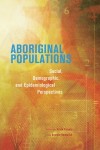
Review: The 6th Largest Province
If Aboriginal Canadians all lived in one place they would be Canada’s sixth largest province with 14 seats in the House of Commons. If they were a nation they would be the 161st member state of the United Nations, larger than Cyprus, Iceland or Fiji.
Aboriginal Populations examines the striking demographics of First Nations, Inuit and Métis. Its scope is encyclopedic and compelling; its findings are often surprising; its commentaries are eloquent. Editors Frank Trovato and Anatole Romaniuk capture a community in transition after centuries of despair: “They have not been on the receiving end of history, from whatever angle the matters are seen.”
First, the numbers.
Authors conclude Canada’s Aboriginal population is probably higher now than at any point in millennia though actual numbers of the pre-Confederation era are historical guesswork – perhaps 200,000, maybe more. By 1900 disease and misfortune decimated the community to some 107,000 people, and then began “a slow journey toward demographic recovery”.
By 2017 aboriginals will number some 1.4 million. Researchers note many Aboriginal languages marked for extinction years ago have in fact survived despite “dire predictions” of assimilation.
“As much as we would like, and should, celebrate Aboriginal people’s demographic revival at this particular point in their history, our view ought to be a much more subdued, to say the least, when we mull over their demographic fortune since the inception of European colonization about four centuries ago,” Aboriginal Populations concludes. “The demographic growth of Aboriginal people over that long drawn out historical period pales in comparison with the growth of the European population”
Second, the people.
Aboriginals are more likely to have shorter lives than other Canadians though even here improvements are found. If the life expectancy of a Status Indian man is 71.4 years – still lower than the national average – it is far better than the life expectancy of 59 years reported in 1975.
Statistically, First Nations members who live on reserves drink less than most Canadians: “This tends to dispel the reputation Aboriginal people have for being given to alcoholism,” authors write. Yet there are other depressing data:
- •Aboriginal children are more likely to live in a single-parent home;
- •Status Indians are three times more likely to die by homicide, suicide, auto wrecks, fatal fires, drowning or poisoning;
- •Aboriginals are more likely to be imprisoned, and more likely to reoffend after their release due to chronic substance abuse, joblessness and broken families;
- •Aboriginals are more likely to smoke, and likelier to suffer obesity due to poor diet.
“Remarkably, the very similar ills are to be found among many indigenous peoples across the world,” authors note: “Everywhere they share a similar historic fate of colonization, oppression, marginalization and socio-cultural disruption.”
Aboriginals are also statistically poor, and suffer the troubles that plague poor people everywhere: violence, sickness and unemployment. Yet Aboriginal Populations is not despairing; it profiles a community in recovery. “The overarching theme,” authors write, “is that Canada’s Aboriginal population has reached a critical state of transition.”
By Holly Doan
Aboriginal Populations: Social, Demographic and Epidemiological Perspectives, edited by Frank Trovato and Anatole Romaniuk; University of Alberta Press; 555 pages; ISBN 9780-88864-6255; $60
Tax Protest Ends At Court
The underground “de-tax” movement, blamed by Canada Revenue Agency for costing millions, has suffered a lethal blow at the Supreme Court. Justices refused to hear an appeal from a delinquent tax-filer who claimed exemption from federal law: “This scheme is being actively promoted”.
Health Canada Marks $638K Food Labelling Campaign
Health Canada proposes to award a $638,000 contract to a food processors’ group for “educational messages” on labeling at supermarkets. The funding follows appeals from consumers’ advocates that cabinet legislate standard nutrition labels on food products: “What is in a ‘fruit cocktail’?”
Cited For Lax Management
Federal agencies almost never suffer budget cuts for inefficiency regardless of whether they meet annual targets, according to the Parliamentary Budget Office. Analysts in a critical report concluded funding was divvied up whether or not individual agencies were proven well-managed: ‘It is like a gong show’.
Enviro Dep’t Border “Blitz” Uncovers Waste Shipments
Environment Canada in an enforcement blitz has cited a leading oil recycler for illegally shipping millions of litres of hazardous waste to the U.S. without a permit. New Brunswick’s Atlantic Industrial Services shipped reclaimed oil to Maine: “It was a hazardous material’.
Air Canada To Divulge Files On Profiling Complainants
Air Canada in a landmark ruling is being ordered to divulge confidential records on security complaints by travellers who allege racial profiling. The order is the first public glimpse into secretive federal security blacklists enacted after 9/11. It follows an appeal by a Halifax man who complained he was repeatedly badgered by airline staff and employees of the Canadian Air Transport Security Authority: “I am a citizen”.
Rail Reform Is Temporary
A rail reform rated the most sweeping in decades is only temporary, cabinet confirms. Transport Canada says interswitching regulations permitting Western shippers to bypass Canadian Pacific and Canadian National Rail Co., will expire in 2016: “Is there going to be emergency legislation every time there’s a commodity stuck out there?”
Cabinet Sets Rail Quotas
Cabinet has fixed new grain shipment quotas for railways after lamenting the “inability” of major carriers to keep to delivery schedules. The quotas are mandated under legislation signed into law May 29: ‘Regulations spell it out’.



