
Inflation in apartment rents has cooled but with little improvement in affordability, CMHC said yesterday. The Canada Mortgage and Housing Corporation did not measure what if any impact resulted from Parliament’s GST holiday on new apartment buildings enacted a year ago: “There has been no improvement in affordability.”
Call Feds Liars On Finances
Federal authorities yesterday denied postponing disclosure of financial accounts to avoid embarrassment over growing debt. MPs on the Commons public accounts committee accused the Prime Minister and cabinet of lying to taxpayers: “If the Government of Canada was on the Toronto Stock Exchange we would be de-listed.”
“Trying To Figure” 25% Tariff
The Department of Finance yesterday said it is “trying to figure out as we go” how many jobs would be lost with a threatened 25 percent Trump tariff. Members of the Commons public accounts committee expressed alarm at the lack of preparedness: “I really hope you guys get on that for the sake of this country.”
Minister Puts Costs At $690B
Climate change targets will cost Canadian electrical utilities about two thirds of a trillion dollars, Environment Minister Steven Guilbeault said yesterday. Guilbeault in a legal notice said the country had no choice but to stop burning fossil fuels for electricity: “Climate change is a growing threat.”
Vow Safer School Bus By 2039
The Department of Transport yesterday deferred for years the full introduction of new safety measures on the nation’s 65,000 school buses. Mandatory seatbelts were already rejected as too expensive and onerous: “School buses are the safest way to transport children.”
Report Lists China Atrocities
Canada must acknowledge Taiwanese status in world affairs, Tibetans’ self-determination and the Chinese Communist Party’s torture and enslavement of minorities, say MPs. The recommendations are detailed in a report to Parliament, the strongest yet, by the Commons Special Committee on Canada-China Relations: “Much more needs to be done.”

Vows Digital ID Is Voluntary
Any national digital ID program will be strictly voluntary, says cabinet. Records tabled in Parliament disclosed federal agencies have spent millions on a digital identification program since 2019: “The government is and has been engaged in research and exploration for quite some time.”
Wasted Vaccines Cost $1.2B
The Public Health Agency wasted $1.2 billion on unused Covid vaccines, records disclosed yesterday. It was the highest figure divulged to date: “There is a diminishing account of pandemic legacy costs.”
Exec Lobbies For Ukraine Aid
A Canadian executive is privately bankrolling a million dollar publicity campaign to lobby Trump Administration appointees to “stand with Ukraine,” records show. James Temerty, founder of the Computerland chain and Northland Power Inc. of Toronto, yesterday did not comment: ‘It will assist in building relationships.’
Downplays Decriminalization
Cabinet is not “preoccupied” with decriminalizing narcotics, Addictions Minister Ya’ara Saks said yesterday. Testifying at the Commons health committee, Saks would not say if she considered a short-lived experiment with decriminalization in British Columbia to be a failure: “The only party that is preoccupied with decriminalization is really the Opposition.”
81 Complain Of Hiring Fraud
Whistleblowers last year filed scores of complaints of fraud in federal hiring, says the Public Service Commission. A total 17 cases were under active investigation: “There are still areas for improvement.”
Gov’t Loses Third House Seat
A “stop Trudeau” protest vote last night cost Liberals a third Commons seat in a byelection, this time in Cloverdale-Langley City, B.C. The upset came hours after the Prime Minister marked the close of what he called “one of the toughest days as a Party.”
Debt Costs Surpass Medicare
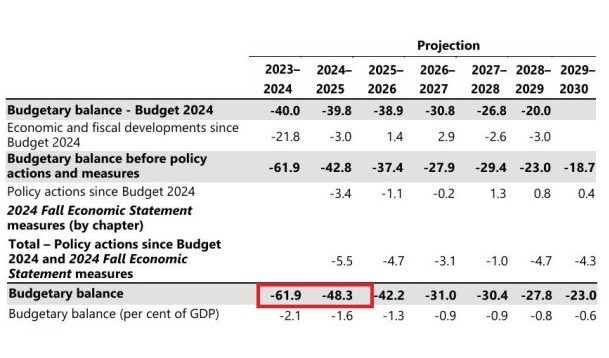
National debt charges this year eclipsed federal funding for medicare, new figures show. MPs expressed astonishment at data that deficit spending is 55 percent higher than projected last April: “Everything they touch turns to mud. It’s the opposite of King Midas.”
Third Treasurer In Four Years
The Liberal cabinet yesterday saw its third finance minister in four years. New Brunswicker Dominic LeBlanc took the oath as MPs predicted a 2025 election will come sooner than later: “We simply cannot go on like this.”
Questions Who Signed Letter
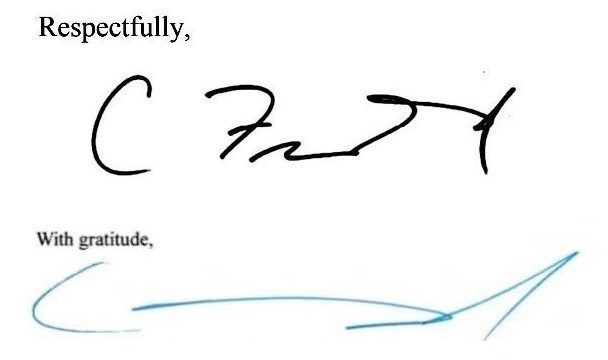
A Canadian graphologist yesterday questioned who signed ex-Finance Minister Chrystia Freeland’s resignation letter. Even a person under emotional strain would not completely alter their signature, said the handwriting expert: “Even under duress you sign your name using the same formations.”