
The carbon tax has no impact on most greenhouse gas emissions in Canada, a Department of Environment manager said yesterday. John Moffet, assistant deputy minister, said the fuel tax likely affected only a third of emissions at best: “It is impossible.”
Stop Criticizing, Says Fraser
Housing Minister Sean Fraser yesterday said critics must “not interfere” in his plan to build 3.9 million homes. Fraser’s remarks followed an observation from one MP that the construction target would require a new home to be built every 60 seconds: “Have a field day.”
Tree Scheme To Take 26 Years
It will take a generation to see any climate benefit from cabinet’s proposal to plant two billion trees, the Department of Natural Resources said yesterday. The 2019 election promise announced by then-Environment Minister Catherine McKenna will cost $5.9 billion, by Budget Office estimate: “I can’t give an exact date on when the two billion trees will be planted exactly.”
Seek True Immigration Data
Cabinet should count all foreigners let into Canada in its annual Immigration Levels Plan, the Senate social affairs committee said yesterday. The true number is quadruple the official figure: “The Department of Immigration bears the majority of responsibility.”
New Democrats Save Fergus
Commons Speaker Greg Fergus yesterday saved his job with NDP support after again breaching rules on non-partisanship. Fergus earlier complained critics held him to a “higher standard” because he is Black: “Being the first, you are held to a higher standard.”
Stung By Christmas Backlash
The Canadian Human Rights Commission was so upset by a backlash over Christmas it says it feared for staff safety. The Commission in 2023 provoked an uproar in Parliament after publishing a report denouncing Christmas as a racist observance “grounded in Canada’s history of colonialism.”
Convoy Files Sealed For Years
Most federal records on the Freedom Convoy, 87 percent, were never disclosed by a 2023 inquiry, says the Privy Council. Canadians will wait decades to see the confidential memos and emails: “These questions would need to be posed to former Commissioner Justice Rouleau.”
Cannot Beat Organized Crime
A third of marijuana users still buy from black market dealers who offer better product, price and service, says in-house Department of Public Safety research. Cannabis users said they were indifferent to dealing with organized crime: ‘Cannabis is legal and it doesn’t matter where they get it.’
Buy Prison Scanners At Last
Federal prisons this summer will begin buying full body scanners five years after Parliament approved their use, says a Correctional Service report. Scanners have been commonplace in federal airports since 2008: “We anticipate awarding the contract to the successful vendor in summer 2024.”
Arrivederci To Luxury Villa
The Department of Foreign Affairs is abandoning its luxury embassy in Rome. The move follows an earlier program to sell costly foreign real estate: “There may be a perception the government is not obtaining fair value or managing such properties prudently.”
A Happy May Long Weekend
Blacklock’s pauses for the Victoria Day observance with warmest wishes to friends and subscribers. We’re back tomorrow — The Editor.
Sunday Poem: “Job Posting”
Number of positions
that may be staffed
with this advertised process
is 1.
We encourage members of equity groups
and all interested individuals
to apply.
This job is open
to employees of the Agency
occupying a position
in the National Capital Region
south of the river,
between the highway
and the shopping centre,
in building 7,
3rd floor,
where the name tag
on their cubicle
starts with
Edward.
By Shai Ben-Shalom

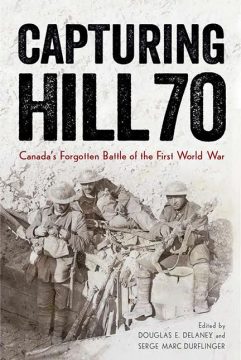
Review: The Day Of Raining Metal
The city of Lens, in the most uninteresting part of France, is about the size of Moose Jaw. Lens has auto parts stores and townhouses. The city sits in “the bottom of a shallow saucer encircled by hills on three sides,” explains Capturing Hill 70. As homely as it is, Lens more than a hundred years ago was much worse, “ringed by slag heaps, coalfields and nearly a dozen industrial, red-brick suburbs that had been pulverized by shelling,” writes historian Mark Humphries of Wilfrid Laurier University.
Lens lays claim to an indelible part of Canadiana. Here in August 1917 Canadian soldiers fought for the first time under a Canadian general with Canadians in charge of nearly all the fighting formations. “A landmark battle,” says Capturing Hill 70. It was heroic and pointless, extraordinary and tragic. If the whole maddening story of the First World War could be summarized in 288 pages, this is it.
Volunteers were assigned to take Hill 70, a treeless mound overlooking German infantry that held the city itself. From the vantage point of a century past, the objective seems obscure. Hill 70 was one of those chess-piece battles devised as part of some incredibly complex master plan that came at horrific cost and did little to win the war. Canadians suffered 257 casualties in one skirmish up a slag heap. Soldiers took Hill 70 at the price of 8,677 dead, wounded and missing. Lieutenant-General Sir Arthur Currie called it “the hardest battle in which the Corps has participated.”
They were brave men. One veteran of Hill 70, Corporal Filip Konowal, an Ottawa labourer, was awarded the Victoria Cross for single-handedly bayoneting 16 Germans in a charge on a machine gun crew. After the war Konowal was hospitalized in an asylum, and ended his days as a House of Commons janitor with a $15 a month pension.
Another Hill 70 veteran, Lt.-Gen. Brock Chisholm, won the Military Cross and for years afterward woke up screaming from night terrors. It drew Chisholm to psychiatry. He became deputy health minister in Ottawa, and the first director-general of the World Health Organization.
In the battle itself, Canadians first poured shellfire into the suburbs of Lens. It was a “metal storm,” writes Tim Cook of the Canadian War Museum. Artillery dropped mammoth shells that “left craters that could swallow a truck.” Forty-six tons of poison gas were lobbed at German lines, and Canadian machine gunners discovered by tilting their Vickers at a 20-degree angle they could “spray the enemy lines indiscriminately with tens of thousands of bullets.” One machine gun company fired more than a third of a million rounds.
The fighting was so ferocious that men cracked. Two Canadians were shot for desertion. Survivors recalled the deafening roar of artillery and shower of body parts.
After shooting and bayoneting their way 1,500 yards up the hill, Canadians then made the mistake of pushing their luck and attempting to take the city itself. “The houses were built in long rows and the Germans had knocked bricks out of each house and built a tunnel through,” one veteran recalled. “They could move two or three streets out of sight. Don’t forget this: The Germans had been there for twelve or thirteen months.”
If Hill 70 was a clear tactical win, authors note, the aftermath saw commanders “unwilling to accept limited gains and continued with poor planning and costly attacks into Lens, even after there was little chance of success.”
Here is the war in a nutshell: little victories, big defeats, numbing cost. “There has been no highly publicized pilgrimage to Hill 70 and the battle is unlikely ever to grace the reverse of the Canadian twenty-dollar bill as the Vimy Memorial does,” writes historian Serge Durflinger of the University of Ottawa.
Capturing Hill 70 is as fitting an epitaph as any.
By Holly Doan
Capturing Hill 70: Canada’s Forgotten Battle of the First World War, edited by Douglas E. Delaney and Sege Marc Durflinger; University of British Columbia Press; 288 pages; ISBN 9780-7748-33592; $34.95
I’m Proud Of ArriveCan: Exec
The former federal executive responsible for ArriveCan yesterday testified he was proud of the work despite the $59.5 million cost and ongoing audits and police investigations. John Ossowski, former $273,000-a year president of the Canada Border Services Agency, said others were to blame for wrongdoing: “It is shocking to me that would be your testimony.”
False Claims Now Total $10B
The Canada Revenue Agency says it now knows of $10 billion in pandemic relief cheques paid to ineligible applicants, the highest figure disclosed to date. Only a fraction has been recovered with billions in additional losses anticipated through ongoing audits: “That was back in 2020 and it’s now 2024.”