
Ontario Premier Doug Ford yesterday suggested the Prime Minister lacked backbone in granting Chinese automakers unprecedented access to Canada’s battery electric car market. “At least I know where I stand now,” said the Premier, who last year praised Mark Carney as a shrewd executive: “We get nothing.”
86hr Course On Colonialism
Federal managers should complete an 86-hour course at taxpayers’ expense for certification on “Canada’s colonial history,” says a Treasury Board memo. Workshops and seminars were a “journey that provides historical reflection,” it said.
Feds Admit Vax “Hardship”
The Public Health Agency confirms effective April 1 it will directly manage a national program that has paid out more than $18 million to Canadians harmed by Covid shots. Consultants hired to run the Vaccine Injury Support Program were blamed for causing “frustration and hardship.”
“Goodbyes Are Sad”: Envoy
The diplomat whose hurried closure of our Embassy in Kabul left 1,290 Canadians trapped in Afghanistan has been recalled from his final overseas assignment. “Goodbyes are sad,” Reid Sirrs wrote in a farewell to colleagues: “Hello to a new adventure.”
Management Was Key Factor
Thousands of acres of dead pine left standing in Jasper National Park were a “key contributing factor” to a disastrous 2024 blaze that burned a third of the town, confirms a Canadian Forest Service report. Cabinet had blamed climate change: “Jasper saw a severe Mountain Pine Beetle attack that peaked around seven years before the fire.”
Chief Judge Called It Anarchy
Any Freedom Convoy appeal to the Supreme Court will be heard by a Chief Justice who publicly called protestors anarchists and hostage takers. Chief Justice Richard Wagner’s remarks were “highly inappropriate,” said one legal group: ‘Conflicts of interest may arise from the judge having expressed views evidencing bias.’
$742M Gun Buyback’s A Go
Thousands of hunters, sports shooters and collectors face a 70-day deadline to surrender “assault style” firearms under a program federal researchers caution may be a costly failure. Public Safety Minister Gary Anandasangree today launched the national gun buyback, a $742 million campaign already twice over budget: “The program faces a risk of non-compliance.”
China Wins Big Market Share
Chinese automakers have gained access to about half the battery electric car market in Canada, federal data show. Concessions by Prime Minister Mark Carney followed Department of Finance complaints of predatory practices by Chinese industry: ‘The government is allowing vehicles from a country that won’t allow our vehicles to go there, so they could displace vehicles that are built here.’
Fault CBC For Story On Jews
The CBC Ombudsman has faulted the network’s Parliament Hill bureau for identifying MPs as Jews in news copy. A 2023 story by reporter John Tasker breached the CBC Journalistic Standards And Practices Guide, the Ombudsman said.
Housing Pace Modest: CMHC
Housing starts despite modest gains last year remain below half the rate needed to restore affordability, CMHC figures show. The latest data follow Prime Minister Mark Carney’s pledge to “build bigger and faster.”
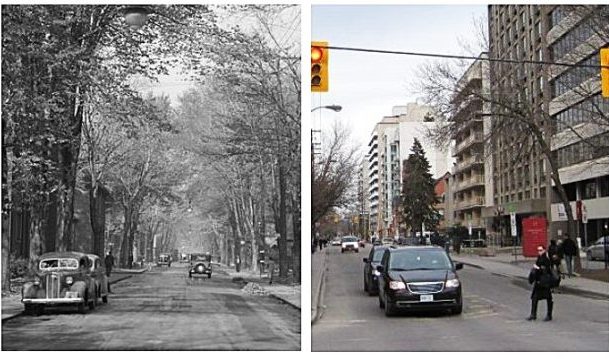
Ottawa Lost — Sifton’s Place
“Canada: The Last Best West!” was his slogan. Clifford Sifton, an interior minister, crafted immigration policies with far-reaching effects that are still with us. The Ottawa house he lived in for 25 years is not.
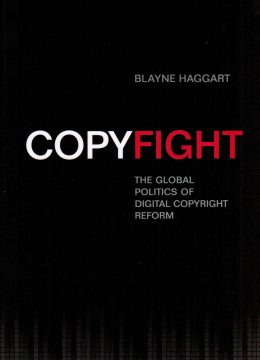
Review — No Police To Call
Copyright law has been around for 300 years and follows the Ten Commandments, yet many including government agencies barely comprehend intellectual property rights. There are no copyright police or courts, and even public agencies steal others’ work. It is no exaggeration that copyright owners enjoy less protection from theft than the night manager eyeing shoplifters at a Quickie Mart.
“Studying copyright, especially if you’re not a lawyer, is akin to stepping into a madhouse where things barely adhere to any internal logic,” writes Professor Blayne Haggart in Copyfight.
One example is Geophysical Service Incorporated, a Calgary firm that licenses underwater seismic maps for use by oil and gas companies. The company is now in constant litigation after discovering federal agencies were distributing copies of its maps for free. The Department of Natural Resources was even cited for concealing documents in the case. “There are no police to call,” Paul Einarsson, the company chair and COO, said in an earlier interview; “It’s unbelievable to me this is going on in Canada.”
Professor Haggart of Brock University attempts to make sense of the mess. “Copyright law has a deserved reputation for being ridiculously complex, but at heart it is simply a way in which governments regulate the market in creative works.”
Canada’s copyright tradition is weak. Mexico has more vigorous protection for owners, and Parliament tried and failed three times in ten years to pass a copyright reform bill. Why are we ineffectual? “Canada was, and remains, a net importer of copyrighted works,” writes Haggart. “This state of affairs helps to explain at least partly why stronger copyright traditionally has not been high on the Canadian policy agenda.”
This is key. Since many Canadians do not produce any novel, photo, song, phrase or any other creation worthy of copyright and don’t know anybody who does, comprehension of creators’ rights is weak even by those who should know better, like the Department of Natural Resources.
Copyfight is an eloquent primer on the whole concept of the capitalist hybrid of “individuality and private property,” as Haggart puts it. The research is fascinating. Readers will learn that copyright law dates from Britain’s 1709 Statute of Anne, and that piano roll companies lobbied for a 1911 amendment to the Copyright Act to halt theft of their works by musical bootleggers.
Copyfight recounts Parliament’s tortured attempts to update the law, and the ridiculous over-reach of some corporate rights holders in limiting theft. Haggart cites the “Rootkit” fiasco of 2005 in which Sony Corporation sold CDs equipped with hidden software that installed itself on user’s Windows operating systems, preventing CD dubs and, oh, contacting Sony every time a customer played a CD and, uh-oh, allowing hackers to access the computers of Sony clients.
“Computers and the internet function by making copies of files,” Copyfight explains. “This poses a challenge for copyright law, which is based on the assumption that copying should be controlled.”
Yet there are times when the issue seems deliberately confused by copyright thieves with a misguided claim to “users’ rights.” The fact remains in 21st century Canada that shoplifting a $4 magazine from Quickie Mart is a prosecutable crime, and stealing a $4 million map from a resource company is an argument.
By Holly Doan
Copyfight: The Global Politics of Digital Copyright Reform, by Blayne Haggart; University of Toronto Press; 348 pages; ISBN 9781-4426-14543; $37.95

Warns PM Of ‘China Haters’
Liberal appointee Senator Yuen Pau Woo (B.C.) yesterday said the Prime Minister has to “watch his back” in promoting friendship with the Chinese Communist Party. The Senator said unnamed “China haters” sought to sabotage close relations with Beijing: “Fifty-first state thinking is deeply embedded in Canada as is Sinophobia.”
Act Quicker To Hide Records
Federal managers have issued new guidelines for concealing records effective January 26 including permanent deletion of chat posts within 15 days. The policy follows Prime Minister Mark Carney’s election pledge that Access To Information was “quite important.”
Reliable TV Audience Over 65
Canadians most likely to trust TV news are over 65, says in-house CRTC research. Canadians under 34 were least likely to rate mainstream media as factual and unbiased: “Although traditional television still exists, its long term future is uncertain.”