Zookeepers are protesting a Senate bill to restrict the public display of elephants and apes. Exotic animals in Canada enjoy the highest standards of care, the Senate legal and constitutional affairs committee was told: “It is very disappointing.”
Feds “Uninterested” In Story
Federal investigators waited years to look into allegations a 2021 Liberal candidate benefited from thousands in undisclosed donations from friends of China, records show. Vancouver East candidate Josh Vander Vies’ campaign was ultimately fined $500 for poor bookkeeping: “I cannot speculate here.”
Prosecute Rebel News Instead
Federal election monitors never caught any Chinese agents despite numerous tips but instead spent four years prosecuting Rebel News Network for improper signage, the China inquiry was told. A director of Elections Act enforcement testified it was complicated: “It is difficult to answer such questions.”

$5M Subsidy For Failed Chain
The insolvent SaltWire Network newspaper chain pocketed more than $5 million in taxpayers’ subsidies in one year while failing to pay its tax debts, Court records show. Creditors in filings with the Nova Scotia Supreme Court described SaltWire management as incompetent: ‘They mismanaged the business.’

Dream Program Failed: Audit
A 2019 pre-election program promising to make home ownership “an achievable dream” failed, says a CMHC report. The billion-dollar scheme was poorly designed and delivered only a fraction of the promised benefits, wrote auditors: “The program has low uptake.”
Cut Taxes, Polls Tell Freeland
Middle class Canadians say they are overtaxed and underappreciated, according to in-house Privy Council research. Focus groups nationwide told federal pollsters they were fed up with rising costs and “the high tax burden.”
We Bid You A Happy Easter
Easter greetings to all friends and subscribers. Blacklock’s pauses today for the federal observance. We are back tomorrow — The Editor
A Sunday Poem: “Steve”
I was told
that God created
Adam and Eve,
not Adam and Steve.
Who created Steve, then?
Slave of his earthly desires,
Steve may have evolved
from a more primitive life form,
such as apes.
Like Michael and Gustav,
Nicole and Fatima,
Roberto and Cheng,
Olga and Maya.
Because God –
as I was told
only created
Adam and Eve.
By Shai Ben-Shalom

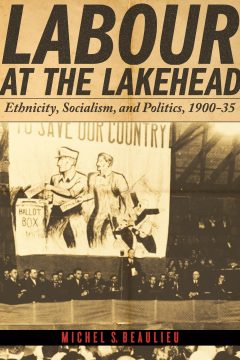
Review: Reds At The Lakehead
In 1919 there were so many Bolsheviks in Port Arthur, Ont. the local MP called it one of Canada’s worst “breeding places of revolution.” The mayor calculated three-quarters of local Finnish immigrants were socialists. In neighbouring Fort William they held a memorial for Lenin in 1924 and sang the Internationale.
The twin cities on the north shore of Lake Superior were “storm centres in Canadian working-class history,” writes Michel Beaulieu, associate professor of history at Lakehead University.
It is popular now to dismiss Canadian communism as a historical curiosity peopled by colourful idealists. In its day it was serious business. Churchill scorned fifth columnists like the Lakehead Leninists as Moscow “missionaries”: “Obscure people awaiting the day when they hope to be the absolute masters of their fellow countrymen and pay off old scores.”
It was no joke on the north shore, in what is now Thunder Bay. “The RCMP and Ontario Provincial Police flooded the region with undercover officers in an attempt to infiltrate the movement,” Beaulieu recounts in Labour at the Lakehead. The twin cities were “a metropole for a resource-rich hinterland,” a choke point for cross-Canada railways that monopolized shipments of Western grain and Eastern factory goods.
Beaulieu notes the 1917 Russian revolution inspired a “spirit of revolt” so palpable in Fort William, a local elevator company petitioned city council to lay on extra police for fear that Reds would seize the works. As late as 1930 a local candidate for alderman campaigned on a platform of “sharper class struggles.”
Beaulieu documents the minutiae of local radical groups and their ultimate failure. The twin city Reds could not even elect an MP: “The sum of their efforts came to less than the immense sacrifices and energies they had poured into them.”
Most poignant is Beaulieu’s brief account of “Karelia fever,” the come-to-the-motherland campaign that saw hundreds of Lakehead Bolsheviks leave Ontario for the Karelia Autonomous Soviet Republic in 1931-32. They were among thousands of socialists who fled the west in Depression years, believing a bright future could be found in Stalinist Russia – and surrendered their passports to find it.
“Pathetic,” wrote newspaperman Eugene Lyons, who documented their plight in his 1937 classic Assignment In Utopia: “The period of disillusionment ranged from two weeks to a year, and the embittered regrets were in direct proportion to the fervor of the original renunciation. It was the finality of their act, the realization that they were trapped and held and could never leave Russia again, which worked on these people, even more than their disillusionment with the USSR. They would come to my office and weep bitter tears.”
In Petrozavodsk the north shore radicals helped erect a monument that still stands, a grotesque statue of Lenin as tall as a house. At the Lakehead there is no monument at all.
By Holly Doan
Labour at the Lakehead: Ethnicity, Socialism and Politics 1900-35 by Michel Beaulieu; UBC Press; 316 pages; ISBN 978-077-4820-028; $32.95
Not My Duty: Commissioner
Yves Côté, now-retired Elections Commissioner, yesterday acknowledged dismissing complaints that Chinese agents were targeting Conservative Party voters in the 2021 campaign. “There is no duty to investigate everything,” Côté testified at the China inquiry.
Knew Of China-Friendly MPs
Federal security agents in a censored 2021 election memo said they were aware China sought to “cultivate relationships with current MPs.” China-friendly Members of Parliament were not identified: ‘China is interested in individuals who are viewed as ‘pro-PRC’ or ‘neutral’ in key areas.”
Elections Chief Had Warning
Security agents secretly warned Chief Electoral Officer Stéphane Perrault of irregularities at a 2019 nomination meeting in a Toronto riding, Don Valley North, the China inquiry disclosed yesterday. Perrault said he referred the incident to investigators but did no more: “Am I correct those concerns related to the Liberal Party nomination?”
Tired Of “Spewing” Over Tax
One of the Prime Minister’s parliamentary secretaries yesterday accused premiers of wasting Liberals’ time by “spewing the same lines” on the carbon tax. MP Irek Kusmierczyk (Windsor-Tecumseh, Ont.), secretary for employment, complained of “the screaming hypocrisy of premiers coming here to decry a three-cent increase on the price of a litre of gas.”
Need “Strategies” On Trust
Cabinet needs new “strategies” to restore public trust in the Government of Canada, says an Access To Information memo. The document complained of “growing evidence” of mistrust by the public: “What are some of the strategies that can be put in place to restore the public’s trust?”
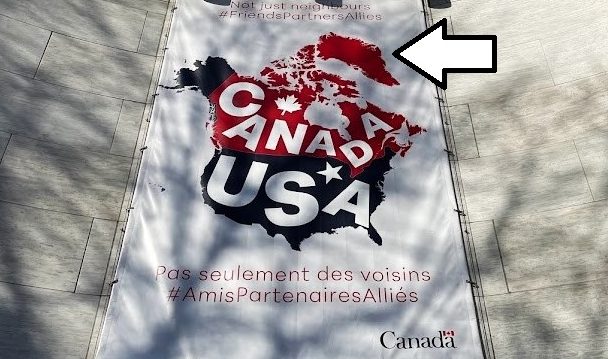
Took Days To Notice Blunder
The Canadian Embassy in Washington admits it displayed large friendship banners that mistakenly proclaimed sovereignty over Greenland. The banners were on display more than a week before the Department of Foreign Affairs noticed, a spokesperson said yesterday: “The banner was removed.”