
The Commons heritage committee yesterday by a 6 to 4 vote rejected extended hearings to question CBC chief executive Catherine Tait over the network’s Middle East coverage. “The CBC has not told the truth,” said Conservative MP Rachael Thomas (Lethbridge, Alta.): “I have very important questions for Ms. Tait.”
Polled Muslims On “Equity”
The Privy Council polled Muslims on the “lack of equity for their religion” in Canada, new records show. The research was conducted following the Prime Minister’s appointment of an advisor on Islamophobia: “Several described what they viewed as limited accommodation for rituals such as daily prayer.”
Carbon Tax Strike Underway
Saskatchewan Premier Scott Moe yesterday served notice of a carbon tax strike after cabinet lifted the fuel charge on Atlantic constituents. “How is that fair?” asked Moe: “As Premier it is my job to ensure Saskatchewan residents are treated fairly and equally with our fellow Canadians in other parts of the country.”
Debt Charges Rose 42 Percent
Public debt charges jumped 42 percent last year due to continued federal overspending and higher interest rates, records show. Costs of carrying the federal debt will rise an additional 26 percent this year: “Many economists have told us we could be laying the groundwork for a recession.”
Wants Vacant Homes Census
Federal regulators should undertake a national count of vacant homes, New Democrat MP Bonita Zarrillo (Port Moody-Coquitlam, B.C.) yesterday told the Commons human resources committee. Zarrillo questioned whether unoccupied properties could be used by the homeless: ‘Is there any discussion about the federal government buying some of these empty condominiums?’
Police Made 5,236 DNA Hits
Police using a national DNA database last year identified more than 5,000 criminal suspects, records show. Police have endorsed a Senate bill to expand DNA sampling to Canadians convicted of non-violent offences like fraud or drunk driving: “The main goals are simple.”
Senators Furious With Insurer
Senators are complaining of poor service from one of the country’s largest insurers. One Senator said his wife spent more than an hour and a half on the phone trying to explain a routine medical expense claim to Canada Life Assurance Co.: “I don’t know who the idiot was who decided this was a good program.”
Cannot Be Italian-American
Federal authorities Saturday would not comment on revocation of the Order of Canada for Buffy Sainte-Marie as a fake Canadian. Full members must be Canadian citizens under a 1967 cabinet order: “The Office of the Secretary to the Governor General does not comment on the possibility of honour terminations.”
Won’t Disclose Lawyers’ Fees
A judicial inquiry into use of emergency powers against the Freedom Convoy cost $17.5 million, new records show. The Privy Council to date has refused to disclose how much went to lawyers: “Applicants who requested funding provided varying degrees of detail.”
Must ‘Do Better’ Says CMHC
CMHC admits it must “do better” after building 12 homes in eight years under a federal program to convert surplus Crown lands into affordable housing. “That does take some time,” an executive told the Senate banking committee: “We want to do better for sure.”
Try Harder For Vets: Report
Cabinet should launch a job matching service for discharged soldiers, sailors and air crew, says the Commons veterans affairs committee. MPs complained even the Department of Veterans Affairs doesn’t hire veterans: “These are men and women who have served our country with distinction.”
Poem: “Are We There Yet?”
In her cave,
Ula the Neanderthal
tries to calm her baby.
“Gases. Again. Tried everything!”
She looks at her man.
Oug sits by the entrance,
gazing at the billion stars.
He appears to be thinking.
“One day,” he says,
“they will find a solution.
It may take many sunrises,
but they will solve this problem.”
“And the common cold too”, says Ula,
sneezing.
By Shai Ben-Shalom

Alleges Proof Of Corruption
The Commons government operations committee yesterday ordered disclosure of 12 years’ worth of federal contracts involving selected suppliers. It followed testimony from a Québec subcontractor who said he could prove sweetheart dealing involving “bad apples” in senior ranks of the federal public service and favoured suppliers: “I think personal benefit is something that could be the cause of this.”
Find The Guilty Says O’Toole
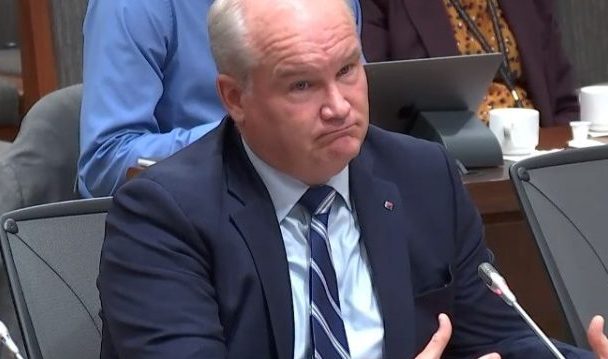
Former Opposition Leader Erin O’Toole yesterday asked MPs to find whoever hid evidence of Chinese interference against Conservatives in the 2021 campaign. O’Toole said his staff warned election monitors of suspicious activity including voter intimidation and saw no action taken: “Who made the decision to say there was no significant cause for concern in the 2021 election?”
Atlantic Tax Cut Worth $250
Prime Minister Justin Trudeau yesterday removed the carbon tax on home heating oil in Atlantic Canada until after the next election. Atlantic voters last elected 24 Liberal MPs: “This is an important moment where we are adjusting policies so they have the right outcome.”