
Finance Minister Chrystia Freeland’s department yesterday said it does not know how many billions it is currently spending on debt interest charges. One senator expressed disbelief: “All the smart people are in the Department of Finance.”
Builders’ Tax Cut Worth $4B
A tax holiday for apartment builders will cost more than $4 billion, the Department of Finance disclosed yesterday. Expenses are triple those estimated two years ago by the Budget Office: “We are talking about $4.5 billion over the next five years.”
Name Nazi Fugitives: Senator
Cabinet under a 2009 international pact has an obligation to name Nazi fugitives let into Canada, a Liberal-appointed Senator said yesterday. Authorities will not release the confidential 1985 list of 20 suspected war criminals: “They knew.”
Say Canada’s Unsafe For CBC
Canada is unsafe for Canadian Broadcasting Corporation reporters, says CEO Catherine Tait. The network chief in a report to Parliament claimed CBC employees “face rising threats to their safety both online and in the field.”
‘I’m Just A Referee’: Speaker
Parliament yesterday elected its first Black Speaker 55 years after Black MPs entered the Commons. Liberal MP Greg Fergus (Hull-Aylmer, Que.) told the House he was “nothing more than a referee.”
Polled Amnesty For Scofflaws
The Canada Revenue Agency polled accountants and tax lawyers on whether to grant amnesty to scofflaws who confess to not paying their taxes. Internal research at the Agency acknowledged the idea was “contentious.”
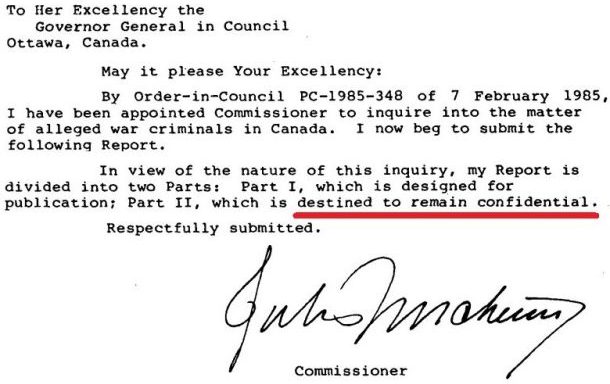
Nazi Blacklist Remains Secret
Attorney General Arif Virani will not commit to disclosing a confidential list of 20 suspected Nazi fugitives who immigrated to postwar Canada. The secret list was compiled in 1985 by a federal war crimes commission: “There is always room to learn.”

Most Photographed PM Ever
Stephen Harper donated more than 1.2 million official photographs to the federal archives, records show. The entire collection of Harper photos, emails and paraphernalia is the largest of any prime minister donated for an undisclosed tax credit: ‘It was an eye-opening experience.’
Haiti Staff Finally Pass Audit
A Canadian mission censured for running a fraud ring has passed a federal audit. Misconduct at the Embassy in Port-au-Prince, Haiti prompted worldwide audits of Canadian diplomatic offices: “Numerous fraud schemes were discovered.”
Feds Claim Lawyer Shortage
The Department of Justice complains it cannot keep lawyers on staff. An internal audit gave no specific reason though the department three years ago conducted “violence risk assessments” due to office squabbles: “Interviewees reported they had witnessed or experienced harassment, disrespectful treatment or discrimination in the workplace.”
Say China’s Now Off Campus
Universities have successfully purged research programs of China security risks, say campus administrators. The Commons science committee was told universities now run active watch lists of suspicious donors: “So far our measures are working.”
CBC Rewrote Higgs Headline
CBC editors quietly altered a headline critical of New Brunswick Premier Blaine Higgs and his supporters. The network’s ombudsman disclosed the “correction” editors attributed to imprecise use of the English language: “CBC editors agreed the headline was imprecise.”
Campaigns To Ban Spanking
Canadians should observe Truth and Reconciliation Day by agreeing to ban corporal punishment, said New Democrat MP Peter Julian (New Westminster-Burnaby, B.C.). The MP said he wanted to “launch a national campaign” to repeal the so-called spanking law: ““We must end all legalized harm and physical punishment of children in Canada.”
Seniors Prompt Hiring Boon
Canada now has so many seniors the Department of Employment hired 18 percent more clerks this year to process Old Age Security claims, records show. New applications for benefits are arriving at the rate of more than 60,000 a week: “For a significant number of these seniors the Old Age Security benefits represent their only source of income.”
Says Media ‘Crushed’ Sealing
Media and animal rights activists have indoctrinated Canadians against the Atlantic seal hunt, says the president of one of Newfoundland and Labrador’s largest unions. “It was all crushed,” Greg Pretty told the Senate fisheries committee: “It was crushed by outside forces.”