Failures Cost Taxpayers $12M

The National Research Council last year wrote down more than $12 million in subsidies to now-insolvent companies, records show. Taxpayer-backed bankrupts ranged from an Alberta shrimp hatchery to a brewery in Prince Edward Island: “The pandemic created major challenges.”

This content is for Blacklock’s Reporter members only. Please login to view this content. (Register here.)

Won’t Endorse Health Labels

The Department of Health will not support a Senate bill mandating health warnings on liquor labels, according to a briefing note. The Canadian Medical Association endorsed the bill after blaming alcohol for 17,000 preventable deaths annually: “People in Canada make informed decisions about their alcohol use.”

This content is for Blacklock’s Reporter members only. Please login to view this content. (Register here.)

Green Showcase Cost $18.6M

Cabinet spent more than $18 million refitting an Italian office to showcase “Canada’s efforts to combat climate change,” Access To Information records show. The spending on a consulate in Milan was approved at the same time cabinet claimed to cut unnecessary spending: “How do you convince Canadians that you are serious about this?”

This content is for Blacklock’s Reporter members only. Please login to view this content. (Register here.)

Bill Will Protect ‘Sacred Sites’

A federal hate crimes bill would outlaw “obstruction” of Indigenous sacred sites including purported unmarked graveyards, says a Department of Justice memo. Attorney General Sean Fraser made no mention of it when he introduced Bill C-9 An Act To Amend The Criminal Code last September 19: “Why isn’t Indian Residential School denialism proposed in this bill?”

This content is for Blacklock’s Reporter members only. Please login to view this content. (Register here.)

CBC Gaffe At Winter Games

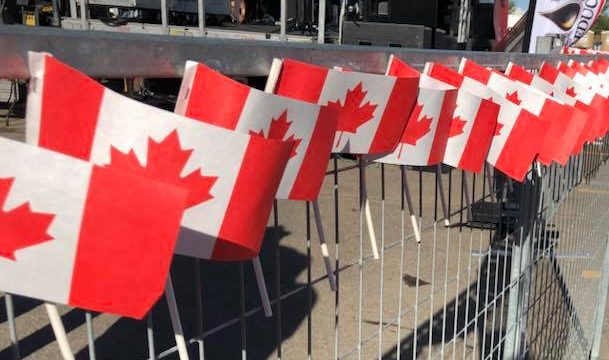
The CBC prompted protests from Seoul by repeatedly identifying South Korean athletes as Chinese at the Winter Olympics. It was the biggest gaffe of its kind since the Government of Canada put up German flags to welcome a delegation from Belgium: “We want people of all backgrounds, identities and abilities to feel valued, seen and heard by CBC.”

This content is for Blacklock’s Reporter members only. Please login to view this content. (Register here.)

“Rolling” In Gov’t Contracts

The federal IT department Shared Services Canada has awarded millions in “rolling” sole-sourced contracts to the same suppliers over 90-day periods, records show. Cabinet in 2018 granted federal managers new powers to award contracts without competitive bidding: “How many instances have occurred?”

This content is for Blacklock’s Reporter members only. Please login to view this content. (Register here.)

Feds Need Railway Advisors

The transport department is hiring private sector consultants to monitor spending on a multi-billion dollar high-speed rail venture. Cabinet said it needed “financial analysis” of the project that has been announced and re-announced for years: “This is real now.”

This content is for Blacklock’s Reporter members only. Please login to view this content. (Register here.)

Ottawa Lost: Meighen’s Place

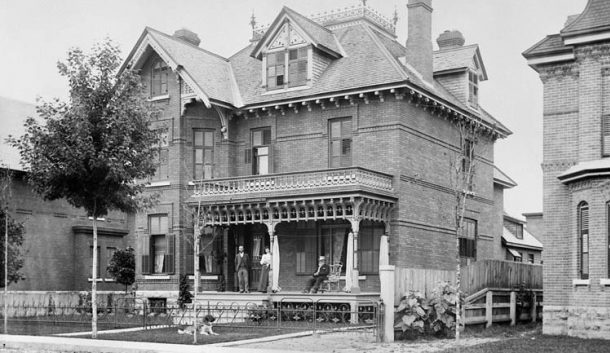
Prime Minister Arthur Meighen lived for years on tree-lined Cooper Street in Ottawa. He owned a rambling Georgian Revival-style home. Meighen raised a family, sent his three children to Ottawa public schools and crafted the most momentous legislation of his era. Today the house is gone, replaced with an ugly apartment block.

Meighen was a brilliant math scholar and lawyer, a six-term parliamentarian, the most influential solicitor general in Canadian history and twice prime minister, in 1921 and 1926. He bought the place at 21 Cooper in 1915. It had a magnificent view of the Rideau Canal yet Meighen lived so plainly he kept chickens in the backyard.

Here he crafted the bill that created Canadian National Railways. He wrote the country’s first conscription bill in 1917 and emergency legislation that ended the 1919 Winnipeg general strike. On hearing Meighen speak in the Commons, Wilfrid Laurier said: “Remarkable.”

He lived simply on Cooper Street. Meighen had an unaffected lifestyle. In 1921 a colleague noted the Prime Minister arrived at work having forgotten to shave. He wore suits till they were threadbare and “has not yet learned to put on his collar and tie properly or wear a hat that does not look like an undertaker’s,” a reporter wrote in 1935.

He was a farmer’s son and all his life had a farmer’s habits. In his youth in St. Marys, Ont., Meighen had sold twine door to door and remained a champion walker. The old man’s walks were “interminable,” his grandson Michael Meighen once told an interviewer.

As prime minister, Meighen walked 13 blocks to work at a military pace, then home for lunch – onion soup, two slices of brown bread, ice cream, coffee – then back to work, six days a week. Meighen had one vice, tobacco. He rolled his own cigarettes.

Most evenings he remained at home, working and smoking, and Cooper Street neighbours would stop by. “He lived in one of the plainest houses,” recalled one visitor, “with no celebrated fads, no celebrated pictures, not much music, but plenty of room for the juveniles.”

In time Meighen moved to Toronto and became a wealthy investment banker. He sold the place on Cooper Street in 1941, for $16,000. In 1957, long retired from politics, Meighen said: “I don’t regret my time in public life. I don’t have to make amends.”

He died in 1960. They demolished the place on Cooper Street in 1965. Today there is nothing to remind us of Meighen’s life in Ottawa.

By Andrew Elliott

Review: The 74%

Twenty-six percent of all new federal prisoners have already served time, which begs the question: Whatever happened to the other 74 percent who served time and never returned? On The Outside looks for answers. The result is fresh and compelling research on life after prison.

The authors interview longtime inmates including those jailed for serious violent crimes that once earned the death penalty. One hides his past from his children and “aspires to a simple life filled with laughter.” Another complains he must learn how to buy groceries: “People have been cooking my meals for twenty-two years and all of a sudden I gotta cook my breakfast.” A third ex-convict is upset by the loss of civility in polite society: “Personal rudeness in the prison system is not tolerated under any circumstances, at least in the old days when I was there.”

On The Outside is no celebration of rehabilitation. Former inmates interviewed by the authors appear broken men, some guilt-ridden, some unapologetic. “The quest for normalcy was a preoccupation,” write the authors, former members of a prisoners’ liaison group at Collins Bay Penitentiary in Kingston, Ont.

Melissa Munn is a professor of sociology at Okanagan College, Chris Bruckert is a professor at the University of Ottawa’s Department of Criminology. Together they interview twenty ex-convicts. “We had come to know the men as individuals.”

The authors do not detail the men’s crimes and interestingly neither do most employers or acquaintances. One parolee says he was fired from a jobsite after a supervisor spotted his gang tattoo. However another recounts his experience in applying for a credit card at the bank: “I was very nervous because I didn’t want to reveal my past and she asked me my particular information and she checked my credit rating and she said, ‘You don’t have a credit rating.’ So I had to tell her where I was. And her comment to me was, ‘Well, banking’s our business, that’s your business.’ And I really appreciated it. I never forgot that comment.”

Common themes emerge. All the released prisoners had bad childhoods. Most came out of prison to work at entry-level jobs as janitors, lawn cutters, 7-Eleven clerks. None returned to their hometowns, and all considered incarceration the most important event in their lives. “It isn’t helpful being locked up every friggin’ day,” says one convicted murderer. “I mean, the whole atmosphere is not helpful.”

Yet On The Outside is no lament. If ex-convicts appear as sympathetic figures, it is only because readers are hearing their voices for the first time, like the man who refuses to wear black as reminiscent of his past as a biker, or the freed prisoner whose life turns after he buys a little house: “It puts you in a different class of people automatically.”

Or the man who recalls with dread the night he walked home after dark. “I haven’t been out at night when it’s dark for a long time”; “This kid walks up and taps me on the shoulder. I said, ‘Oh, gosh, lucky one of us didn’t die,’ because I almost had a heart attack and I was going to kill him because I don’t know who he was. All he wanted was a dollar”; “I had never been out at night and I never had anybody come up behind me and put their hand on my shoulder.”

By Holly Doan

On The Outside: From Lengthy Imprisonment To Lasting Freedom, by Melissa Munn & Chris Bruckert; UBC Press; 240 pages; ISBN 9780-7748-25375; $29.95

No Sympathy For Employers

Canadians are indifferent to claims of labour shortages by businesses that rely on foreign workers, says Department of Immigration research. Even people with mild views on immigration were “unpersuaded” by complaints from employers: ‘Some suggested they may depress wages and used foreign workers to drive down costs.’

This content is for Blacklock’s Reporter members only. Please login to view this content. (Register here.)

Do Not Get Trapped In Cuba

Canadians traveling to Cuba should expect to be stranded without electricity, food or fresh water, the Department of Foreign Affairs said yesterday. Diplomats updated a federal travel advisory warning conditions were so poor, drivers were fighting in gas station lineups: “Traveling across the island is extremely challenging.”

This content is for Blacklock’s Reporter members only. Please login to view this content. (Register here.)

More Research On Arctic Port

Cabinet yesterday said it will spend $248,600 for a study on how much it would take to upgrade Canada’s most northerly deepwater port. The Port of Churchill, Man. has been the subject of numerous postwar studies that questioned its commercial potential: “What is the viability of the Port of Churchill?”

This content is for Blacklock’s Reporter members only. Please login to view this content. (Register here.)