
Pandemic restrictions on the size of outdoor gatherings were justified, Saskatchewan Court of King’s Bench ruled yesterday. The decision came in the case of protesters fined $2,800 apiece for breaching a public health order limiting outdoor gatherings to ten people: “We can all see things which we would wish had been done differently or not at all.”
Only Two Pockets To Pick
Electricity ratepayers or taxpayers or both must pay for greening of the power grid, a utilities’ lobbyist yesterday testified at the Commons environment committee. “There is no third pocket,” MPs were told: “It’s the ratepayer, the taxpayer, who’s paying for it. It’s not clear where all of these costs are ultimately going to fall.”
$938M For Kids’ Dental Care
A free children’s dental care program for uninsured households earning less than $70,000 will cost almost a billion a year, cabinet said yesterday. Health Minister Jean-Yves Duclos said grants will be paid on the honour system subject to audit: “It is not a national dental program.”
Cabinet Studies Rent Controls
Cabinet commissioned confidential research on federal rent controls, records show. In-house polling by the Privy Council Office found most Canadians said Parliament must do something on housing affordability: “No participants were of the opinion that housing and rental prices should be solely left up to the free market.”
Face Questions On Expenses
Aides to Governor General Mary Simon face questioning on their return from the Queen’s funeral. The Commons government operations committee on Thursday will cross-examine witnesses over exorbitant catering bills at Rideau Hall: “The question is who’s responsible for this?”
Tested Tax Filers’ Personality
The typical small business operator trusts the private sector over government while 25 percent prize “individualism” and “work ethic,” according to behavioural research by the Canada Revenue Agency. Management divided business owners into six personality profiles in a bid to boost tax compliance: “Tax administrations around the world have started using behavioural insights.”
Land Of Snow, Maple Syrup
Say “Canada” and people in Vietnam think of maple trees and cold weather, says federal research. Questionnaires by the Department of Agriculture follow a series of studies on what foreigners think of Canadians: “When you think of Canada what is the first thing that comes to mind?”
Search For Covid News Leak
A privacy investigation has ended without conclusion in the case of a Covid patient whose medical history was leaked to a Prince Edward Island blogger. The case is currently before the Island’s Supreme Court: “A privacy breach cannot be undone.”
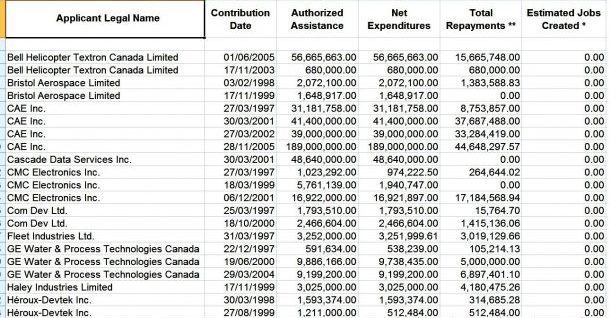
Secret Loan Terms Disclosed
Federally-subsidized companies were given years to repay as little as ten cents on the taxpayers’ dollar borrowed from the Department of Industry, Access To Information records show. Confidential details of easy-term loans were disclosed by order of Information Commissioner Caroline Maynard: “Public funds are involved.”
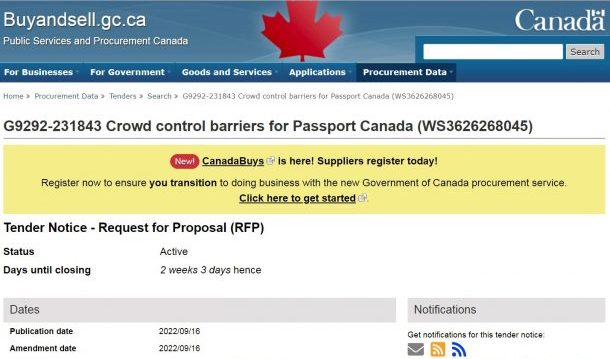
To Control Passport Crowds
The passport office, now in its six month of public protests over processing delays, is ordering crowd control barriers. Managers in a notice to contractors said delivery of barriers was needed at its Montréal office where police were repeatedly called to calm crowds: “People are crying and freaking out.”
Student Loan Interest Fees Up
Cabinet on Saturday gave notice it will raise the interest rate on student loans. Prime Minister Justin Trudeau in the last election campaign had promised to abolish students’ interest charges altogether: “The government wants to make sure young people know they matter.”
Unvaxed Win A Federal Case
A federal tribunal has reinstated Employment Insurance benefits for a Toronto man fired for being unvaccinated. The judgment was the first successful appeal on behalf of Canadians denied jobless benefits over their medical status, said a lawyer in the case: “To my knowledge it is the first.”
Feds Defend Beleagured Bank
Cabinet is rejecting an all-party committee recommendation that it disband a Crown agency, the Canada Infrastructure Bank. A Commons transport committee report called the Bank a costly failure: “The government strongly disagrees with the recommendation.”
Ottawa Lost: A PM’s Refuge
Alexander Mackenzie, Canada’s first Liberal prime minister, lived near Parliament Hill in a beautiful Gothic Revival home. He was an honest, thrifty fellow who helped transform the country yet could not stand parliamentary life. “Politics is very low,” he wrote. Today the house is gone and forgotten, just like Mackenzie.
Born in Scotland, he arrived in Kingston, Ont. in 1842 as a near-penniless stonecutter. He became a successful contractor in Sarnia known for quality work. Mackenzie-built structures can still be found including the former Essex County Courthouse, now called Mackenzie Hall.
He was sharp-eyed, tight-mouthed and weather-beaten. Mackenzie did not dress well and hated to spend money. As prime minister he was pained at paying $128 for a political banquet and resolved never to entertain at home due to the cost.
Mackenzie landed in politics as a reformer, elected Liberal leader in 1873 and Prime Minister less than a year later. “Some people have a theory that a successful politician must necessarily depend on intrigue and doing crooked things,” Mackenzie said. “I determined to rule in broad daylight or not at all.”
He refused to campaign on public works spending for fear Canadians would think he was trying to buy votes. When federal contractors sent gifts for the Prime Minister’s wedding anniversary in 1878 Mackenzie had them returned. “I never felt so mortified in my life,” he said.
He grew so weary of reporters and patronage hounds Mackenzie built a secret staircase from his West Block office so he might evade questions. Cronyism and cynicism were enough to “sicken me of public life,” he wrote.
Mackenzie determined to clean up the place. He introduced Canada’s first secret ballot in 1874. Elections had been open ballot affairs with widespread bribe-taking. He established the Supreme Court and the Office of the Auditor General, the bane of grafters.
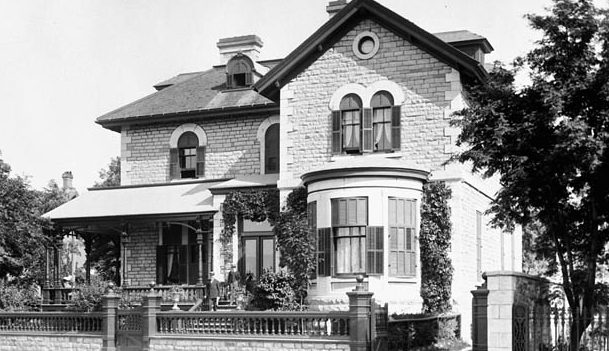
His home and refuge from the meanness of politics was at 22 Vittoria Street, a short walk west of Parliament Hill. From his veranda Mackenzie had a marvelous view of the Ottawa River. The Gothic home had a distinctive rounded bay window and the tooth-like corner stone patterning that Victorians enjoyed.
On losing the premiership in the recession of 1878, Mackenzie remained an MP but sold the Vittoria Street home in 1880. The house survived til 1928 when contractors demolished it to make way for MPs’ offices in the new Confederation Building.
And Mackenzie? He refused a title from the Queen – “We have no landed aristocracy in Canada,” he explained – and like all honest politicians of his era, died poor. When Mackenzie passed away in 1892 his estate was so modest MPs voted a $10,000 trust fund to support his widow.
By Andrew Elliott 

Review: Good Eats
Any book that examines the human condition through diet is welcome. Who is not wiser on learning Lester Pearson was so bland his favourite lunch was a poached egg, or that Britain’s Ministry of Food recommended rice soup as a wartime Christmas meal in 1917?
In Eat Local, Taste Global Professors Glen Filson and Bamidele Adekunle of the University of Guelph look at vegetables in documenting Canada’s demographic revolution. The nation has never seen so many different immigrants from so many varied lands – Asian, African, Caribbean, Middle Eastern. Authors note the nation imports 24.9 million pounds of okra annually, a third of it in the Toronto area through the largest vegetable wholesaler in the nation, the Ontario Food Terminal Board.
“While humans are often viewed as rational beings who make informed decisions to optimize their benefits, food decisions are not always rational,” says Eat Local. “This is evident as food serves many purposes beyond nutritional value, including construction of personal identity and pleasure.”
“There are many factors that influence food choice including previous exposure, expectations, economic factors, marketing, education and nutritional knowledge, social interactions, morality and religion, culture, lifestyle, age, food trends, media and the attributes of the individual,” authors explain.
Eat Local is a scholarly eye-opener for readers who recall when the range of exotic foreign foods in Canada ran a narrow gamut from chop suey to Japanese oranges. Today Canadians eat 21 million pounds’ worth of Asian purple eggplant every year, and 24 million pounds of yard-long beans. Foreign ingredients like cilantro, broccoli and artichokes, introduced by Italian immigrants, are commonplace. Bok choy and bitter melon are sold in most supermarkets in most medium-sized cities in Canada. Halal butchering has saved many a small, independent packing house.
Authors note this is simple economics – more immigrants, more income – but marvel that it occurs at all. Grocery retailing is heavily controlled among a handful of corporations, and inexpensive processed food is everywhere. “Our industrial diet has been and continues to be nutritionally degraded due to the ever-growing abundance of ‘pseudo-food’, an even broader category than the more widely used term ‘junk food’,” they write.
In 2013 the federal agency that regulates food safety, the Canadian Food Inspection Agency, even expanded the definition of “local” produce from a 50-kilometre radius to include interprovincial goods, meaning carrots sold as “local” in Vancouver may be trucked from Blairmore, Alta. “There is somewhat of a political economic tug-of-war between those controlling most of what we eat, and those wanting a more sustainable agriculture and local access to fresh, healthy food,” authors write. “This struggle occurs along the value chain from producers to processors, and distributors, wholesalers and retailers all the way to the consumers.”
By Holly Doan
Eat Local, Taste Global: How Ethnocultural Food Reaches Our Tables, by Glen Filson and Bamidele Adekunle; Wilfrid Laurier University Press; 200 pages; ISBN 9781-7711-23136; $27.99