
Canadians expect to suffer from food inflation and high interest rates for years to come, say federal data. “There was a sense of pessimism about the future of the economy” well into 2025, said a Department of Finance report: “There was a mentality of having to ‘ride it out,’ of things getting worse before they get better.”
Want More Oil, Gas Workers
Canada is short thousands of oil and gas workers, Labour Minister Seamus O’Regan says in a report to Parliament. The industry payroll must grow by at least 13 percent, he said: “How many more workers does the government estimate are needed in the oil and gas industry?”
Agency Rates Itself Mediocre
The Canada Revenue Agency despite millions in upgrades to call centres says taxpayers still have only a 50-50 chance of speaking to a live agent within 15 minutes. Cabinet in 2018 budgeted $206 million in five-year funding on a promise of “fewer delays and more timely and responsive services.”

Ukraine Loan Support Fading
Taxpayers are sharply divided over ongoing financial aid for Ukraine, according to internal research by the Department of Finance. Canadians were more likely to oppose than support additional loans, subsidies and credits: “Support for Ukraine has helped the government continue to operate in the face of Russia’s illegal invasion.”
Upholds Volunteers’ Privacy
Canadians’ right to privacy includes firefighters on emergency calls, a Privacy Commissioner has ruled. The decision came in the case of a request for photos of volunteer firefighters on the job in Pouch Cove, Newfoundland and Labrador: “Pictures taken while fighting a fire show expressions and actions in a dangerous situation.”
Sunwing Owes Public $317M
Sunwing Airlines owes taxpayers almost a third of a billion, according to Department of Transport records. Repayment over five years was a condition of cabinet’s approval of a takeover of Sunwing by WestJet Airlines: ‘There was a significant risk Sunwing would not be able to repay the loans.’
Can’t Find Happy Customers
Canadians in internal Privy Council polling share universal disapproval of internet service providers, documents show. Cabinet commissioned the research prior to approving the largest merger yet in telecom, the $26 billion takeover of Shaw Communications by Rogers: “All felt the Government of Canada should be doing more.”
Blunder Had Agency Rushing
The Public Health Agency in an internal audit confirms from the outbreak of the pandemic it rushed to lease three private medical supply warehouses after closing three of its own depots the year before. Emergency leasing costs were not disclosed: “Too late.”
Parks Cops See Few Crimes
Law enforcement by Parks Canada wardens consists mainly of illegal fishing and breaches of campground rules, says an internal report. The agency could not explain why it sought extraordinary new policing powers under a bill currently before Parliament: “Going through law school I was always told the devil is in the details.”
Seek Details Of Usury Reform
Solicitors with one of the country’s largest commercial law firms are questioning a proposal to rewrite Canada’s usury law for the first time in 45 years. Finance Minister Chrystia Freeland said she will lower the maximum interest rate on most loans from 60 to about 42 percent a year: “It is unclear.”
Poem: “Remember Forget”
Remember and Forget
were walking down the street.
People were staring.
They couldn’t believe.
“Forget is renowned as Remember’s nemesis!”
“Remember, don’t be a traitor! Come, join us!”
Remember remained calm.
Forget’s eyes swelled and teared.
Remember looked at his friend,
a victim of people’s fears.
“Without Forget there’d be no need for me.
“Memory would be futile.
“People would never try to think.
“I am Remember. I could never forget a friend.”
With that Remember shifted his gaze from the crowd to Forget.
He locked eyes with his friend,
whose tears were all dried.
Thankfully, Forget couldn’t remember why he cried.
By Dahlia Kurtz

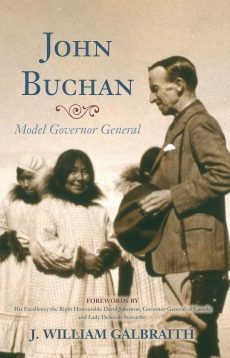
Review: Do Not Mention The War
On February 6, 1940 Governor General John Buchan collapsed in his bathroom at Rideau Hall. Buchan had suffered a paralytic stroke and fractured his skull in the fall. He lay on the tiled floor for an hour before they found him. He was dead in a week.
Buchan had been a celebrity novelist. The same year he came to Ottawa in 1935, Alfred Hitchcock released a film adaptation of Buchan’s thriller The Thirty-Nine Steps. It was like appointing John Grisham governor general.
Despite his international fame and sudden death Buchan today is forgotten, almost as if his service in Canada was expunged from the record. The reason is revealed in J. William Galbraith’s biography.
Buchan was a Nazi appeaser. He failed the greatest moral test of his era and was capable of “dangerous rationalization,” writes Galbraith. In a November 11, 1938 speech to a Canadian Legion banquet the Governor General suggested Hitler might use British veterans as peacekeepers in Nazi-occupied territories. “The defense of a country is always a difficult question,” he said. “You dare not neglect it or you may be taken at a sudden disadvantage. But it is possible to overdo it and thereby increase the very risk which it was intended to prevent.”
Buchan’s speech came two days after Kristallnacht, the 1938 pogrom that saw German synagogues burned and Jews murdered in the streets. The Governor General did not mention it. “All defence carries a face of war,” he said.
John Buchan: Model Governor General is no gotcha biography. Galbraith is a member of the John Buchan Society. He does not mention the Kristallnacht speech. Instead he celebrates Buchan as the man who adapted his ceremonial office into a kind of national greeter who toured the Arctic, patting cattle at livestock shows and giving speeches on the CBC. Readers will note how little the job has changed.
Galbraith is an honest biographer who provides a first glimpse into Buchan’s enthusiastic appeasement of the pre-war Nazi regime. Germany’s occupation of Austria was “very largely our own blame,” said Buchan. Press critics of Neville Chamberlain were “donkeys”; Winston Churchill “exasperated everybody”.
Appeasers fascinate historians. How could they have been so wrong? Buchan and his crowd feared Nazis. They appeared paralyzed by post-traumatic memories of the First World War and were unmoved by the Germans’ early victims: communists, trade unionists, Slavs, Jews – though Buchan was hardly anti-Semitic, his biographer notes. The Governor General’s wife was a supporter of Montreal’s Hadassah. “No man is so strong as he who is not afraid to be called weak,” Buchan wrote in 1938.
When war came Buchan sent his own two sons into the Canadian Army, but his stroke saved him the agony of witnessing the full tragedy of 1930s politics. Buchan did not live to see the fall of Hong Kong and Singapore or the Blitz, the Holocaust or loss of empire that left Britain so broke it kept rationing food till 1955.
“My work here is over,” Buchan wrote at war’s outbreak. It was, in more ways than one.
By Holly Doan
John Buchan: Model Governor General by J. William Galbraith; Dundurn; 544 pages; ISBN 9781-4597-09379; $40 hardcover
We Bid You A Happy Easter
Easter greetings to all friends and subscribers. Blacklock’s pauses for the national observance this Good Friday — The Editor

Middle Class Was Grumbling
Finance Minister Chrystia Freeland’s “strong middle class” budget followed internal polling that warned of widespread grumbling by middle class voters. “Most were of the view the country was currently headed in the wrong direction,” said a Privy Council report: “There should be a greater emphasis on increasing benefits and financial supports for middle income Canadians.”
Gov’t Garbled Cabinet Order
The Privy Council Office yesterday would not comment on its apparent garbling of records over an ethics filing. Documents suggested Intergovernmental Affairs Minister Dominic LeBlanc recused himself from a crucial vote a day after it happened: “How do you recuse yourself the day after?”



