
The Commons transport committee yesterday by unanimous vote agreed to summon Transport Minister Omar Alghabra for answers on how to “fix the mess” at federally-regulated airports. No Liberal MP spoke in Alghabra’s defence: “All the warning signs were there.”
Agency To Fund Activist Art
Federally-subsidized art programs must embrace “social activism,” says the Canada Council for the Arts. Management in a series of reports said it seeks “a decolonized future for the arts.” The Council spent $428.6 million last year: “The Council should support the arts sector in promoting social activism.”
Hero Medallion For Everyone
The Public Health Agency faulted in audits for Covid mismanagement is awarding a pandemic hero’s medallion to every single employee. Medal presentations include a velvet box to commemorate “their commitments towards pandemic relief efforts” that left 43,000 Canadians dead: ‘It is a special Covid-19 coin in a velvet presentation box.’
MPs Open Airport Hearings
The Commons transport committee today opens rare August hearings into continued snarls at federally-regulated airports. Hearings requested by Opposition MPs follow disclosures less than half of flights through Toronto’s Pearson International Airport run on time: “This is not a number I would normally tout.”
Ban Guns Under Cheese Law
Handgun imports will be banned in Canada under the same law used to block American dairy products at the border, cabinet said Friday. “We will use every single tool at our disposal,” Public Safety Minister Marco Mendicino told reporters: “The number of handguns in Canada will only go down.”
Under 25s Just Different: Feds
Young Canadians are pragmatic but “more individualized” than past generations, says a Department of Heritage report. Staff compiled a personality profile of Canadians under 25 as part of an audit of youth program spending: “The world has changed.”
Can’t Charge For Cash Prizes
Taxpayers should not directly pay cash prizes to Canadian Olympic and Paralympic athletes who win international competitions, says the Department of Canadian Heritage. Paralympians have complained they do not receive $20,000 prizes awarded to Olympic gold medalists through organizing committees: ‘The sport support program does not permit use of federal funds for prize money.’
Review: The 86-Year Argument
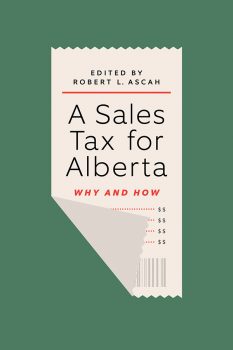
Alberta does not have a provincial sales tax because Albertans do not want one. They tried it 86 years ago. It was not successful. Robert Ascah, former director of the University of Alberta’s Institute for Public Economics, recounts the little-known experiment. “An unpopular and misunderstood tax is something to avoid if you are gunning for re-election,” Ascah wryly observes.
In the teeth of the Dust Bowl and facing insolvency, the Social Credit cabinet introduced a two percent sales tax on May 1, 1936. Ascah recounts the dreadful circumstances. Four hundred school districts were in default, wheat was down to 32 cents a bushel – a price not seen since the Middle Ages – and ratepayers were reduced to eating rodents.
A 1933 Alberta Taxation Inquiry Board endorsed a sales tax in bloodless terms strikingly similar to those used by advocates today. It was “simple,” “easily understood,” “flexible,” “easily modified.” The legislature repealed the tax a year later on September 1, 1937 and never mentioned it again.
“Backing down from this tax appears to have been, in hindsight, an astute move for Alberta’s young government,” writes Ascah. Social Creditors remained in office another 34 years and the sales tax remained Black Death.
When Brian Mulroney introduced the GST in 1991 Albertans challenged it in court and defeated every single GST supporter at the polls. Conservative MP Murray Dorin (Edmonton West), then-chair of the Commons finance committee, was such an enthusiastic support of the GST he wanted it levied on rents.
I lived in Dorin’s riding at the time. The MP had so many fists waved in his face Dorin suspended his 1993 campaign weeks before balloting day. “Nervous exhaustion,” they said.
Against this colourful history Editor Ascah and contributors have produced A Sales Tax For Alberta: Why And How. “The biggest obstacle to actually implementing such a tax is Alberta’s political culture which is widely considered to be hostile to taxes,” authors note. “Politicians fear electoral defeat should they ever advocate for the tax or even consider the idea in public.”
A Sales Tax For Alberta is lively and a good argument starter. Authors concede no sales tax is possible without popular support.
“A sales tax could help fund crucial public programs such as education and health care,” write Ascah. “A sales tax makes good sense both economically and fiscally,” writes Graham Thomson, longtime Edmonton Journal columnist. A sales tax would have reduced past deficits, explains Melville McMillan, professor emeritus of the University of Alberta’s Department of Economics.
So the Taxation Inquiry Board said in 1933. Advocates today have the advantage of 86 years’ worth of data to contrast and compare in proving their assertion Alberta is worse off for its lack of a sales tax. Here A Sales Tax For Alberta falls short.
Does oil-producing Alberta with no provincial sales tax have worse health and education outcomes than oil-producing Newfoundland and Labrador that charges 15 percent? We don’t know.
Are residents of oil-producing Alaska made more miserable by the fact they not only don’t pay a sales tax but last year each received a US$1,114 oil dividend cheque? Readers are left to wonder.
Is the poorest ratepayer next door in British Columbia materially better off for paying seven percent plus GST? A Sales Tax For Alberta does not say.
Alberta taxpayers would answer no, no and no. Advocates accept they must first convince voters before any tax could be imposed. Here at least they are ahead of Murray Dorin.
By Tom Korski
A Sales Tax for Alberta: Why and How, edited by Robert L. Ascah; Athabasca University Press; 160 pages; ISBN 9781-7719-92978; $27.99

Covid Test Lab Kept E-mails
A federal contractor hired to manage airport Covid test kits yesterday was cited for keeping 147,000 travelers’ email addresses for sales pitches. Quarantine Act regulations had forced travelers to surrender their emails to receive test results: ‘Travelers had no choice but to comply with the Public Health Agency rules.’
Still Enforcing Fed Vax Order
Canadian Armed Forces members continue to be discharged under vaccine rules weeks after other federal employers suspended mandates, Federal Court records show. One corporal who challenged her dismissal noted provinces and most employers also lifted Covid mandates: “She takes issue with the manner in which her religious exemption was considered.”
Won’t Detail Actual Sanctions
Cabinet will not detail millions of dollars in Canadian assets they claim to have frozen under sanctions against Russia. Foreign Minister Mélanie Joly yesterday said she had no more information than what the RCMP gave reporters two months ago: “I think your questions are extremely valid.”
Envoy To MPs: Cabinet Failed
Ukraine’s ambassador to Canada yesterday pleaded with MPs to overrule cabinet’s waiver of Russian sanctions. “This appeasement has already failed,” Ambassador Yuliia Kovaliv told the Commons foreign affairs committee: “Just Google the history.”
Will Explain $106M Waste
The Department of Public Works promises to disclose what if anything it did to verify the credibility of federal Covid suppliers. Hurried contracting and outright theft cost taxpayers more than $100 million, records show: “Processes can always be improved.”
Feds Couldn’t Spare Truckers
The labour department days before Freedom Convoy protests against vaccine mandates complained of “significant” labour shortages in a trucking industry that could not afford to lose drivers, according to records. A cabinet proposal that interprovincial truckers show proof of vaccination was dropped a week after the protest ended: “Science changes. Lots of things are changing.”
Gov’t Plans 2023 Quake Drill
The Public Health Agency plans a 2023 earthquake drill. An earlier pandemic drill was interrupted by Covid: “If there is a significant seismic event in either British Columbia or in the Ottawa-Montréal-Québec City corridor we would be looking for an all-of-society approach.”



