
Political aides yesterday declined comment on federal security measures for a Truckers For Freedom convoy. A similar 2019 rally had the Privy Council Office clear rooftops overlooking Parliament Hill and distribute staff emails claiming truckers wanted to arrest Justin Trudeau: “I’m worried that somebody’s going to be shot.”
Blank On Firearms Smuggling
Cabinet has no idea how many firearms are smuggled into the country from the United States, according to Public Safety Minister Marco Mendicino’s department. Staff in an internal briefing note also contradicted public claims of widespread gun seizures at the border: “The total number of firearms successfully smuggled into Canada is unknown.”
Kids’ Risk Less Than Feared
Covid caused fewer cases of serious illness among kindergartners than originally claimed, says an internal federal briefing note. The Public Health Agency also ruled out any vaccine mandate for young children and said parents’ views must be respected: “Caregivers are supported and respected during the decision making process.”
Board Breaks Spending Rules
The Treasury Board is in violation of its own rules on proper use of federal credit cards, says an internal audit. An investigation found irregularities were commonplace including lack of receipts justifying purchases: “The department must show good stewardship of public funds.”
Gov’t Flies Hip-Hop To Arctic
The Department of Canadian Heritage is billing taxpayers to fly hip-hop dancers, rappers and African drummers to Nunavut to observe Black History Month in February, accounts show. Documents detail nearly $83,000 in funding including talent fees for one senator to visit Nunavut: “This is not something I wish to discuss with you.”
Promised Loans Still Pending
Federal regulators say they are still awaiting cabinet’s final approval to launch on an interest-free loan program for home energy refits. Cabinet announced the plan last April 19 but has yet to introduce it: “We are waiting impatiently for it.”
Voluntary Vax Is Best: PHAC
Mandating vaccination is not recommended, says the deputy chief epidemiologist with the Public Health Agency of Canada. Dr. Howard Njoo told reporters Friday immunization was “a voluntary choice” and that positive education was preferable to coercion: “It doesn’t have to be because there’s a mandate.”
Never Meant To Tax Equity
CMHC never meant to commission $250,000 worth of research on a home equity tax, the CEO told the Commons finance committee. Romy Bowers said the federal insurer had done no work on the entire subject of taxation: “Unfortunately I am not in a position to answer.”
Public ‘Coping Or Struggling’
Only a third of Canadians think they will be better off in five years, says a global survey by a Chicago-based public relations firm. The finding mirrored in-house research by the Department of Finance that found many Canadians were merely “coping or struggling.”
Sunday Poem: “Engineered”
I dreaded her.
My Grade 6 English teacher
who beat at the blackboard
with her chalk.
Imagined this immense fibreglass structure
– half the wall –
detaching, falling, crushing her underneath.
Studied it for days.
Affixed with only four screws,
I concluded it’s doable.
Today, brought my
screwdriver.
(Editor’s note: poet Shai Ben-Shalom, an Israeli-born biologist, writes for Blacklock’s each and every Sunday)

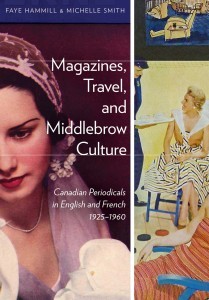
Review: When The World Was Bigger
In 1955 a round-trip flight from Toronto to Rome was a staggering $677, the modern equivalent of $6,100. It was the cost of a full order of household appliances or a good used car – not that it mattered. Most Canadians went their entire working lives without ever stepping on an airplane for a holiday. Not till 1944 did any province even mandate two weeks’ annual holiday pay for wage earners. A simple vacation was luxury, let alone travel abroad.
“Don’t you get tired of just reading about things?” the frustrated traveler George Bailey is asked in It’s A Wonderful Life. Bailey, like the film audience, accepted he could never get away. So, they dreamed. The phenomenon inspires this compelling book documenting the aspirations of the “middlebrow”, a pejorative first coined in 1924.
Travel “was a symbol of achievement, cultural literacy, savoir faire and personal means,” note authors Faye Hammill and Michelle Smith of the University of Strathclyde in the U.K. To read Magazines, Travel & Middlebrow Culture is to revisit an era when Middle Canada worked a six-day week and fantasized about the fine things in life.
“Magazines, by circulating fantasies of travel, were instrumental in forging a link between geographical mobility and upward mobility,” Middlebrow explains. “They constructed travel as an opportunity to acquire knowledge and prestige as well as to experience pleasure and luxury.”
Authors meticulously researched the contents of six periodicals over a 35-year period that lauded the merits of travel to places that readers would never see. “Money spent in travel is a sound investment,” Maclean’s wrote in 1927. “Nothing can take from you the returns it guarantees – broadmindedness, pleasant education, relaxation, recreation and lasting memories.”
Travel pages, then and now, were advertiser-driven; authors calculate sponsorships by cruise lines, hotels and other tourism operators accounted for 10 percent of advertising over the period; another 40 percent sold automobiles, meaning “the theme of geographical mobility was central to half of the consumer advertising in the magazines.”
The effects were occasionally bizarre.
In August 1935 the monthly Mayfair ran its vacation number with long, overwritten articles extolling Canadian Pacific cruises to Egypt and China: “What a marvelous experience!”, Mayfair enthused; “Would you like a real change? Something that will give you an adventure in comfort, and comfort in adventure.”
Note the month, August ’35, the same period when the Prairie wheat crop was ravaged by frost; industrial unemployment hit 25 percent; and Ontario’s premier announced the province “will be insolvent” if welfare payments kept up. Mayfair readers paid 25¢ — the price of a ten-pound bag of flour – to see how the top one percent sought amusement.
“The magazine declined to engage seriously with the world beyond Canadian high society,” authors note. “Instead, it constructed an artificial realm in which only money, style and social capital counted.” The impact was a “startling lack of perspective”, as witnessed by this July 1935 article headlined En Route: “During a recent European tour, Mr. B.W. Keightley of Montreal included an interesting visit to Germany, where he discussed the situation with many citizens – including a smartly turned-out Nazi Storm Trooper.”
Mayfair halted publication in 1958. Other magazines reviewed by Middlebrow similarly vanished: the Canadian Home Journal in 1958; La Revue Moderne in 1960; La Revue Populaire in 1963. They live on only in this warm and engaging book, when Middle Canada for 25¢ could dream of trips they would never take.
By Holly Doan
Magazines, Travel And Middlebrow Culture: Canadian Periodicals in English and French 1925 to 1960, by Faye Hammill & Michelle Smith; University of Alberta Press; 256 pages; ISBN 9781-7721-120837; $49.95
Trump Tweeted, Feds Bought
Internal records show the Department of Health rushed to stock a malaria drug after then-U.S. President Donald Trump endorsed it on Twitter as a Covid treatment. Managers in a censored memo rushed to buy hydroxychloroquine based on “media articles,” they said: “That’s all it is, just a feeling.”
Too Generous For Truckers
Labour Minister Seamus O’Regan’s office in correspondence with a senator said paid sick leave for the private sector should be not be too generous to avoid abuse by workers. The letter claimed employees like truck drivers would take advantage of automatic benefits such as ten days’ paid sick leave per year: “Give it to me in writing.”
Question Grocers On Bonus
New Democrat and Liberal MPs yesterday said they’d like to recall grocery executives for questioning over alleged wage fixing. Legislators and the Commissioner of Competition have proposed to outlaw collusion between employers on workers’ pay: “Have them come back and explain.”
Rate Is Worse Than Botswana
First Nations hamlets under federal care have higher Covid death rates than Botswana despite more than a billion in emergency spending by the Department of Indigenous Services, data show. Management yesterday had no explanation: “Is that enough? No.”